What Is The Oldest Winery On Old Mission Peninsula?
An honest, source-checked answer to which winery on Old Mission Peninsula is the oldest, why the wineries predate the 1987 appellation, and what the records actually say.
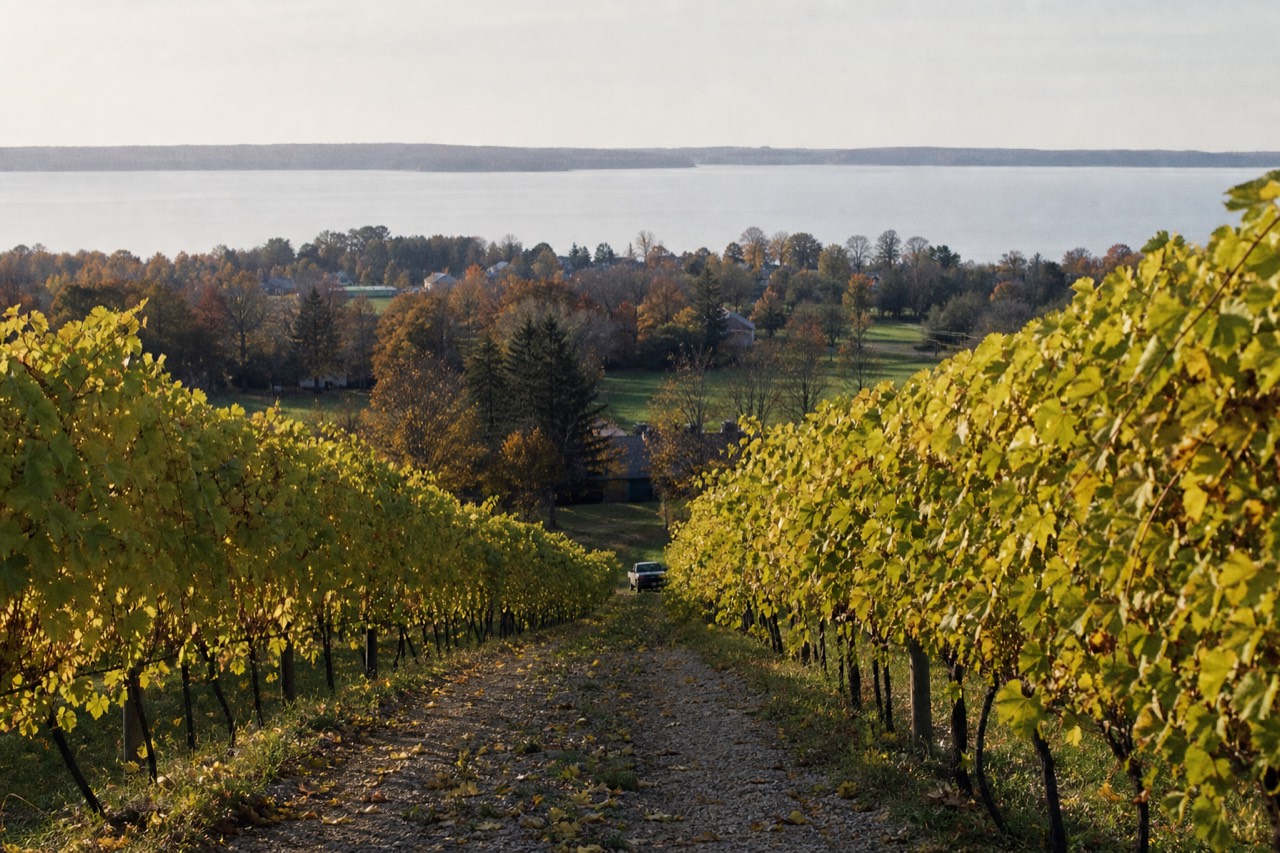
What Is The Oldest Winery On Old Mission Peninsula?
No source in the verified record gives a founding date for any of the ten wineries on the Old Mission Peninsula Wine Trail, so an honest answer has to say that plainly rather than crown a winner. The trail's own site names ten member wineries but publishes no founding years, and the federal regulation that created the appellation in 1987 is silent on which producers were already pouring. Winemaking on the peninsula predates the appellation by years.
That is an unsatisfying answer if you came here for a name and a date, and plenty of pages will hand you one. This site would rather show its work. The Old Mission Peninsula Wine Trail lists ten wineries on its own trail map: 2 Lads Winery, Black Star Farms, Bowers Harbor Vineyards, Brys Estate Vineyard & Winery, Bonobo Winery, Chateau Chantal Winery and Inn, Hawthorne Vineyards and Mari Vineyards are the names confirmed either on the trail's site or in live tour itineraries. Not one of those sources publishes a founding date. Where a date is not in a source, the honest move is to say so, and that is what this page does.
What can be said with certainty is structural. The Old Mission Peninsula became a federally recognized American Viticultural Area on 8 June 1987, under Treasury Decision ATF-252, published in the Federal Register. An appellation is a line drawn around a place, not a birth certificate for its wineries, and the federal government does not license or date the tasting rooms inside it. Producers had to be growing and selling wine on the peninsula before anyone would petition for the boundary, which means the oldest operations here are older than 1987 by some margin the sources on file do not quantify.
If your real question is which of the named estates to visit, the practical answer is that the trail's roster is short enough to see most of it, and a guided loop is the efficient way. These are the three formats worth comparing first.
The distinction matters more than it might seem. A page that tells you a specific winery opened in a particular year of the 1970s, with no citation, is doing the same thing a page does when it invents a price: filling a gap with something that sounds right. The trail's own map is the authority on membership, and membership is the only fact it stands behind.
Why The Wineries Are Older Than The Appellation
The Old Mission Peninsula AVA was established on 8 June 1987, five years after the Leelanau Peninsula AVA on 30 March 1982, and both were drawn around vineyards that already existed, which is how appellation law works everywhere in the United States. A petition must demonstrate that a named area has a distinguishable viticultural history and geography, so the 1987 date is proof of maturity, not of beginnings. The wineries predate the line drawn around them.
The regulation itself, 27 CFR 9.114, describes the boundary in dry legal terms: all of Peninsula Township in Grand Traverse County, excluding Marion and Bassett Islands, plus a small part of Traverse City Township. The boundary line runs 19 miles north along the western shoreline to the lighthouse at Old Mission Point, across a peninsula never more than three miles wide. Roughly 19,200 acres sit inside the line. None of that text dates a single winery, because that is not what an appellation does.
Putting the local timeline against the statewide one shows how deep the roots go:
| Year | What happened | Source character |
|---|---|---|
| 30 March 1982 | Leelanau Peninsula AVA established (27 CFR 9.40, T.D. ATF-99) | Federal regulation |
| 8 June 1987 | Old Mission Peninsula AVA established (27 CFR 9.114, T.D. ATF-252) | Federal regulation |
| 2025 | WineAmerica counts 279 wine producers and 13,346 vineyard acres in Michigan | Industry economic study |
| 2026 | Old Mission Peninsula Wine Trail lists ten member wineries | The trail's own site |
The statewide numbers come from the 2025 WineAmerica economic impact study, relayed by the Michigan Wine Collaborative, which put the industry's total economic activity at $8.96 billion and counted those 279 producers. That is a measure of everything, from the biggest operations down to tasting rooms that opened last year, and it says nothing about which Old Mission estate poured first. It does confirm the scale of what grew out of those early vineyards.
There is a further wrinkle worth knowing. Black Star Farms appears on both peninsulas' trails, because it operates a Leelanau property and pours on Old Mission as well. Anyone adding the two trail rosters together to count wineries near Traverse City will double-count it, and anyone using trail membership to date a winery will get two different answers for the same company. Membership and founding are different facts, and only one of them is published.
Planning a full day around these estates is easier with someone else handling the driving, and the question of which vehicle suits you is a real one on a peninsula with a single spine road.
The Wineries The Sources Actually Name
Eight of the ten Old Mission trail members are confirmed by name in the sources on file, either on the trail's own site or in live tour itineraries, and each has a distinct reputation even where the founding date is unpublished. Chateau Chantal runs a winery and inn, Bowers Harbor and Brys Estate anchor the published tasting circuits, and Mari Vineyards is expanding fastest, with an on-site bed and breakfast scheduled to open in late 2026.
Here is what the record supports for each named estate:
| Winery | What the sources say about it | Founding date published? |
|---|---|---|
| Chateau Chantal Winery and Inn | Winery plus inn on Old Mission; named in live tour itineraries; hosts the annual Ice Wine Festival, held in late January | No |
| Bowers Harbor Vineyards | Regular stop on published Old Mission tours; flights run $22 to $28 per the operator's own listing | No |
| Brys Estate Vineyard & Winery | Named on the trail and in itineraries; glasses run $9 to $11 per the operator listing | No |
| Bonobo Winery | Trail member; opening a downtown Traverse City tasting room and sushi bar with Dojo Sushi at 115 Franklin Street, targeting a July 2026 opening | No |
| Mari Vineyards | Trail member in its tenth-anniversary year, building The B&B at Mari Vineyards, scheduled to open in late 2026 | No |
| 2 Lads Winery | Confirmed trail member | No |
| Hawthorne Vineyards | Named in live tour itineraries; glasses around $10 per the operator listing | No |
| Black Star Farms | Member of both trails; tasting rooms at Suttons Bay and on Old Mission at 360 McKinley Road E | No |
Notice the pattern in that last column. The trail publishes membership, the regulations publish boundaries, the tour listings publish what a glass costs at the bar, and nobody publishes a founding year. That is the genuine state of the public record, and it is why this page refuses to name an oldest winery. A claim like a specific mid-1970s opening date on some other site may well be true, but it is not sourced anywhere this site can verify, and an unsourced date is worse than no date because it gets copied forward forever.
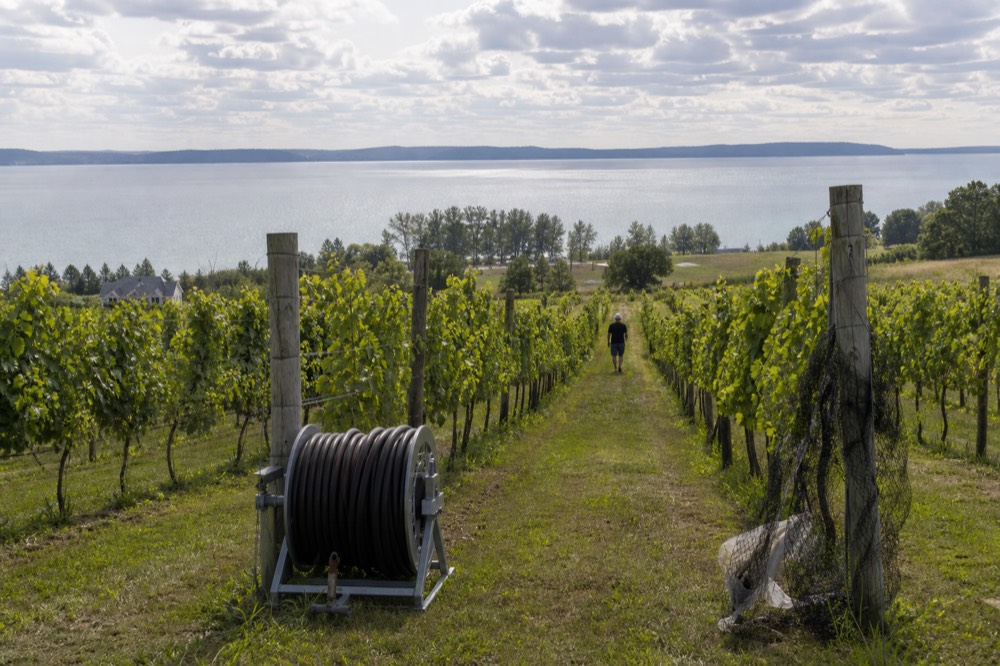
The Mari Vineyards expansion is the clearest sign that the peninsula's story is still being written. Reporting by MLive in April 2026 described the winery's tenth-anniversary year and the planned bed and breakfast overlooking the vineyards and East Grand Traverse Bay, with Alberto Giusti joining as winemaker. A winery celebrating ten years in 2026 is by definition not the oldest, which narrows the honest field a little: whatever the answer is, it is not Mari.
The Escalade-format tour is a good fit for a history-minded day, since it reaches the established estates in a single 4.5-hour loop from $69 per person, with samples and a complimentary bottle in the ticket and flights and food extra at the wineries. It carries only a handful of reviews so far, too few for a star claim.
For a deeper look at which rooms deserve your time, the guide to the best wineries around Traverse City works through the full roster on both peninsulas, and the Old Mission Peninsula wine trail guide covers the ten-stop loop in practical detail.
How Old Mission Compares With Leelanau's Timeline
Leelanau's appellation is five years older, established 30 March 1982 against Old Mission's 8 June 1987, and its trail is larger too, with the Leelanau Peninsula Wine Trail describing over 20 award-winning wineries while its own member page lists 23. Neither date tells you which individual winery is older, because appellation years and founding years answer different questions, and only the appellation years are on the public record.
The Leelanau boundary, under 27 CFR 9.40, is all of Leelanau County excluding the offshore islands, which makes it the larger of the two regions by far. The only defensible area statement for Leelanau is that boundary itself, and no official figure exists for its planted acreage, so none is printed here. Old Mission's 19,200 acres, by contrast, come from the Federal Register record around the 1987 rule.
The two trails also count differently, which trips up careless comparisons. The Old Mission trail's own map lists ten wineries. The Leelanau trail's homepage says "over 20 award winning wineries," and its member page counts 23. Third-party outlets print 11 for Old Mission and 23, 25 and 28 for Leelanau across three different articles, disagreement that is itself informative: trail membership, licensed producers and tasting rooms are three different populations, and writers who do not say which they are counting produce numbers that cannot be reconciled.
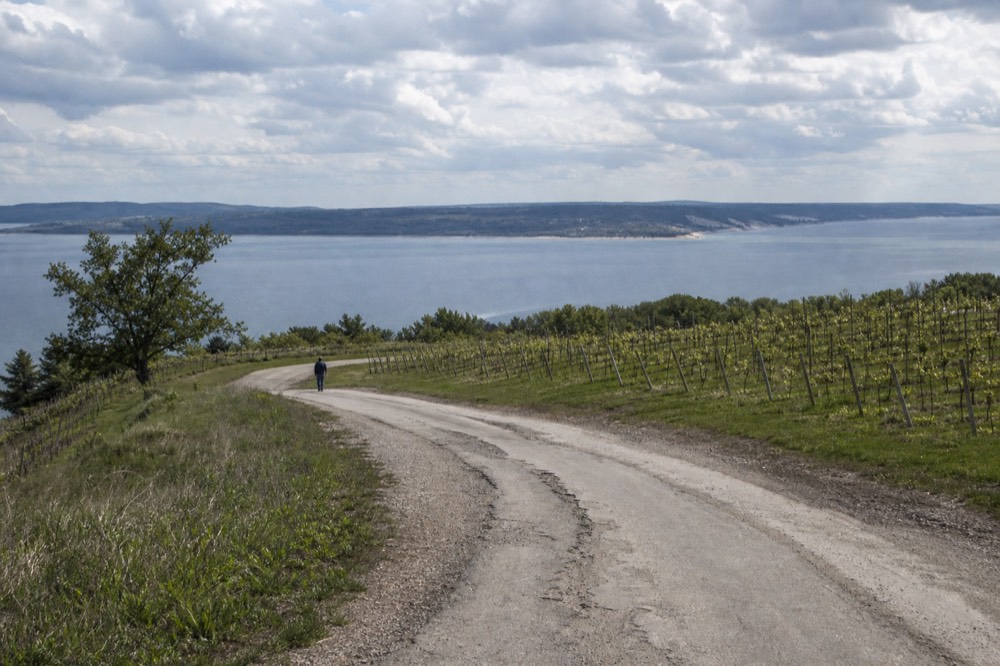
The "Napa of the Midwest" phrase belongs to Travel + Leisure, quoted as its words and not repeated here as fact. What is fact is the physical reason both peninsulas grow wine at all: they sit on the 45th parallel, and Lake Michigan moderates the air enough to extend the growing season, the same mechanism Traverse City Tourism credits for the region producing over 60 percent of Michigan's grapes. The comparison between the two peninsulas, including which suits which kind of visitor, is worked through in the Old Mission versus Leelanau guide.
Seeing The Old Estates Today
Yes, every named Old Mission estate sits along the same 19-mile stretch of Center Road, M-37, which runs north from Traverse City to the lighthouse at Old Mission Point, so you can see them all in one loop. Guided tours handle the driving and appointments, with shared shuttle runs from $79 per person and semi-private formats from $69 per person, tasting fees extra on the shuttle and samples included on the small-vehicle runs.
That fee difference is the sharpest distinction in this market and worth understanding before you book. The Magic Shuttle Bus products, including the 5-hour four-winery Old Mission tour rated 4.9 across 2,666 reviews, cover transport only, with tasting fees of roughly $5 to $10 per stop paid at the bar. The Movie Stars Wine Tours products, including the non-bus four-winery SUV tour rated 5 across 542 reviews, include samples plus a complimentary bottle, with flights and food extra. Neither structure is better; one is cheaper up front, the other is simpler on the day.
| Format | Example tour | What the fare covers | What you pay at the bar |
|---|---|---|---|
| Shared shuttle | 5-hour Old Mission four-winery tour, from $79 per person | Transport between four wineries | $5 to $10 per tasting |
| Semi-private SUV | Non-bus four-winery SUV tour, from $69 per person | Samples plus a complimentary bottle | Flights and food only |
| Private Escalade | Old Mission tour by Cadillac Escalade, from $69 per person | Samples plus a complimentary bottle | Flights and food only |
Michigan law shapes these products more than visitors realize. The open-container statute, MCL 257.624a, bans open alcohol in a vehicle's passenger area, but subsection (4) exempts passengers in a chartered vehicle authorized by the state transportation department. That exemption is why the shuttle and SUV operators can advertise drinking on board. It is also why the designated-driver product on this site, where a hired driver takes the wheel of your own car, cannot rely on it: the vehicle is yours, not chartered. The full legal picture, including the 0.08 OWI threshold, is laid out in the wine tour transport guide.
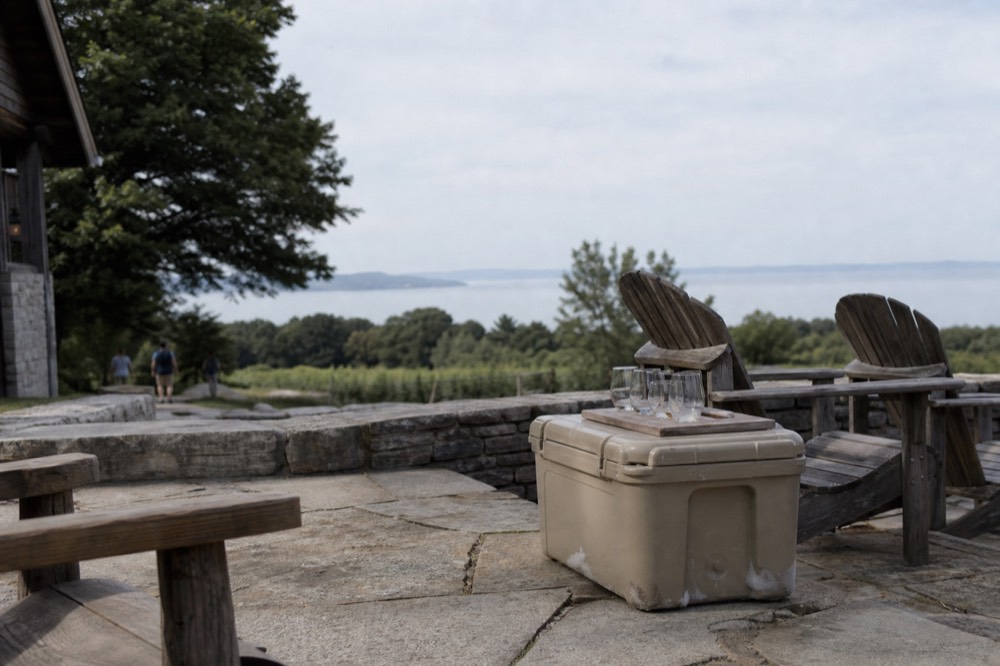
The shuttle format deserves its own mention for a history-minded visitor. Because it is the longest-running shared product on the peninsula at four stops over five hours, it is the run most likely to put you in a room with locals and repeat visitors, which is often where the undocumented history actually surfaces: who planted what first, which family sold to whom. The stories are not sources, but they are the reason the question keeps getting asked. The tour is rated 4.9 across 2,666 reviews, the deepest review pool on the roster.
There is a seasonal angle to a history visit too. Harvest runs mid to late September through October, and tasting rooms are busiest in October when harvest and fall colour overlap, so the rooms are fullest exactly when the peninsula looks its best. A visitor who wants time to ask questions at the bar, and history-minded visitors usually do, will find late autumn and winter quieter, with the trade-off that some rooms run reduced hours. The trade-offs by month are worked through in the guide to the best time for wine tasting around Traverse City.
For context on how the region's winery count is measured and why the numbers disagree, see how many wineries sit near Traverse City, and for the broader question of which town anchors Michigan wine, the piece on the wine capital of Michigan works through the economic data. Whatever the founding dates turn out to be, the region's present is easier to document than its past, and Traverse City Wine Tours keeps both honest.
The short answers below cover the founding-date question, the appellation timeline, the trail's own membership count, the Leelanau comparison, the newest estate on the peninsula, and how to visit all of it without driving. Each answer sticks to what the sources on file actually publish, which is less than most pages claim and more than most pages can prove.
Common Questions About The Oldest Winery On Old Mission Peninsula
What Is The Oldest Winery On Old Mission Peninsula?
The verified sources do not publish a founding date for any of the ten wineries on the Old Mission Peninsula Wine Trail, so no defensible answer exists on the public record. The appellation was established in 1987, five years after Leelanau's in 1982, and the wineries predate both lines. Any page naming a specific oldest winery without a citation is guessing.
When was the Old Mission Peninsula AVA established?
On 8 June 1987, under Treasury Decision ATF-252, codified at 27 CFR 9.114. The boundary covers all of Peninsula Township in Grand Traverse County, excluding Marion and Bassett Islands, plus a small part of Traverse City Township, roughly 19,200 acres in total.
How many wineries are on the Old Mission Peninsula Wine Trail?
Ten, per the trail's own trail map. The names confirmed in the sources on file are 2 Lads Winery, Black Star Farms, Bowers Harbor Vineyards, Brys Estate, Bonobo Winery, Chateau Chantal, Hawthorne Vineyards and Mari Vineyards. Black Star Farms also appears on the Leelanau trail, so adding the two rosters double-counts it.
Is Leelanau's wine region older than Old Mission's?
Its appellation is: the Leelanau Peninsula AVA was established 30 March 1982, five years before Old Mission's. Appellation dates do not date individual wineries, so the comparison tells you which region was federally recognized first, not which tasting room poured first.
Which Old Mission winery is newest?
Mari Vineyards is in its tenth-anniversary year, per April 2026 reporting, and is building an on-site bed and breakfast scheduled to open in late 2026. That makes it clearly not the oldest, though an exact founding year for the others remains unpublished.
Can you visit the Old Mission wineries without a car?
Yes, through guided tours. Shared shuttle runs start at $79 per person with tasting fees paid at each winery, and semi-private SUV and Escalade formats start at $69 per person with samples and a complimentary bottle included. The peninsula's single spine road makes it an easy loop for any operator.