Old Mission Peninsula Wine Trail: Every Winery, In Driving Order
The Old Mission Peninsula wine trail packs ten wineries onto a narrow 19-mile spit of glacial land north of Traverse City, with water on both sides of the road the whole way up. Here is the trail winery by winery, what each room charges at the bar, and the order that makes sense behind the wheel.
Short answer
The Old Mission Peninsula wine trail is ten wineries on a peninsula no more than three miles wide, running about 19 miles north from Traverse City to the lighthouse at Old Mission Point. Tastings run $5 to $10 per winery on average, and a shared shuttle tour starts at $79 per person with fees paid at the bar.
What Is The Old Mission Peninsula Wine Trail?
The Old Mission Peninsula wine trail is the ten-winery collective on the narrow peninsula that runs roughly 19 miles north of downtown Traverse City, an American Viticultural Area established on 8 June 1987 under 27 CFR 9.114, with Grand Traverse Bay on both sides of the road almost the entire way. The trail's own site publishes the count plainly: "Our wine trail is comprised of ten wineries." That is the number the organization stands behind, and it is the one worth planning around, even though third-party outlets sometimes print eleven.
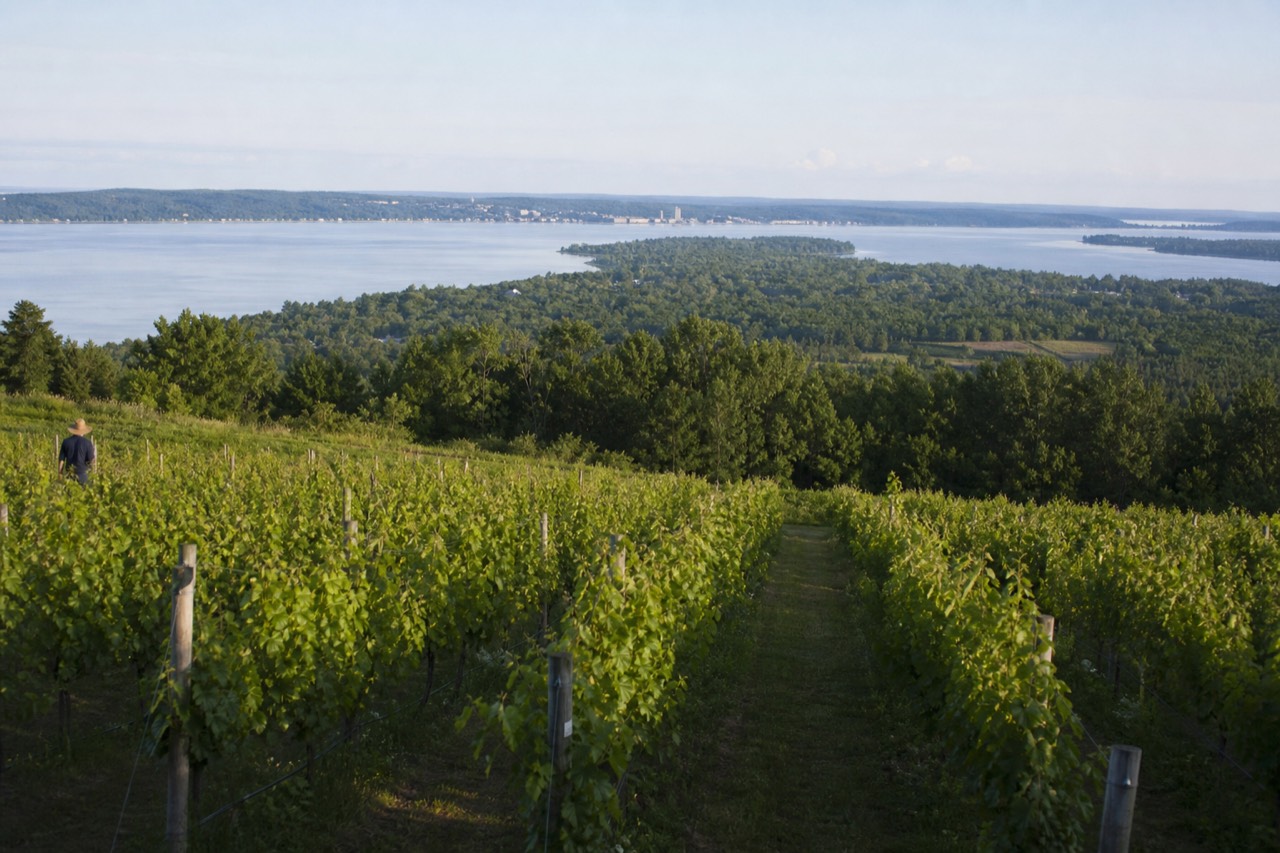
The peninsula itself is a glacial relic, a ridge of dirt and stone pushed down the middle of Grand Traverse Bay. It is never more than three miles wide at any point, which produces the trail's signature effect: you are always within a mile or two of open water, and on much of Center Road, the main spine, you can see the East Bay out one window and the West Bay out the other. That water is not scenery decoration. It is the reason the vineyards exist. Lake Michigan moderates the air, extends the growing season, and lets cool-climate grapes like Riesling and Cabernet Franc ripen reliably at the 45th parallel, the same latitude band that runs through parts of Bordeaux and Piedmont.
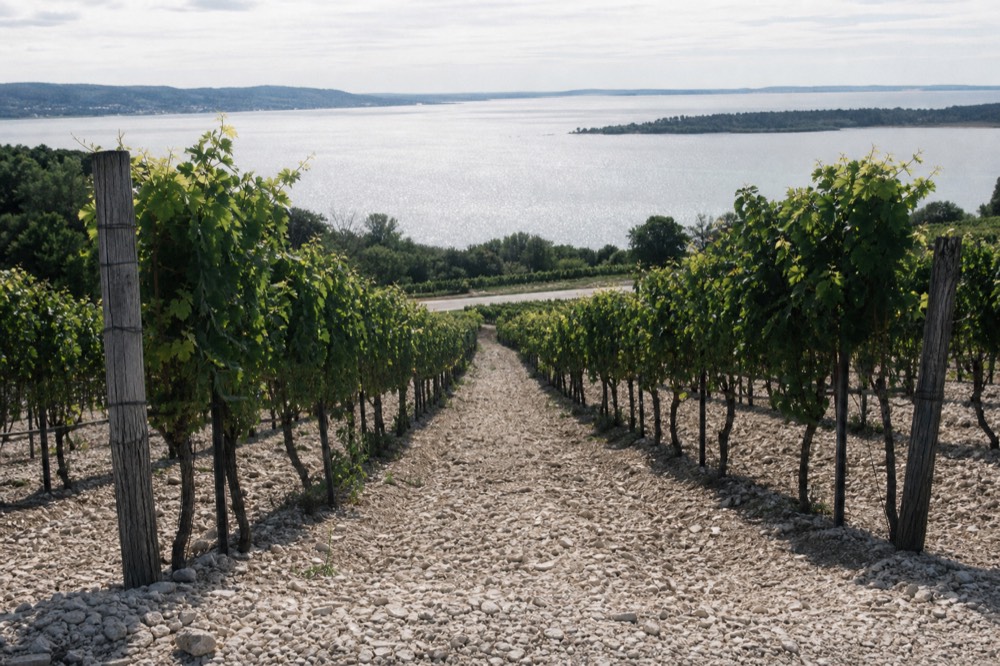
The AVA boundary, from the federal regulation itself, is all of Peninsula Township in Grand Traverse County, excluding Marion and Bassett Islands, plus a small portion of Traverse City Township. The total area is about 19,200 acres, roughly 30 square miles. Planted vineyard acreage on the peninsula is reported at roughly 1,800 acres by Wine Enthusiast, though no official TTB or USDA figure exists for that measure, so treat it as an estimate rather than a census number.
For context on the region, Traverse City Tourism describes the two peninsulas together as producing over 60 percent of Michigan's grapes. If you are weighing this trail against its northern neighbor, our Leelanau Peninsula wine trail guide covers the older, larger AVA, and the head-to-head comparison lives in Old Mission vs Leelanau.
How Many Wineries Are Actually On The Trail?
The Old Mission Peninsula Wine Trail publishes ten wineries on its official trail map, and the member names confirmed on the trail's own site or in live tour itineraries are 2 Lads Winery, Black Star Farms, Bowers Harbor Vineyards, Brys Estate, Bonobo Winery, Chateau Chantal, Hawthorne Vineyards and Mari Vineyards. The full ten-name roster is not reproducible from the trail's fetched page, which loads its winery list dynamically, so this guide names the eight confirmed members and stops there rather than padding the list with invented names.
That honesty matters more than it might seem. Published counts for this peninsula genuinely disagree. Eater Detroit has said Old Mission grew to eleven wineries, while the trail itself says ten. The same problem is worse on Leelanau, where the trail's homepage says "over 20 award winning wineries" while third parties print 23, 25 and 28. The pattern is consistent: trail membership is a voluntary association, and every licensed producer with a tasting room is not necessarily a member. When you read a count anywhere, ask whether it counts trail members or every pouring room.
One wrinkle worth knowing: Black Star Farms appears on both trails. It operates its home estate in Suttons Bay on Leelanau and also pours at a tasting room on Old Mission at 360 McKinley Road East. Anyone adding the two trail counts together to get a regional total will double-count it.
If driving the whole peninsula yourself sounds like more logistics than you want, the two dominant formats are a shared shuttle or a small semi-private vehicle. These three are the main Old Mission options:
The shared shuttle, run by The Magic Shuttle Bus, covers four wineries in five hours from $79 per person, rated 4.9 across 2,666 reviews, with tasting fees paid separately at each stop. The SUV option from Movie Stars Wine Tours runs four to five hours from $69 per person, includes samples and a complimentary bottle, and is rated 5 across 542 reviews. The Escalade version is a 4.5-hour semi-private run, also from $69, with too few reviews for a star claim but the same samples-plus-bottle inclusion. How those inclusions differ in practice is the single biggest cost variable on this peninsula, and it is worth understanding before you book anything.
What Does A Tasting Cost At Each Old Mission Winery?
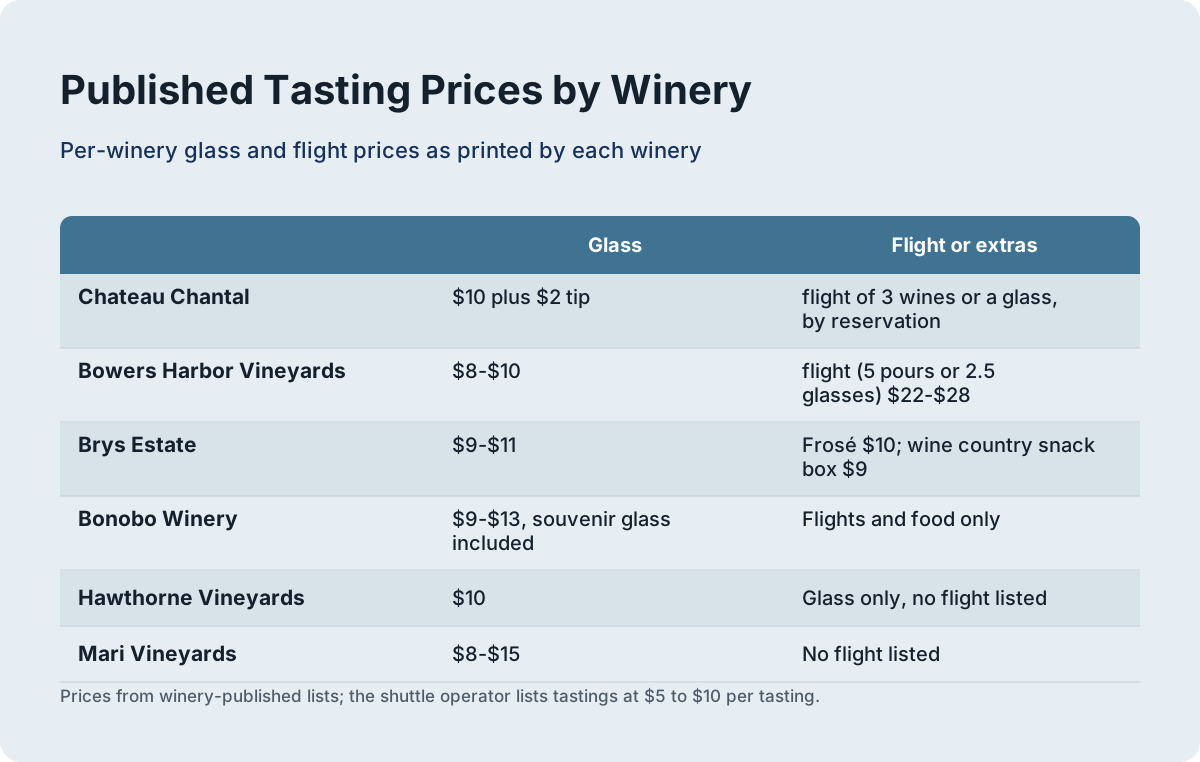
Published per-winery tasting prices on Old Mission range from a $10 flight of three wines at Chateau Chantal to $22 to $28 for a five-pour flight at Bowers Harbor Vineyards, with most glasses running $8 to $15, and the shuttle operator's own listing states tastings range from $5 to $10 per tasting across the peninsula. Those figures come from the operator's published price list, and printing them winery by winery is something no other page in this market does.
Here is the list as published:
| Winery | Published tasting price |
|---|---|
| Chateau Chantal | $10 plus $2 tip, flight of 3 wines or a glass, by reservation |
| Bowers Harbor Vineyards | Glass $8-$10; flight (5 pours or 2.5 glasses) $22-$28 |
| Brys Estate | Glass $9-$11; Frosé $10; wine country snack box $9 |
| Bonobo Winery | Glass $9-$13, souvenir glass included |
| Hawthorne Vineyards | Glass $10 |
| Mari Vineyards | Glass $8-$15 |
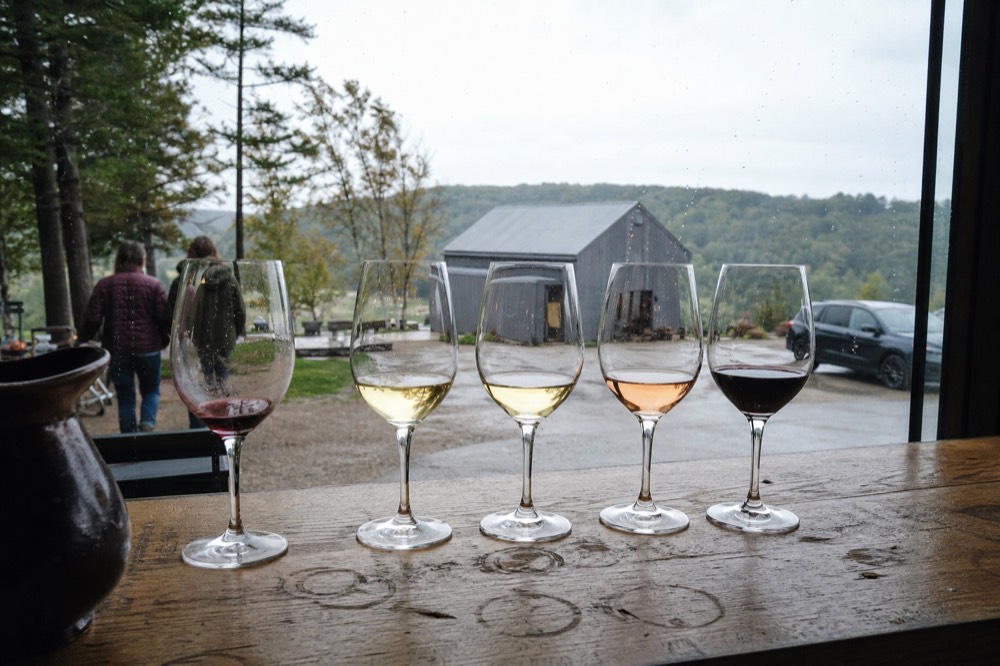
Two practical notes on that table. First, the Chateau Chantal line carries a reservation requirement, which is unusual on this peninsula; most rooms here operate on walk-in traffic outside peak weekends. Second, a "glass" price and a "tasting" price are not the same thing. Several rooms will pour you a full glass at the listed price, while a structured flight costs more and usually comes with the winery's commentary on what you are drinking.
The other cost variable is whether your tour ticket includes any of this. It breaks down cleanly by operator:
| Operator | Vehicle | Are tastings in the fare? | What you still pay at the bar |
|---|---|---|---|
| The Magic Shuttle Bus | Scheduled limo-style shuttle | No, transport only | $5 to $10 per tasting on Old Mission, from the operator's own published list |
| Movie Stars Wine Tours | SUV or Cadillac Escalade | Yes, samples plus a complimentary bottle | Flights and food only |
| Bay Life Getaways | A hired driver in your own car | No | Every pour, at every stop |
The arithmetic is worth doing before you book. A $79 shuttle ticket plus four tastings at the middle of the $5 to $10 range adds up to noticeably more than the ticket price itself once the bar fees are in. A $69 SUV ticket that already includes samples and a bottle is $69 plus whatever flights and food you add. Neither is a rip-off; they are different products. Our wine tour prices guide runs the full comparison across every operator in the market, including the private and group rates.
What Order Should You Drive The Wineries?
Drive north up Center Road, which is M-37, hitting the wineries in ascending order of distance from Traverse City, roughly Bowers Harbor, then the Black Star Farms Old Mission room, then Bonobo, Hawthorne and Brys Estate in the middle stretch, then Chateau Chantal, Mari Vineyards and 2 Lads near the top, and the 45th parallel crosses Center Road a few miles south of the lighthouse at Old Mission Point. That is the shape of the trail: one road in, the same road out, roughly 19 miles from town to the point.
The regulation establishing the AVA describes the boundary as proceeding north 19 miles along the western shoreline until it reaches the lighthouse near Old Mission Point. Center Road follows that spine for almost its whole length, with Bluff Road as the parallel option along the west side. There is no alternate route across the peninsula to speak of, and no cross-peninsula shortcut, because the land is never wide enough for one. A culvert collapse on Center Road near Council Oaks Drive in July 2026 closed the only through-road until a temporary repair reopened it, which is the clearest possible demonstration that this is a single-spine road: when it is blocked, there is no Plan B.
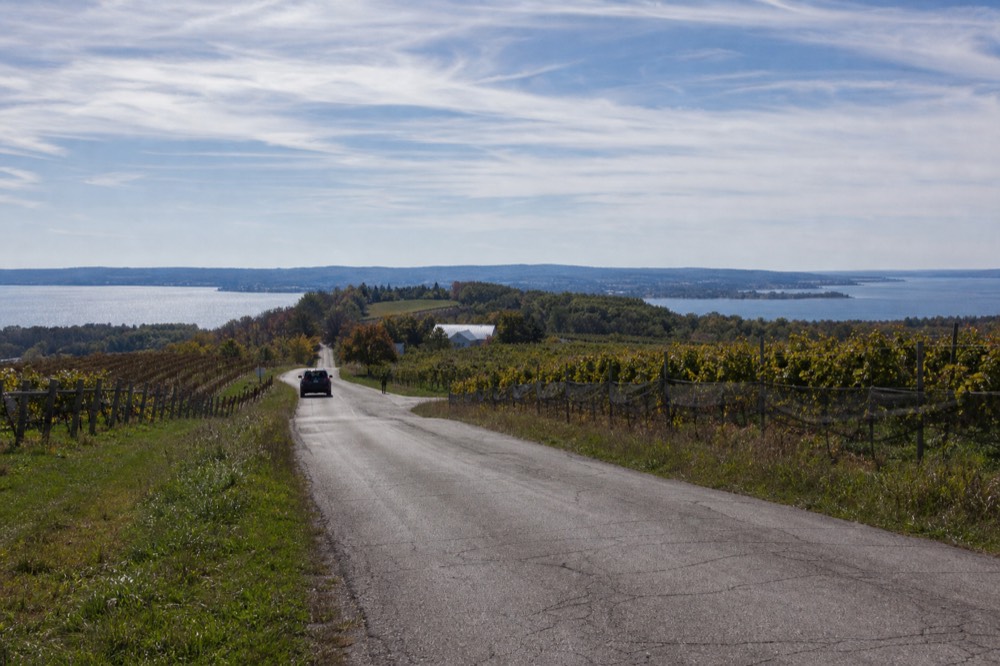
Here is the driving-order skeleton with the distances that matter:
| Stop order | Winery | Position on the peninsula |
|---|---|---|
| 1 | Bowers Harbor Vineyards | Lower peninsula, West Bay side |
| 2 | Black Star Farms (Old Mission room) | Lower peninsula, McKinley Road |
| 3 | Bonobo Winery | Mid peninsula |
| 4 | Hawthorne Vineyards | Mid peninsula |
| 5 | Brys Estate | Mid-to-upper peninsula |
| 6 | Chateau Chantal | Upper peninsula, reservation for tastings |
| 7 | Mari Vineyards | Upper peninsula |
| 8 | 2 Lads Winery | Near the top, East Bay side |
The 45th parallel crossing is one of the trail's quiet landmarks. Traverse City sits on the 45th parallel, halfway between the equator and the North Pole, and the line crosses the peninsula itself a few miles south of the lighthouse. Several of the wineries lean on it in their marketing, and it is more than a bumper sticker: the same latitude band runs through Bordeaux's neighbors and parts of Piedmont, and combined with the bay's moderating effect, it is why vinifera grapes ripen here at all.
Budget three to five hours for a full run up the peninsula with three or four stops, more if you linger over lunch. Tasting rooms are busiest in October, when harvest and fall color overlap, and the rooms at the far north end fill first on peak weekends because everyone drives the same direction. Starting early, or starting from the top and working south against the traffic, are the two moves that consistently beat the crowds. Our best time for wine tasting guide covers the seasonal picture in detail.
Which Wineries Take Reservations, And Which Are Walk-In?
Chateau Chantal is the one Old Mission room with a published reservation requirement for its tastings, on the operator's own price list, while the other named rooms on the trail operate on walk-in traffic in normal conditions, with the practical caveat that October weekends can fill any room on the peninsula regardless of policy. There is no dated, sourced record of reservation-policy changes at any named Old Mission tasting room in 2025 or 2026, so anything more specific than that would be invention.
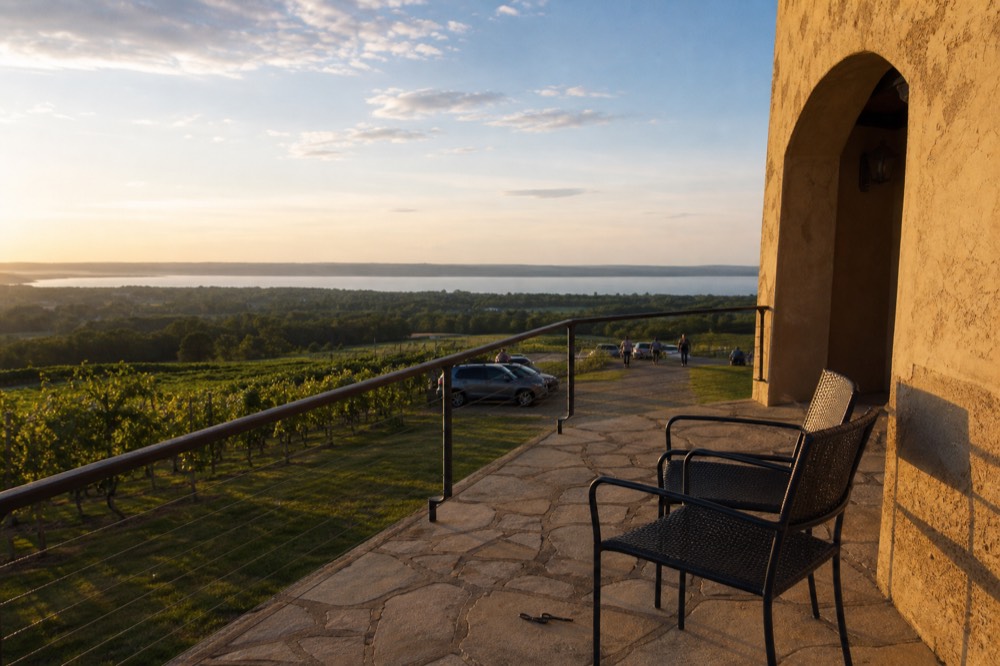
The honest planning advice is therefore simple. If Chateau Chantal is on your list, and it usually is, since its hilltop site above East Bay is one of the most-visited rooms on the peninsula, book the tasting ahead. For everything else, arrive when the rooms open if you are touring on a Saturday in October, and do not over-engineer the rest.
Group travelers face a different constraint. Nothing dated or sourced was found on group-size rules, limo policies or "no buses" policies at any named winery on either trail, so do not assume a hard rule either way. What is documented is that the shared shuttle tours make appointments rather than full reservations at the wineries on their itineraries, per the operator's own listing language, which is the mechanism that lets a 20-person shuttle show up at four rooms in an afternoon without each stop being a surprise.
That appointment structure is also why a tour can be the less stressful format for a first visit. The five-hour shared run handles the logistics:
The Magic Shuttle Bus tour visits four wineries over five hours, from $79 per person, rated 4.9 across 2,666 reviews, with appointments arranged ahead at each stop and tasting fees of roughly $5 to $10 paid at the bar. If you would rather build your own route, our self-guided wine tour guide walks through the driving logistics, and the wine country map page lays out both peninsulas together.
What Is Happening With The Peninsula Township Winery Lawsuit?
In July 2025, U.S. District Court Judge Paul Maloney awarded roughly $50 million, about $49.3 million plus fees and interest in the court documents, to a coalition of eleven Old Mission Peninsula wineries against Peninsula Township, over zoning rules limiting events and on-site sales that the court found unconstitutional, and the judgment has not been paid: the case is on appeal and collection is stayed. The most recent dated development in the case is from March 2026, when the court stayed collection.
The background, reported by MLive, is a five-year legal battle between the Wineries of Old Mission Peninsula and the township over what the wineries may host and sell on site. In October 2025 the wineries proposed a settlement offering noise limits after 9 p.m., 11 p.m. on weekends, and capacity caps tied to state building and fire codes in exchange for a reduction of the damages award. In December 2025 they announced they would begin enforcing the judgment after five months without meaningful settlement engagement. Around the same period, Bonobo Winery, filing as OV the Farm LLC, brought a separate federal suit over enforcement of noise rules the earlier ruling had found unenforceable. Collection was subsequently stayed.
For a visitor, the practical takeaway is limited and should stay that way. The trail's ten wineries are open, pouring and running events; the litigation is about what they may host and sell on site in the long term, not about whether you can taste wine there this weekend. The trail itself maintains a standing page titled "Winery Lawsuit Information" for anyone who wants the current procedural status.
Should You Take A Tour Or Drive Yourself?
Take a tour if you want to taste freely, because Michigan's open-container law, MCL 257.624a, exempts passengers in a chartered vehicle authorized by the state transportation department but bans open alcohol in the passenger area of your own car, which means a hired designated driver at the wheel of your vehicle cannot rely on the exception. That single legal distinction, subsection (4) of the statute, is why the chartered shuttle and SUV operators can advertise drinking on board while the drive-your-own-car product cannot.
The statute makes violation a misdemeanor, and the state's OWI threshold is 0.08, with zero tolerance under 21. Every tour listing in this market states the tour is not suitable for under-21s, which matches the Michigan drinking age. None of this is a scare tactic; it is the actual legal architecture of wine touring in this state, and it is documented on the Legislature's own site.
The practical choice then looks like this:
| Format | Typical price | Tastings included? | Open container on board? |
|---|---|---|---|
| Shared shuttle (The Magic Shuttle Bus) | From $79 per person | No, $5-$10 per stop | Yes, chartered vehicle |
| Semi-private SUV (Movie Stars Wine Tours) | From $69 per person | Yes, samples plus a bottle | Yes, chartered vehicle |
| Private group shuttle, up to 14 | From $699.99 per group | No, fees separate | Yes, chartered vehicle |
| Designated driver in your car (Bay Life Getaways) | From $369 per group, 5 hours | No | No, the exemption does not apply |
The designated-driver product is not a bad option, to be clear. It is private, it is five hours, it is rated 4.8 across 187 reviews, and the route on either peninsula is yours to choose. It simply operates under different drinking rules than the chartered vehicles, and you should know that before you book it. Our wine tour transport guide covers every format in the market, including the local bus option.
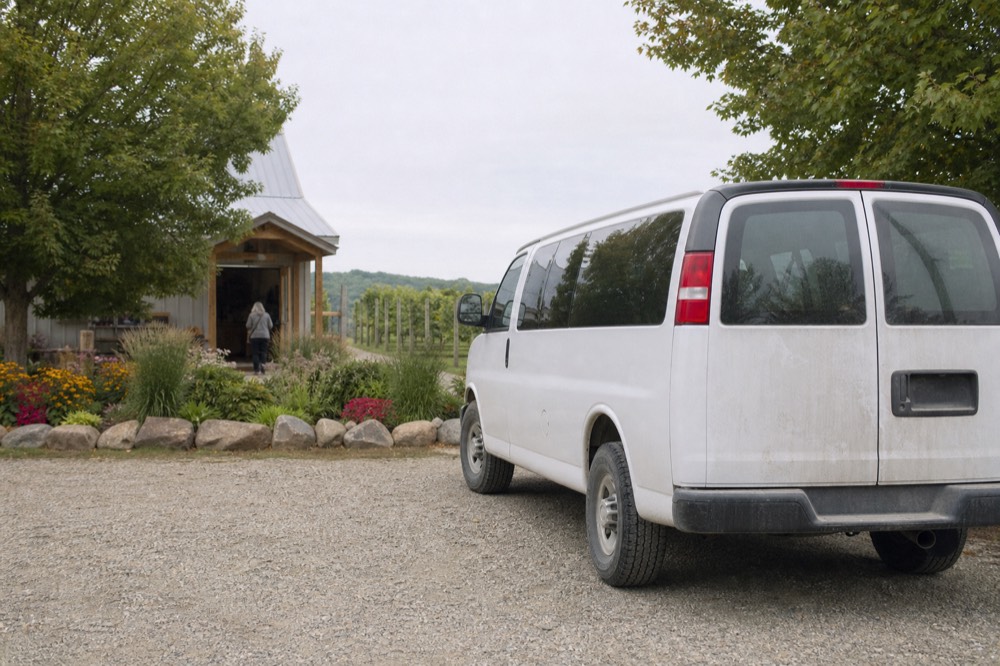
For an evening run, there is a sunset version of the shared loop that shortens the day to three wineries and four hours:
The sunset tour runs from $74 per person, rated 4.9 across 261 reviews, with the same tasting-fee structure as the daytime shuttle. If food matters as much as wine, the wineries with food guide covers which rooms on both peninsulas serve actual meals, and the Traverse City Wine & Dine tour format pairs two Old Mission wineries with downtown food stops.
When Is The Best Time To Drive The Trail?
October is the busiest month on the Old Mission Peninsula wine trail, when harvest and peak fall color overlap, with harvest itself running mid to late September through October and Traverse City Tourism's own guidance placing peak color in the Grand Traverse region between early and mid October, with the peninsulas holding color later than inland areas because the bay moderates the air. That bay-moderation effect is the same mechanism that lets grapes ripen here, which makes the color season and the wine season physically the same story.
The shoulder logic is straightforward. Weekdays in September give you harvest activity without October's crowds. November through March is quiet, sometimes very quiet, with some rooms running reduced hours, though winter has its own draws: ice wine is a real product here, picked frozen from late December into January when temperatures reach about 15°F, and the Old Mission trail publishes its own explainer on how it is made. Our winter wine tasting guide covers the cold-season options.
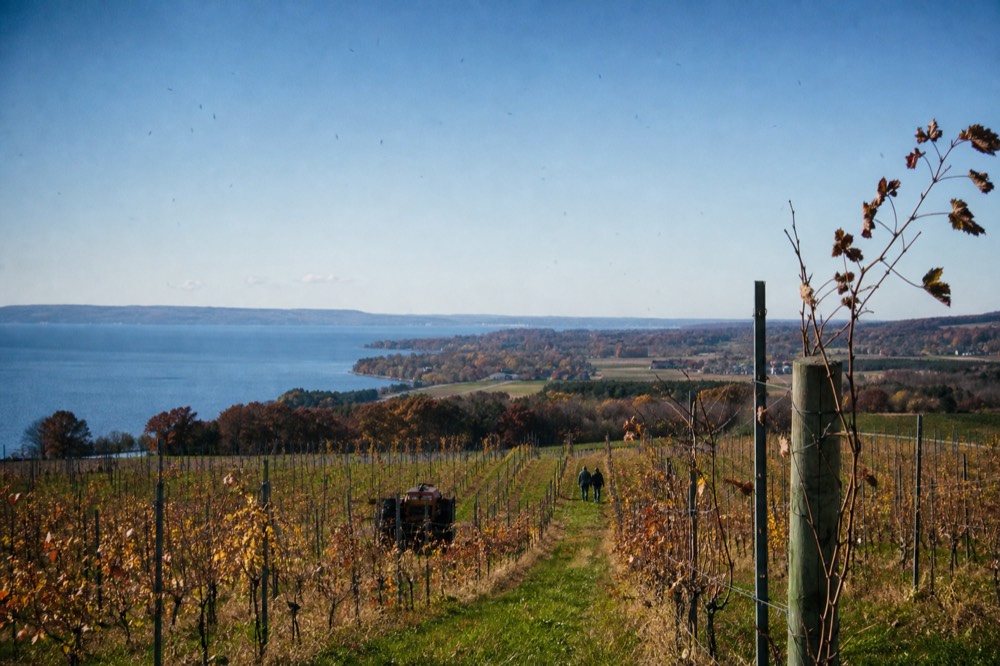
One honest gap: no official peak-color date range exists for this area, and 2026 forecasts from different outlets disagreed, with some projecting around 20 October for the northern Lower Peninsula and others a Leelanau peak of 7 to 13 October. Give yourself a window, not a date, and lean on the peninsulas-hold-color-later fact if you are booking late in the month. For the full seasonal breakdown, see best time for wine tasting.
However you time it, the peninsula rewards the unhurried approach. Ten wineries on a 19-mile road with water on both sides is not a checklist to sprint; it is a single long afternoon with the bay in view the whole way. Traverse City Wine Tours covers both peninsulas in depth, and these are the three Old Mission tours worth comparing for that afternoon:
The questions visitors ask most about the Old Mission Peninsula wine trail come down to six things: how many wineries there are, what a tasting costs, how long the drive takes, where the 45th parallel crosses, whether you can drink on a tour, and which rooms take reservations. Each one has a short, sourced answer, and the details above carry the full context behind every reply.
Common Questions About The Old Mission Peninsula Wine Trail
How many wineries are on the Old Mission Peninsula wine trail?
The trail's own site publishes ten wineries. The member names confirmed on the trail's own site or in live tour itineraries are 2 Lads Winery, Black Star Farms, Bowers Harbor Vineyards, Brys Estate, Bonobo Winery, Chateau Chantal, Hawthorne Vineyards and Mari Vineyards.
How much does a tasting cost on Old Mission Peninsula?
Tastings range from $5 to $10 per winery on average, per the shuttle operator's published list. Individual rooms vary: a flight of three wines at Chateau Chantal is $10 plus a $2 tip, while a five-pour flight at Bowers Harbor Vineyards runs $22 to $28.
How long does it take to drive the Old Mission wine trail?
The peninsula runs roughly 19 miles north from Traverse City to the lighthouse at Old Mission Point. A full run with three or four winery stops takes three to five hours; allow more on October weekends when rooms are busiest.
Where does the 45th parallel cross Old Mission Peninsula?
The 45th parallel crosses Center Road a few miles south of the lighthouse at Old Mission Point. Traverse City sits on the line, halfway between the equator and the North Pole, in the same latitude band as parts of Bordeaux and Piedmont.
Can you drink on an Old Mission wine tour?
Yes, on a chartered tour. Michigan's open-container law, MCL 257.624a, exempts passengers in a chartered vehicle authorized by the state transportation department. The exemption does not apply to a hired driver at the wheel of your own car.
Do Old Mission wineries take reservations?
Chateau Chantal is the one named room with a published reservation requirement for tastings. The other named rooms operate on walk-in traffic in normal conditions, though October weekends can fill any room regardless of policy.