What Is Traverse City Best Known For?
Cherries, two wine AVAs and the water: what Traverse City is actually famous for, what visitors spend their days doing, and how the reputation maps onto the real town.
What Is Traverse City Best Known For?
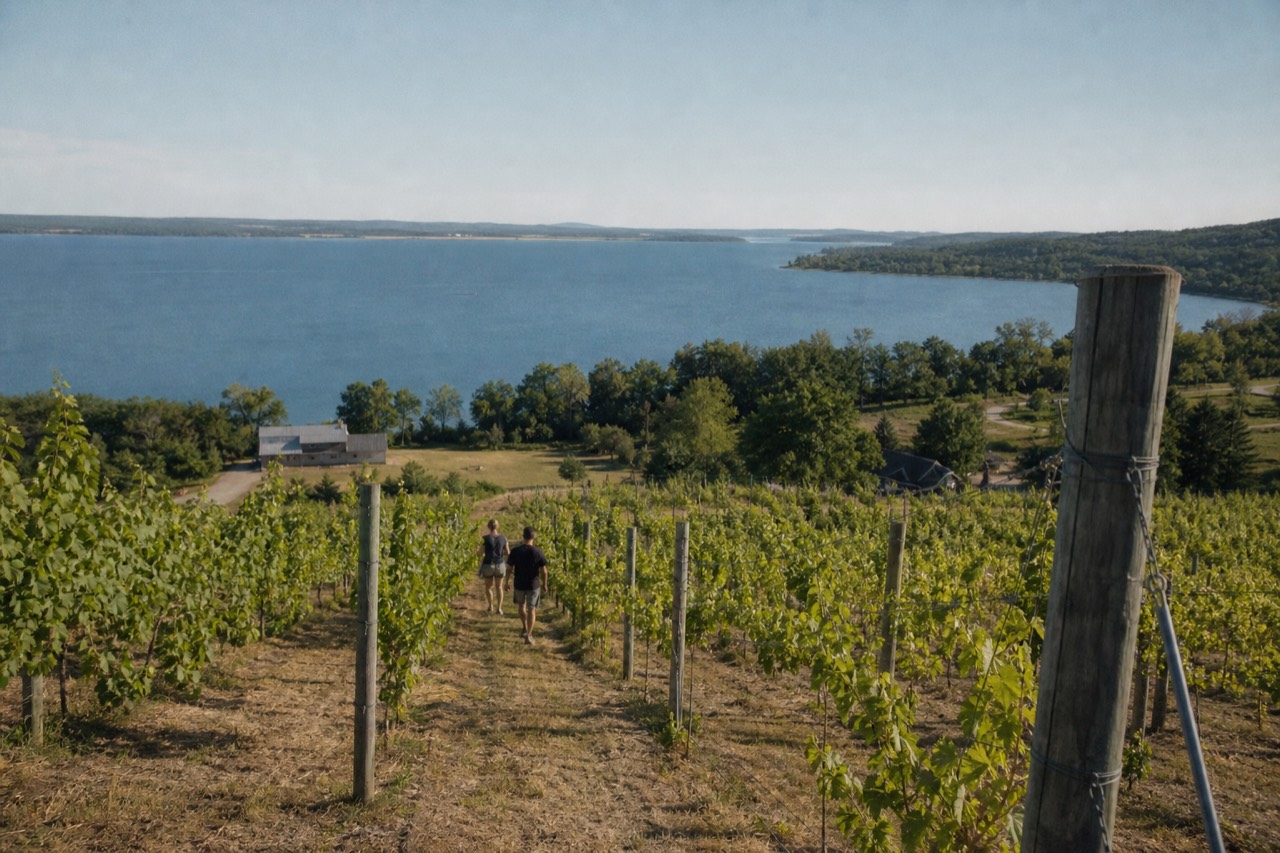
Traverse City is best known for three things, in this order of public recognition: cherries, wine country and the water. It calls itself the Cherry Capital of the World, it sits between two federally recognized wine appellations on Grand Traverse Bay, and its beaches and bayfront are the reason most people can afford to be here in the first place.
That is the reputation. The reality of a visit runs roughly the other way around. Almost nobody flies in, eats a cherry and leaves. They swim, they drive a peninsula, they taste wine, and somewhere in the middle of it they buy a cherry pie, because the cherries are genuinely everywhere and genuinely good.
The scale of the thing is easy to underestimate. Figures Traverse City Tourism presented at its 2026 annual meeting put annual tourism spending across the four-county region above $1.14 billion, per reporting by the Traverse City Record-Eagle. Cherry Capital Airport handled 935,816 passengers in 2025, its third consecutive record year, and was still on record pace through July 2026. This is a small town by population and a serious destination by every other measure.
The town's fame also increasingly includes its food scene. Midwest Living named Traverse City its Food City of the Year in the Best of the Midwest Awards for 2026, and the city placed sixth for Best Small Town Food Scene in the USA Today 10Best Readers' Choice Awards for 2026, as covered by the Detroit Free Press. But the food reputation and the wine reputation are the same story, told twice: this is a region where things grow.
If you want to see the most famous non-cherry half of that story in a single afternoon, the guided options are the simplest route onto the wine trail.
The rest of this page takes the three pillars in the order the public knows them, then looks at what visitors actually book, because the gap between the two is where most trip-planning mistakes happen.
Why Is Traverse City The Cherry Capital?
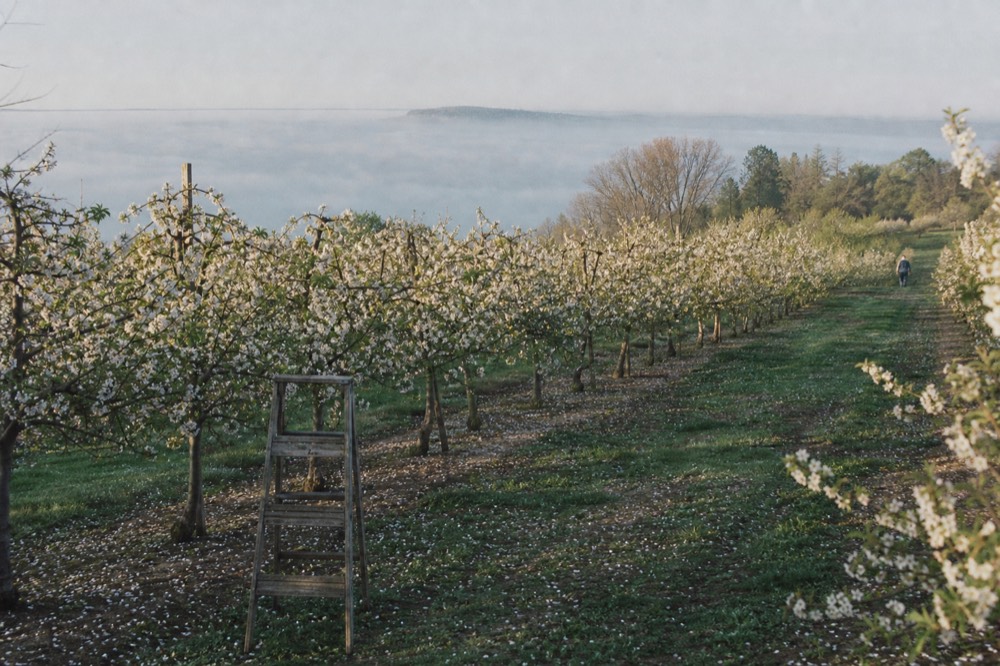
Traverse City is the Cherry Capital of the World because northwest Michigan grows more tart cherries than anywhere else in the country, and the town has celebrated that fact with the National Cherry Festival since 1926. The 2026 festival, which ran 4 to 11 July, marked its hundredth anniversary, and the 2027 dates are already set for 3 to 10 July.
The festival is the town's single biggest civic event, and its centenary was the local story of summer 2026. A hundred years of cherry parades, cherry pie and air shows over the bay is not a marketing invention; it is a genuine century-old institution, confirmed by the festival's own media materials.
The industry behind it is real agriculture at national scale. Michigan's tart cherry crop is a federal statistic: the USDA forecast the 2026 state crop at 83.1 million pounds, the smallest in six years after late-April freeze events damaged buds in some orchards. A short crop does not change the region's standing, but it does show the exposure that comes with being the country's cherry basket.
Cherries also bleed into the wine side of the region in a way visitors rarely expect. Bel Lago's NV Cherry Wine took Gold in the fruit wine category at the 2026 Taste Michigan Governor's Cup Competition, a Leelanau Peninsula winery winning a state award with the town's signature fruit. Cherry wine, cherry cider and cherry desserts sit on tasting room menus across both peninsulas. We cover the cherry story in more depth in our piece on why Traverse City is the city known for cherries.
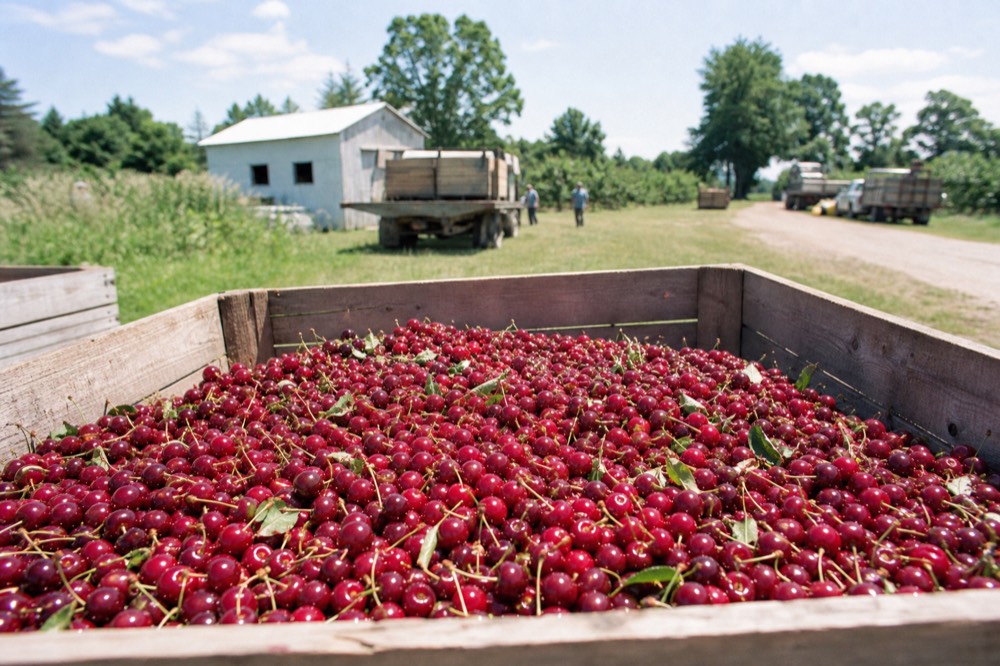
What the cherry reputation does not do is fill your day. The festival occupies one week in July. Outside that week, the cherry presence is a farm market, a pie, a wine and a roadside stand, all excellent, none of them an itinerary. That is the first and biggest gap between what the town is known for and what visitors actually do here.
How Did Traverse City Become Wine Country?
Traverse City became wine country because two peninsulas jutting into Grand Traverse Bay, Old Mission and Leelanau, were federally designated as American Viticultural Areas, in 1987 and 1982 respectively, and together they now produce over 60 percent of Michigan's grapes, according to Traverse City Tourism.
The AVA designations are legal facts, not marketing labels. Old Mission Peninsula was established on 8 June 1987 under 27 CFR 9.114, covering about 19,200 acres of a peninsula no more than three miles wide at any point. Leelanau Peninsula was established on 30 March 1982 under 27 CFR 9.40, five years earlier, across all of Leelanau County excluding the offshore islands. Lake Michigan moderates the air on both, extending the growing season far past what this latitude would otherwise allow. Traverse City sits on the 45th parallel, the same band that runs through parts of Bordeaux and Piedmont.
The trails' own numbers anchor the scene: the Old Mission Peninsula Wine Trail lists ten wineries, and the Leelanau Peninsula Wine Trail describes itself as over 20 award-winning wineries, with 23 members on its live list. Black Star Farms appears on both, so simple addition double-counts it. We untangle the counts in how many wineries are near Traverse City.
| Region | Legal status | Wineries on the trail | Signature experience |
|---|---|---|---|
| Old Mission Peninsula | AVA since 1987, 27 CFR 9.114 | 10 | A 19-mile drive up one spine of a road, water on both sides |
| Leelanau Peninsula | AVA since 1982, 27 CFR 9.40 | Over 20, 23 members listed | Loops through farm country, Sleeping Bear to the west |
| Traverse City itself | Not an AVA | Urban tasting rooms, including Left Foot Charley | Wine without driving |
Statewide, the industry's own numbers frame the scale. Michigan wine's industry site cites 775 family-owned farms and 3,375 acres of vineyards, and there are 258 commercial wineries statewide by Michigan Craft Beverage Council data reported through Crain's. The 2025 WineAmerica economic impact study puts Michigan wine's total economic activity at $8.96 billion, supporting 52,939 jobs. Riesling is the most-planted wine grape in the state, at roughly 670 of those 3,375 wine-grape acres, and cool-climate varieties carry the north.
The wine reputation is the one that fills itineraries, and this is where the town's fame and its visitor behavior diverge hardest. Cherries made Traverse City famous; wine is what people book. The Old Mission half of the region is the tighter, easier half for a first visit, and we lay out the whole trail in our Old Mission Peninsula wine trail guide.
The Magic Shuttle Bus runs the most-reviewed wine tour in the market: a five-hour shared run to four Old Mission wineries, from $79 per person, rated 4.9 across 2,666 reviews. Tasting fees are extra, generally $5 to $10 per stop on Old Mission.
That shuttle format is the one most first-time visitors end up on, and the question that usually decides it is simple: do you want the biggest-reviewed tour in the region on the peninsula closest to town, or a different vehicle, a different peninsula, a different price? Either way, the seat is easier to get before October fills it.
Is Traverse City A Beach Town Too?
Yes, and more than most visitors expect: Traverse City fronts both arms of Grand Traverse Bay, with a public beach and a lighthouse within sight of downtown, and the freshwater coastline of Leelanau County, including Sleeping Bear Dunes National Lakeshore, sits half an hour west.
The water is the quiet third pillar of the reputation and, in practice, often the first thing people do. The bay is why the town exists where it does, why the airport is busy, and why the peninsulas can grow wine grapes at the 45th parallel at all. The same lake effect that insulates the vines keeps the beaches swimmable in summer and the fall colour lingering on the peninsulas later than inland Michigan.
Sleeping Bear Dunes is the headline excursion. The National Park Service lists fee-free entrance days each year, and the Pierce Stocking Scenic Drive is open to vehicles roughly late May through late October, weather depending. One thing worth knowing if your Leelanau plans include the islands: Manitou Island Transit ran no ferry service to North or South Manitou Island for the entire 2026 season because the National Park Service closed both island docks for reconstruction, with service expected to resume in 2027. Plenty of older travel pages still tell you to hop that ferry.
The water and the wine are not separate attractions. They are the same geography. A wine tour on either peninsula is, among other things, a drive along two shorelines, and the tasting rooms with the best views are the ones that leaned into that fact. Our wineries with views guide covers that angle in full.
What Do Visitors Actually Book In Traverse City?
Visitors book wine tours, brewery tours and boat time, in roughly that order, with the cherry festival and the food scene layered on top. The town's fame runs cherries, wine, water; the booking data of the tour market runs wine, beer, water, with cherries as an edible souvenir.
That inversion is the most useful thing a planner can know. Nobody needs to schedule cherries; they will find you. Wine is the thing that benefits from a reservation, a driver and a plan, because the wineries are spread along two rural peninsulas and tasting fees, formats and vehicles differ sharply between operators.
| What Traverse City is known for | What a visitor actually books | Why the gap exists |
|---|---|---|
| Cherries, the Cherry Capital | A pie, a farm market stop, festival week in July | The cherry presence is everywhere but needs no booking |
| Two wine AVAs | A 4 to 5 hour guided wine tour on one peninsula | Tasting rooms are rural and spread out; a driver solves logistics and the open-container question |
| Grand Traverse Bay | Beach time, a boat, a drive to Sleeping Bear | Free, flexible, weather-dependent |
| The food scene | Dinner reservations downtown | Compact, walkable, easy to add around a tour |
| Craft beer and cider | Brewery and distillery tours | The same operators run them in the same vehicles |
The format choice matters more here than in most wine regions, because of one legal detail that most visitors never hear about. Michigan's open-container law, MCL 257.624a, bans open alcohol in a vehicle's passenger area, but subsection (4) exempts passengers in a chartered vehicle authorized by the state transportation department. That is why the bus and SUV tours can pour on board, and it is a genuine, structural reason to take a chartered tour rather than improvise. Every tour in the market also states it is not suitable for under-21s, matching the state's drinking age.
The fee structure is the other sharp divide. The Magic Shuttle Bus tours are transport only, with tasting fees of roughly $5 to $10 per stop on Old Mission and $5 to $15 on Leelanau paid at the bar. Movie Stars Wine Tours includes samples plus a complimentary bottle in its fares, with flights and food extra. Bay Life Getaways puts a hired driver at the wheel of your own car, from $369 per group, with every pour paid at every stop. We break all of this down in our wine tour prices guide.
For groups whose interests run wider than wine, the same SUVs and drivers run a brewery and distillery route: four to five hours, from $69 per person, samples included, food and take-home bottles not.
When Should You Visit For The Cherries And The Wine?
The cherry and wine calendar peaks from July through October: festival week in early July for the cherry celebration, harvest and fall colour from mid-September through October for the wine side, and late January for ice wine, the region's signature winter oddity, when grapes are picked frozen on the vine.
The two calendars barely overlap, which is the town's quiet advantage. July owns the cherries. October owns the wine rooms, which are busiest when harvest and fall colour arrive together, and Traverse City Tourism's own guidance puts peak colour in the region between early and mid October, with the peninsulas holding their colour later than inland areas because the bay moderates the air.
Winter is not dead either. Ice wine grapes are picked frozen, typically late December into January, and Chateau Chantal's Ice Wine Festival was held on 31 January 2026 as one example of an annual late-January event. Snowshoe, Wine and Brew tours ran every Sunday from early January through early March 2026 on Old Mission. Our best time for wine tasting guide covers the whole year.
| Period | What is happening | Best for |
|---|---|---|
| Early July | National Cherry Festival, 2027 dates 3 to 10 July | The full cherry-capital experience |
| July to August | Peak beach season, busiest lodging | Water first, wine second |
| Mid-September to October | Grape harvest, peak fall colour, busiest tasting rooms | Wine touring at full tilt |
| November | Toast the Season weekends on the Leelanau trail | Indoor tasting with pairings |
| Late December to January | Ice wine harvest, winter tasting events | A quieter, stranger, colder wine country |
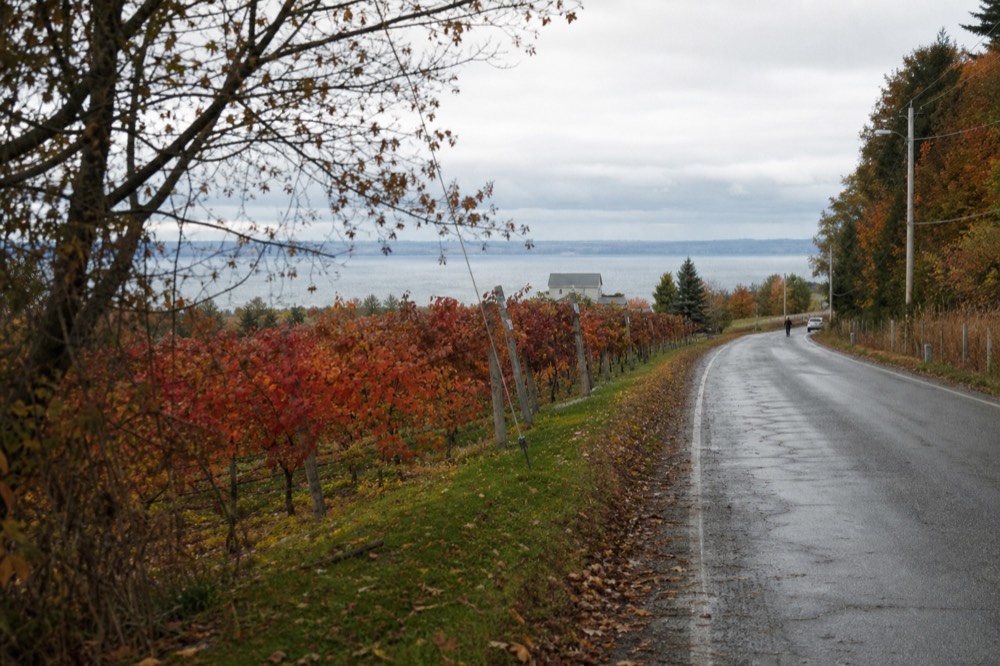
One planning note that follows from all of the above: the reputation draws crowds on the same weeks the region is at its best. October tasting rooms are busy, festival week is busy, and the airport's record years are not an accident. Booking wine tours ahead is not fussiness here; it is the difference between a seat in a chartered shuttle and an afternoon of driving yourself between tasting rooms, which, given the open-container law above, defeats a good part of the point.
Where Does The Food Reputation Come From?
The food reputation comes from the same growing conditions that make the wine possible: orchards, farms and lake fish feeding a small downtown restaurant scene that has now drawn national notice, including Midwest Living's Food City of the Year award for 2026 and a James Beard semifinalist chef at Modern Bird.
Andy Elliott and Emily Stewart of Modern Bird were named semifinalists for Best Chef: Great Lakes in the 2026 James Beard Awards, announced in January 2026; no northern Michigan nominee advanced to finalist that year, which is worth saying plainly. The scene is real but young, and it turns over: long-running spots closed in 2025, including J&S Hamburg Downtown after 87 years, while new openings such as Frank's 231 and Right Bower Kitchen and Coffee on Old Mission arrived through 2025.
For a wine-tripping visitor, the practical takeaway is that dinner downtown pairs naturally with an afternoon on a peninsula. Several tours are built exactly that way, including a wine and dine format that pairs two Old Mission wineries with downtown food stops. Our where to eat in Traverse City piece tracks the openings and closures so you do not end up at a door that shut last year, which is the standard failure of every stale food list.
The food, the wine and the cherries are, in the end, one story: a glacially carved, lake-moderated growing region that happens to have a good small city sitting between its two farming peninsulas. That is what Traverse City Wine Tours exists to help you navigate, and it is why the honest answer to what the town is known for has three parts rather than one.
However you order the three pillars, a guided day on a wine trail is the single activity that touches all of them at once: the orchards on the drive out, the vines at the stops, and the bay in every view. These are the three formats worth comparing first.
Traverse City is best known for cherries, wine and water, and the questions below cover the details: whether the Cherry Capital title is earned, how many wineries sit near town, which peninsula suits a first visit, when to come, and whether you can legally drink on a tour vehicle. Each answer pulls the verified figures from the sections above.
Common Questions About Traverse City
What Is Traverse City Best Known For?
Cherries, wine and water, in that order of fame. Traverse City calls itself the Cherry Capital of the World, hosts the National Cherry Festival, sits between the Old Mission and Leelanau Peninsula AVAs which together produce over 60 percent of Michigan's grapes, and fronts both arms of Grand Traverse Bay.
Is Traverse City really the Cherry Capital of the World?
It is the commercial and cultural center of northwest Michigan's tart cherry country, which produces the bulk of the United States tart cherry crop. The town has held the National Cherry Festival since 1926; the 2026 edition marked its centenary.
How many wineries are near Traverse City?
The trails' own numbers are ten wineries on the Old Mission Peninsula Wine Trail and over 20 on the Leelanau Peninsula Wine Trail, which lists 23 members. Black Star Farms appears on both, so adding the two trails together double-counts it.
Which peninsula should a first-time visitor tour, Old Mission or Leelanau?
Old Mission is the tighter first visit: ten wineries along a single 19-mile road with water on both sides, minutes from downtown. Leelanau is bigger, more varied and pairs with Sleeping Bear Dunes. Our old mission versus leelanau comparison walks the choice in detail.
When is the best month to visit Traverse City?
July for the festival and beaches, October for harvest, fall colour and peak tasting-room energy. Traverse City Tourism's guidance puts peak colour between early and mid October, with the peninsulas holding colour later than inland areas.
Can you drink on a wine tour in Traverse City?
On a chartered tour vehicle, yes. Michigan's open-container law exempts passengers in a chartered vehicle authorized by the state transportation department, which is why the bus and SUV operators can allow drinking on board. In a private car, including one driven by a hired designated driver, the open-container ban still applies.