What Is Glen Arbor Known For?
Glen Arbor is the gateway village to Sleeping Bear Dunes National Lakeshore, and it sits inside Leelanau County, the same county boundary that defines the Leelanau Peninsula AVA. Here is what to do there and how to pair the dunes with wine country.
What Is Glen Arbor Known For?
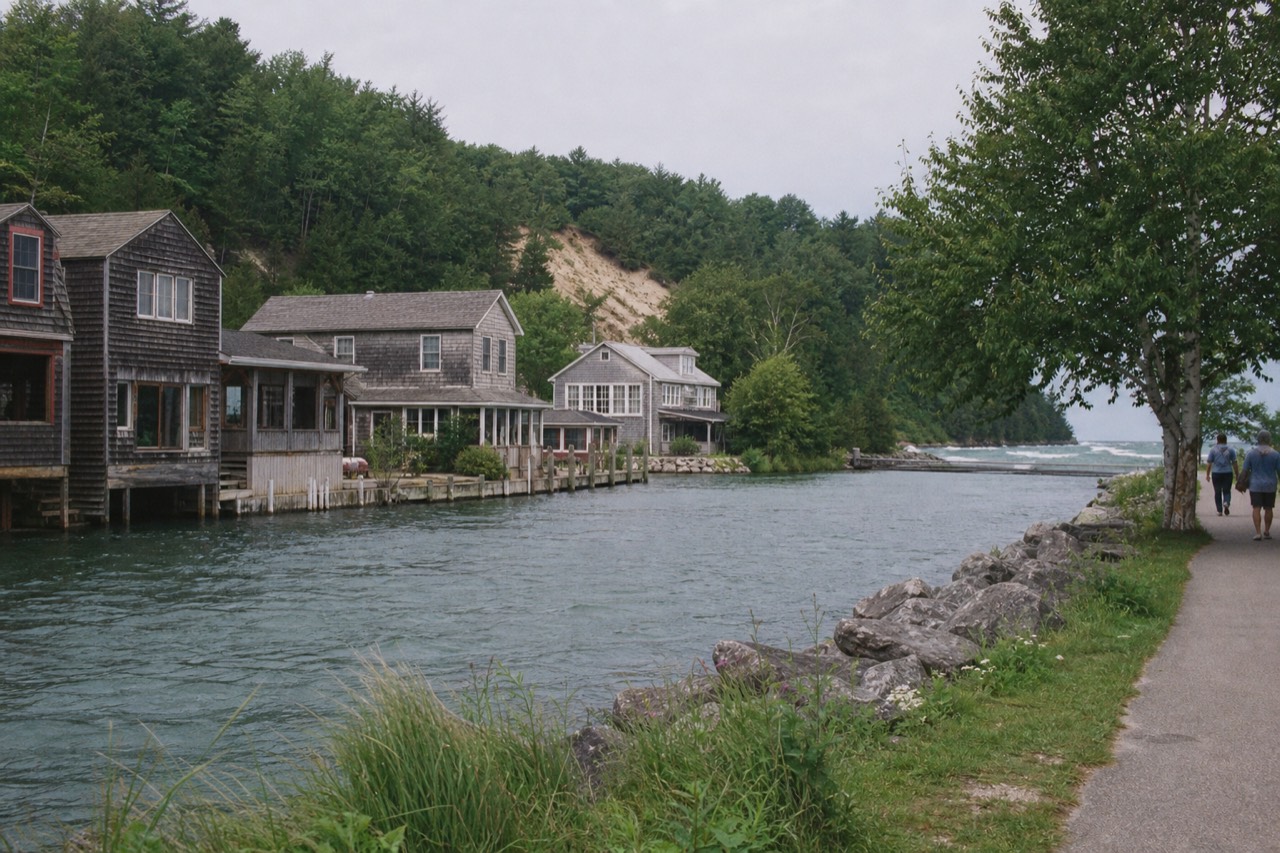
Glen Arbor is known as the gateway village to Sleeping Bear Dunes National Lakeshore, the federal park that covers the Lake Michigan shore of the Leelanau Peninsula. It is a base for the Dune Climb, the Pierce Stocking Scenic Drive, Glen Haven's historic dock and Port Oneida's farm landscape, all inside a county that also happens to be a federally recognized wine appellation.
That last clause is the part most travel coverage misses, and it is the reason this site cares about Glen Arbor at all. The Leelanau Peninsula AVA, established 30 March 1982 under 27 CFR 9.40, is legally defined as all of Leelanau County excluding the offshore islands. Glen Arbor sits in Leelanau County. So does the national lakeshore. The boundary that Congress drew around the dunes and the boundary that federal regulators drew around the vineyards are, in practical terms, the same line: the county line. You can stand at the Dune Climb in the morning and be inside wine country the entire time, and no article about the dunes ever tells you that.
The village itself is small, a cluster of shops, a grocery, a couple of restaurants and inns stretched along M-22 between Glen Lake and Lake Michigan. People do not come to Glen Arbor for the village the way they come to Traverse City for downtown. They come for what surrounds it: two large lakes, the Crystal River, the dunes, and a stretch of shoreline under federal protection.
What that means for a wine traveller is simple. Glen Arbor is not a wine destination in itself, but it is one of the best places to sleep in the middle of wine country, and it puts the single most famous landscape in northern Michigan within fifteen minutes of tasting rooms. A day that combines both is not a compromise, it is the best version of a Leelanau day.
How Far Is Glen Arbor From Traverse City?
Glen Arbor sits roughly 30 miles northwest of Traverse City, about a 40 to 45 minute drive out M-72 and M-22 when traffic is light, and longer on a summer Saturday. The road out of town, Grandview Parkway and Bay Shore Drive, was fully reconstructed in a $25.8 million project finished in March 2026, so the drive is smoother than older trip reports suggest.
The route matters as much as the distance. You leave Traverse City on M-72 West, which becomes M-22 at the corner of the bay, and then follow M-22 up the western shore of Leelanau. That single road is the spine of the whole peninsula: Suttons Bay, Northport, Leland, Glen Arbor and Empire all sit on it or a short detour off it. Anyone planning a wine trip around the Leelanau Peninsula Wine Trail will drive pieces of this road repeatedly, so it is worth knowing its character, tight curves, lake views on one side, orchards and vineyards on the other.
If you are basing yourself in Traverse City and want to see Glen Arbor and the dunes, the honest arithmetic is this: the drive out plus a few hours at the lakeshore plus the drive back is a half-day commitment on its own. Add tastings and you have a full day, which is exactly why the pairing below works. If you would rather not drive it yourself at all after tasting, that is what the private designated driver products are for.
Here is how the two places compare for a visitor deciding where to spend time and where to sleep.
| Traverse City | Glen Arbor | |
|---|---|---|
| What it is for | Restaurants, lodging, departures for wine tours, both peninsulas from one base | Sleeping Bear Dunes access, Glen Lake, small-village quiet |
| Distance apart | Roughly 30 miles via M-72 and M-22, about 40 to 45 minutes | Same |
| Wine access | Every shared and private tour departs here; Old Mission is 15 minutes away | Tasting rooms on M-22 south toward Suttons Bay; the full trail is a drive |
| Best use in a plan | Sleep and eat here, tour from here | Day trip or one-night stay inside the dunes landscape |
What Is Sleeping Bear Dunes And Why Do People Go?
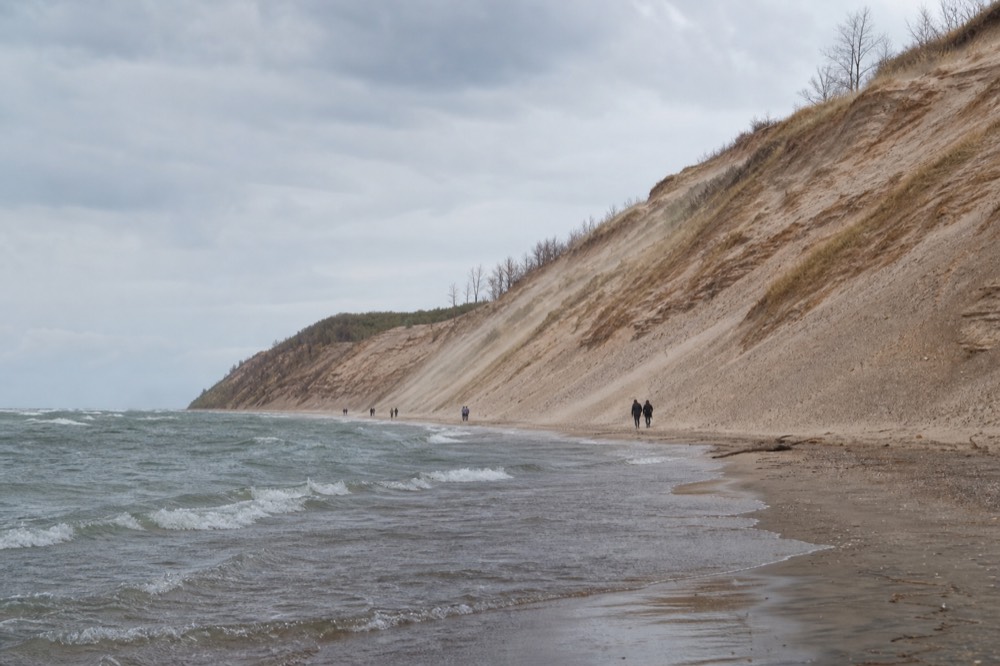
Sleeping Bear Dunes National Lakeshore is the national park unit that stretches along the Lake Michigan shoreline of the Leelanau Peninsula, and Glen Arbor is its front door. People go for the Dune Climb, the Pierce Stocking Scenic Drive, the Empire Bluff and Pyramid Point overlooks, and the Sleeping Bear Dune itself, the towering headland from the Ojibwe story the park is named for.
The park's hold on people is not subtle. The Dune Climb is exactly what it sounds like, a wall of loose sand you walk straight up, and it is the single most crowded spot in the park on a summer afternoon. The Pierce Stocking Scenic Drive is a seven-mile loop road through beech and maple forest with three overlooks perched hundreds of feet above the lake, and it is the fastest way to understand why this stretch of shore keeps winning national attention. The drive is open to vehicles only from roughly late May until late October, weather depending, and outside that window it belongs to walkers and hikers, per the National Park Service's own Pierce Stocking Scenic Drive page.
Glen Haven, just south of the village, is the park's restored company town: a blacksmith shop, a cannery museum, and the dock where the restored fishing vessels sit. Port Oneida, north of the village, is one of the most intact agricultural landscapes in the national park system, farmsteads and fields from the late 1800s left largely as they were. Neither has anything to do with wine, and both are worth more time than most itineraries give them.
One honest correction to older guidebook material: many pages still tell you to catch the Manitou Island Transit ferry from Leland out to North and South Manitou Islands. There was no ferry service at all in the 2026 season because the National Park Service closed both island docks for reconstruction, and the operator expects service to resume in 2027. If an island day is part of your plan, check the operator's own site before you build a day around it.
Is Glen Arbor Actually In Wine Country?
Yes, in the legal sense that matters. The Leelanau Peninsula AVA is defined in federal regulation as all of Leelanau County, excluding the offshore islands, and Glen Arbor is in Leelanau County. Every acre of vineyard between the village and the county line grows inside a federally recognized appellation established in March 1982, five years before Old Mission got its own.
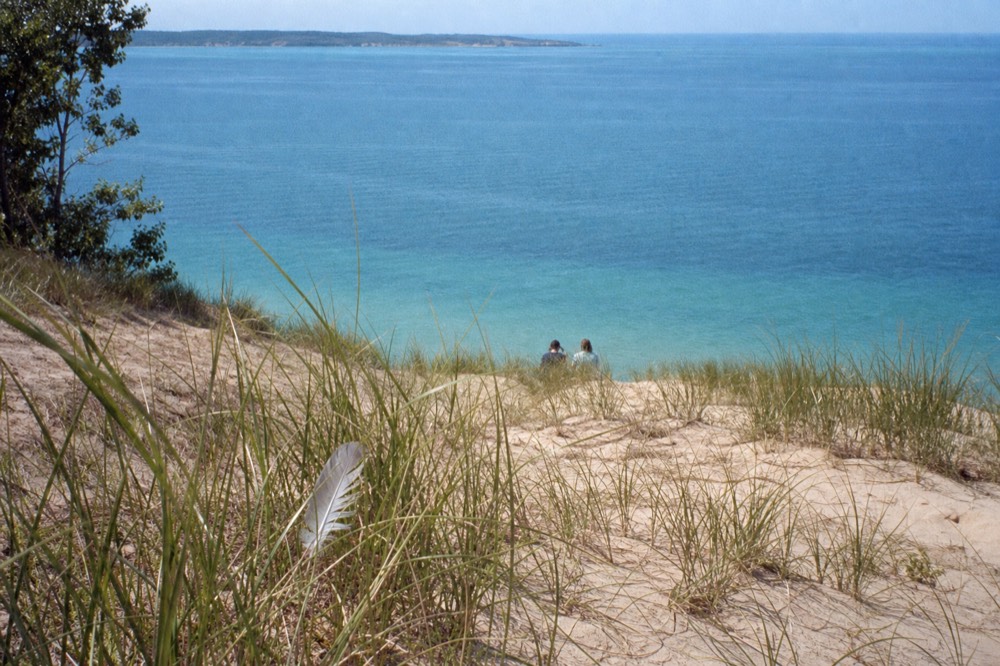
This is the connection this site owns and no dunes article makes. Most coverage treats Sleeping Bear Dunes and the Leelanau wine trail as two separate attractions that happen to be on the same peninsula. They are more entangled than that. The same glacial geology that piled the dunes along the shore also left the gravelly ridges the vines grow on inland, and the same Lake Michigan that carved the bluffs moderates the air over the vineyards enough to let vinifera grapes ripen this far north. Traverse City Tourism's own description of the region credits the lake's moderating effect with extending the growing season and allowing grape ripeness. The dunes and the vineyards are two outputs of one landscape.
The practical version: the Leelanau Peninsula Wine Trail lists over 20 member wineries on its own site, and several of them sit on or just off M-22 between Glen Arbor and Suttons Bay, the same road you drive to reach the dunes. Shady Lane Cellars, one of the trail's older names, is a short drive south of the village. Black Star Farms in Suttons Bay, which appears on both peninsulas' trails, is on the way back toward Traverse City. You do not leave wine country to see the dunes, you drive through it.
For readers deciding between the two sides of the bay, the comparison guide on Old Mission versus Leelanau breaks down the differences in winery count and character, and the Leelanau Peninsula wine trail guide covers the tasting rooms themselves. This is also why Traverse City Wine Tours treats the whole county, dunes included, as one wine region rather than two separate trips.
Can You Do The Dunes And Wineries In One Day?
Yes, and it is the best single-day shape for the Leelanau Peninsula: dunes in the morning while the sand is cool and the overlook lots are empty, lunch in Glen Arbor or Empire, then two or three tasting rooms on M-22 in the afternoon, ideally ending with a sunset tour. The whole loop is under 60 miles of driving if you plan the stops in order down the peninsula.
The key is direction. Work from the far end back toward Traverse City. Drive out M-72 and M-22 to Glen Arbor first, do the Dune Climb and the Pierce Stocking Scenic Drive before noon, eat in the village, then taste your way south and east with the drive home getting shorter at every stop. Doing it in reverse means finishing the day with the longest drive of the evening, which is exactly the wrong time to be behind the wheel after a tasting.
Here is a realistic day plan with honest drive times. These are planning figures for a normal traffic day, not promises; allow more on summer weekends.
| Time | Stop | What you do | Drive to next |
|---|---|---|---|
| 9:00 | Leave Traverse City | M-72 West to M-22 | About 40 minutes to Glen Arbor |
| 9:45 | Dune Climb and Pierce Stocking Scenic Drive | Climb the dune, drive the overlook loop | 10 minutes |
| 12:00 | Lunch in Glen Arbor or Empire | Village restaurants, grocery picnic | 15 to 25 minutes |
| 1:30 | First tasting room on M-22 south | Shady Lane Cellars area | 15 to 20 minutes |
| 3:00 | Second tasting, Suttons Bay direction | Black Star Farms area | 20 to 25 minutes |
| 5:00 | Head back toward Traverse City | Or hand the wheel to a tour or driver | 20 to 30 minutes |
The obvious flaw in that plan is the last row: three tasting stops and then a drive. That is why the guided formats exist. A shared five-hour Leelanau tour handles the route and the appointments for you, and an evening sunset tour means the driving happens before the pours. There is also a legal wrinkle worth knowing: Michigan's open-container law exempts passengers in a chartered vehicle authorized by the state transportation department, which is why the bus and SUV tours can pour on board, while a hired driver at the wheel of your own car cannot rely on that exemption. The wine tour transport guide covers that distinction in full.
If you would rather taste in the evening after a dunes day, the sunset format is built for exactly that.
For a daytime version that still leaves your morning free, the shared five-hour Leelanau tour is the other natural fit.
When Is The Best Time To Visit Glen Arbor?
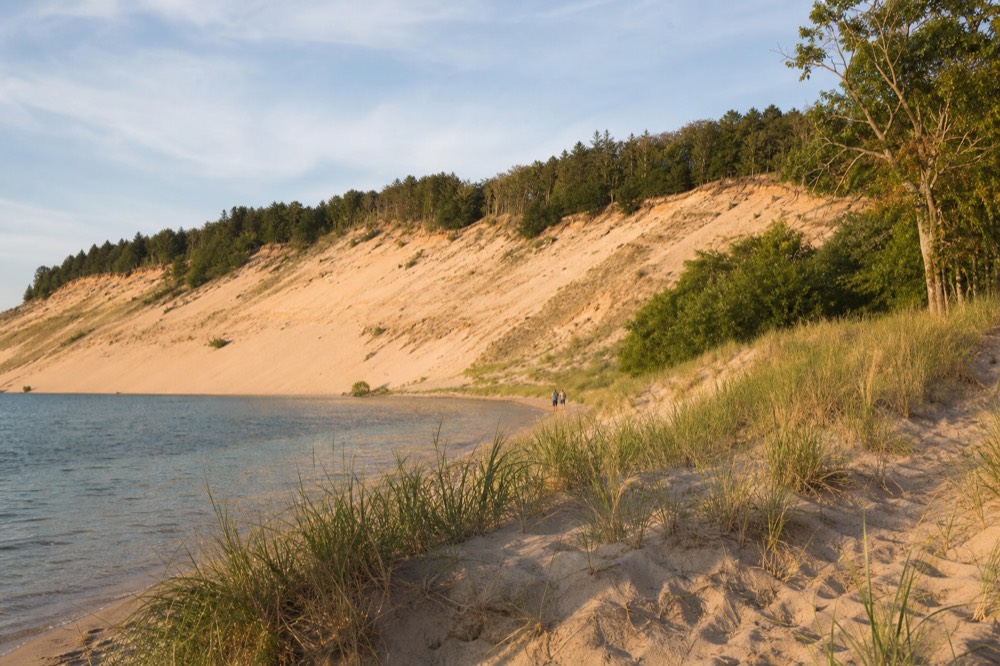
Late September through mid October is the strongest window, when harvest, fall colour and the last weeks of the Pierce Stocking Scenic Drive overlap, though the drive's vehicle season runs roughly late May to late October and summer is when the water and the village are at their busiest. October is the busiest month for the region's tasting rooms, so book lodging and tours early for that window.
The fall colour timing is genuinely worth getting right, and the forecasts for 2026 disagreed with each other. The Detroit Free Press and USA Today Network projected peak in the northern Lower Peninsula around 20 October, while More Than Just Parks forecast a Leelanau County peak of 7 to 13 October. Traverse City Tourism's own guidance is early to mid October, with one physical detail that matters here: air off Lake Michigan keeps the peninsulas insulated, so their colour often lingers toward the end of the month after inland areas have gone bare. The same water moderation that lets grapes ripen here holds the leaves longer. The fall colors route guide builds a full driving plan around that mechanism.
If you go in the shoulder window, know the trade-offs. Before late May and after late October the scenic drive is closed to cars, though hikers can still use it, and the village is quiet. In deep winter the lakeshore becomes a snowshoe and cross-country landscape, and a handful of Leelanau tasting rooms stay open, which makes a quiet winter weekend possible but not lively. The fee-free entrance days at Sleeping Bear Dunes in 2026 included 16 February, 25 May, 14 June, the 3 to 5 July window, 25 August, 17 September and 11 November, per the National Park Service fees page; otherwise the lakeshore charges its standard entrance fee.
One more seasonal note for the wine side: harvest in this region runs mid to late September through October, and ice wine grapes are left on the vine and picked frozen from late December into January. If your Glen Arbor trip lands in October, you are driving through the middle of the grape harvest, and tasting room staff will tell you about it whether you ask or not.
What Else Is Around Glen Arbor?
Glen Lake and the Crystal River sit immediately east and south of the village, the Port Oneida farm district stretches north, and the towns of Empire, Leland and Suttons Bay sit within half an hour along M-22. Each one adds something different: Empire for the dunes' southern access, Leland for Historic Fishtown, Suttons Bay for the densest run of Leelanau tasting rooms.
Glen Lake deserves a specific mention because it is not a footnote. It is a large, remarkably clear lake split into Big and Little Glen, and the narrows between them, with the Alligator Hill dunes rising above, is one of the most photographed stretches of water in Michigan. The Crystal River is slow enough to paddle in a kayak from Glen Arbor toward the lake, and several outfitters in the village rent boats and boards in season.
South of the village, Empire is the park's other gateway, home to the visitor center and the Empire Bluff Trail, a short hike to one of the best lake overlooks in the park. North of Empire, the land rises into the Port Oneida Rural Historic District, and beyond that you reach Leland, where Historic Fishtown's shanties and docks line the river. Leland is also the ferry port for the Manitou islands, though as noted the 2026 season had no ferry service at all. The question of whether Leland is worth visiting gets its own treatment elsewhere on this site, and the answer involves more than the ferry.
For the drive itself, M-22 is the reason many people come to this coast at all, and this site keeps a full guide to the most scenic drive in Michigan, including a stretch through Grand Traverse Band land that was dedicated in May 2026 as the Company K Indian Veterans 1st Michigan Sharpshooters Civil War Memorial Highway. Between the dunes, the lakes and the vineyards, the road is less a connection than an attraction.
A Practical Note On Staying Versus Day-Tripping
Sleeping in Glen Arbor puts you inside the park landscape and an easy morning drive from the dunes, but it distances you from the tour departure points in Traverse City, so the trade is scenery against convenience. Most guided wine tours depart from the city, which makes Glen Arbor a better fit for self-driving days or for a split plan with one night in each place.
The lodging picture in the village itself is small: inns, motels and a heavy concentration of short-term rentals, filling fast for the September and October window. Traverse City, by contrast, has the full range plus every tour departure point, and the guide to where to stay in Traverse City works through that choice in detail. A useful federal data point for pricing your trip: the GSA per diem lodging rate for Traverse City and Grand Traverse County is $134 a night for most months but rises to $235 for July and August, a government-coded signal of how sharply summer pricing peaks here. October sits in the cheaper band.
A split plan is what this site would suggest for a first visit that must include both the dunes and serious tasting: one or two nights in Traverse City with a guided tour day on one peninsula, plus one night in or near Glen Arbor with a self-guided morning at the lakeshore. That shape avoids the worst of both compromises, the long evening drives after tasting and the rushed midday dunes stop.
Glen Arbor is the small village on M-22 that serves as the gateway to Sleeping Bear Dunes National Lakeshore, and it sits inside Leelanau County, the same county boundary that legally defines the Leelanau Peninsula AVA. The questions below cover the drive from Traverse City, the one-day dunes-and-tasting plan, the scenic drive's season, and the timing of fall colour around the village.
Common Questions About Glen Arbor
What Is Glen Arbor Known For?
Glen Arbor is known as the gateway village to Sleeping Bear Dunes National Lakeshore. It sits between Glen Lake and Lake Michigan on M-22, and it provides the closest lodging and services to the Dune Climb, the Pierce Stocking Scenic Drive, Glen Haven and the Port Oneida farm district. It is also inside Leelanau County, which is the legal boundary of the Leelanau Peninsula AVA, so the village sits inside federally recognized wine country.
How far is Glen Arbor from Traverse City?
Roughly 30 miles, about a 40 to 45 minute drive via M-72 West and M-22 when traffic is light, and longer on summer weekends. The M-72 and M-22 approach through Elmwood Township was fully reconstructed in a project completed in March 2026, so the road is in good shape.
Can you visit Sleeping Bear Dunes and wineries on the same day?
Yes. Do the dunes in the morning while the sand is cool and the lots are empty, lunch in Glen Arbor or Empire, then taste your way south on M-22 toward Suttons Bay in the afternoon. The full loop is under 60 miles if the stops are sequenced from the far end back toward Traverse City. If you plan to taste, consider a guided tour or a designated driver rather than driving yourself after the last stop.
When does the Pierce Stocking Scenic Drive open?
The drive is open to vehicles from roughly late May until late October, weather depending, per the National Park Service. Outside that window it is closed to cars but open to walkers and hikers. No exact opening or closing date is published for a given year, so check the park's own page before a shoulder-season trip.
Is there wine tasting in Glen Arbor itself?
The village is not a tasting-room cluster; its identity is the lakeshore and the lakes. The nearest Leelanau tasting rooms sit along M-22 to the south and east toward Suttons Bay, and the Leelanau Peninsula Wine Trail lists over 20 member wineries across the peninsula, all inside the same county boundary that defines the AVA.
When is fall color best around Glen Arbor?
Forecasts for 2026 disagreed, with projections ranging from a 7 to 13 October Leelanau peak to around 20 October for the northern Lower Peninsula. Traverse City Tourism's guidance is early to mid October, with the peninsulas holding color later than inland areas because air off Lake Michigan keeps them insulated, so color often lingers toward the end of the month.