What Is The Wine Capital Of Michigan?
No official body has crowned a wine capital of Michigan, so the answer has to come from evidence: AVA counts, vineyard acreage and where the state's grapes actually grow.
What Is The Wine Capital Of Michigan?
What Is The Wine Capital Of Michigan?
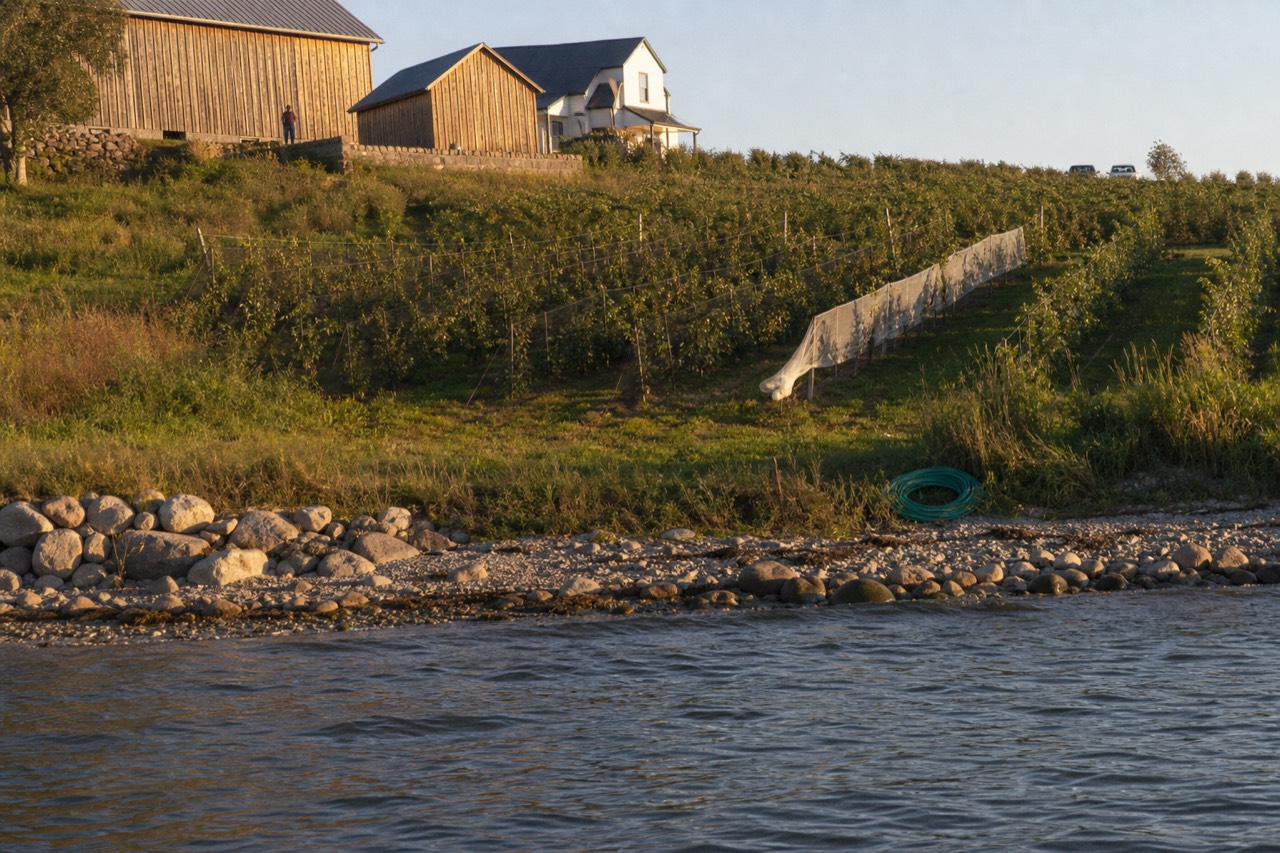
Michigan has no official wine capital, and no major publication has crowned one. The honest answer, on the evidence, is the Traverse City region: the Leelanau Peninsula and Old Mission Peninsula AVAs together produce over 60% of Michigan's grapes, according to Traverse City Tourism, out of roughly 3,375 acres of wine grapes statewide. No other region in the state comes close to that concentration.
That is a claim built on numbers rather than on a title, and it deserves the unpacking. Michigan's wine industry spreads from the Lake Michigan shore in the southwest up to the tip of the Leelanau Peninsula, with licensed producers in most corners of the Lower Peninsula. The state counts 258 commercial wineries, per Michigan Craft Beverage Council data reported by Crain's Detroit Business, and the 2025 WineAmerica economic impact study counts 279 wine producers. If sheer producer count decided the question, the southwest corner around Baroda and Paw Paw would have a real argument, because that is where Michigan's modern wine industry began and where a large share of the state's wineries still sit.
But a capital is not a census. It is where the industry's identity, its fruit and its reputation concentrate, and on those measures the two peninsulas flanking Grand Traverse Bay win comfortably. The region even has the nickname closest to a title: Travel + Leisure branded the two peninsulas the "Traverse Wine Coast" in November 2025 and called it the "Napa of the Midwest", which is a national outlet's phrase, quoted as such, not this site's.
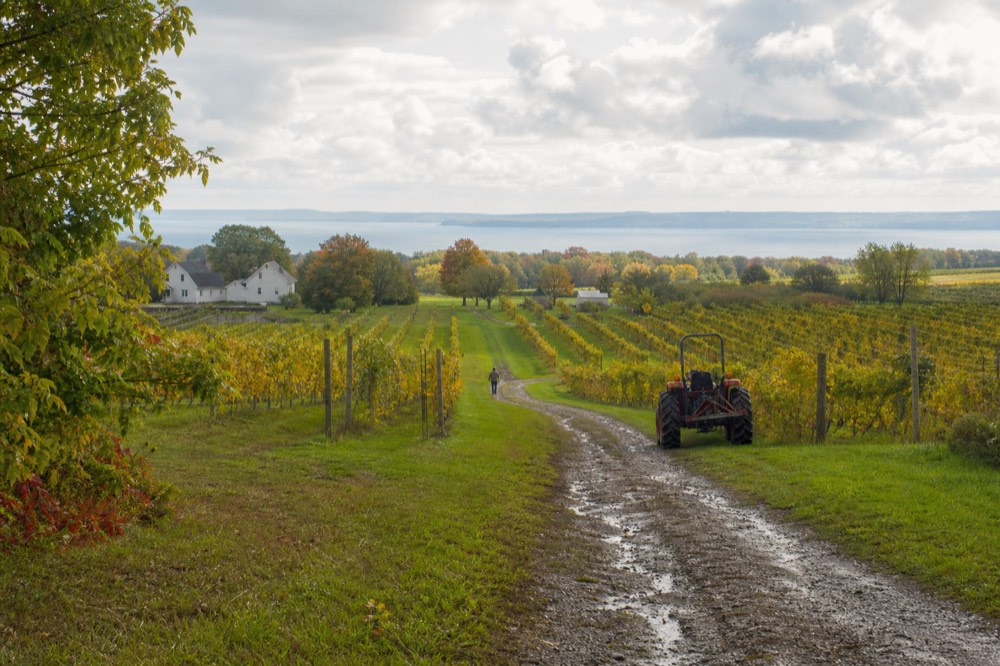
The case for Traverse City rests on three pillars. First, geography: the region holds two of Michigan's federally recognized American Viticultural Areas, and they are unusually close together, a 19-mile peninsula and a whole neighboring county, both moderating their climates off the same waters. Second, fruit: the over-60% grape share means most of the state's raw material for wine grows here. Third, reputation: the 2026 state competition results, the wine-country-hotel awards and the national press all land on these two peninsulas rather than anywhere else.
If the argument appeals to you in person rather than on paper, the region is unusually easy to tour. The three most popular guided options below cover both peninsulas.
Which Michigan Regions Have Federally Recognized AVAs?
Michigan has five federally recognized American Viticultural Areas, and two of them, the Leelanau Peninsula AVA and the Old Mission Peninsula AVA, sit on opposite sides of Grand Traverse Bay within about half an hour of downtown Traverse City. AVA status is granted by the federal government, and it is the closest thing American wine has to an official quality-of-origin designation.
That density matters. An AVA is not a marketing label; it is a boundary drawn in the Code of Federal Regulations, with established dates, defined lines on USGS maps and a requirement that the name on the bottle reflects grapes actually grown inside those lines. Leelanau was established on 30 March 1982 under 27 CFR 9.40, covering all of Leelanau County excluding the offshore islands, making it one of Michigan's first AVAs. Old Mission followed on 8 June 1987 under 27 CFR 9.114, bounded by all of Peninsula Township in Grand Traverse County plus a small part of Traverse City Township, about 19,200 acres in total.
Here is how the recognized regions stack up:
| Region | AVA status | What the boundary covers | Why it matters to the capital question |
|---|---|---|---|
| Leelanau Peninsula | Established 30 March 1982 (27 CFR 9.40) | All of Leelanau County, excluding offshore islands | The older of the two Traverse City AVAs; its wine trail lists 23 member wineries |
| Old Mission Peninsula | Established 8 June 1987 (27 CFR 9.114) | Peninsula Township plus part of Traverse City Township, about 19,200 acres | A 19-mile peninsula no more than 3 miles wide; its trail publishes ten wineries |
| Lake Michigan Shore | Federally recognized AVA | Southwest Michigan along the lakeshore | The historic heart of Michigan's bulk wine industry and the southwest's claim to the title |
| Fennville | Federally recognized AVA | A small southwest Michigan district | One of the oldest AVAs in the country, tiny by comparison |
| Tip of the Mitt | Federally recognized AVA | The northern Lower Peninsula above the 45th parallel | Northern, but with far fewer wineries than either Traverse City peninsula |
The table makes the structural point plainly. The southwest has history and producer count. The Traverse City region has two AVAs packed into a single bay, both of them drawing on the same lake-moderated climate, and both of them producing the majority of the state's grapes between them. A visitor can stand in downtown Traverse City and be inside 20 minutes' drive of two federally mapped wine regions.
That is also why the region tours so well, which is not a small part of what a "capital" does. A capital is a place people travel to for the thing itself, and the tour infrastructure here, from shared shuttles to private SUV runs, exists at a scale the southwest's scattered wineries do not match. The Old Mission versus Leelanau comparison breaks down how the two AVAs differ for a visitor.
Does The Southwest Have A Claim To The Title?
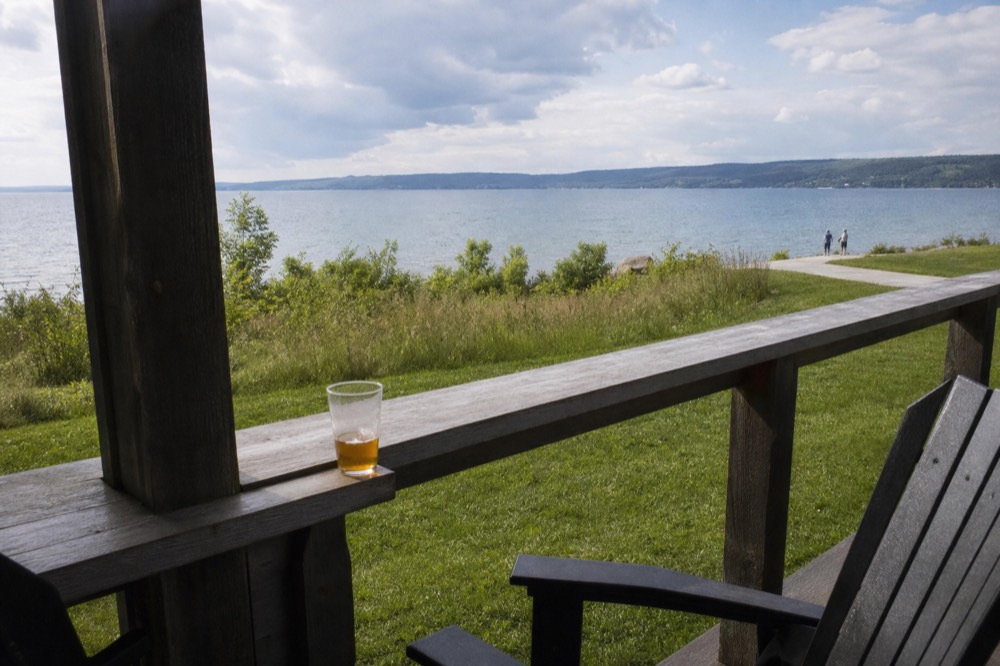
Yes, a fair one, and pretending otherwise would be dishonest. Southwest Michigan, around Baroda, Paw Paw and the Lake Michigan Shore AVA, is where Michigan's modern wine industry was rebuilt, it holds a large share of the state's 258 commercial wineries, and it grows most of the state's juice grapes on acreage far larger than either Traverse City peninsula. On producer count alone it can argue it is the center of gravity.
The southwest's case is historical and commercial. The oldest large wineries in the state built their businesses there, close to the Chicago-driven market, and the Lake Michigan Shore AVA holds much of the acreage behind Michigan's volume production. When the 2025 WineAmerica study counts 13,346 acres of vineyards in Michigan, a figure that includes juice grapes and not just wine grapes, a lot of that acreage is in the southwest, and the study attributes $8.96 billion in total economic activity to the Michigan wine industry, supporting 52,939 jobs, statewide rather than in any one region.
But volume and history are not the same as a capital. The measure that settles the argument is where the wine grapes, the fruit that actually becomes bottled wine under a place name, are concentrated. Traverse City Tourism states that the Leelanau and Old Mission AVAs together produce over 60% of the grapes in Michigan. More than six of every ten grapes in the state grow on these two peninsulas, which together cover a fraction of the state's vineyard land. The southwest can claim the industry's past and its biggest buildings. The Traverse City region grows most of its fruit.
There is a second, quieter argument for the southwest: price. Its wineries sit closer to a large population base and often run cheaper tasting rooms. If the question is where Michigan wine is cheapest to drink, the southwest wins. If the question is where Michigan wine is grown, named and judged, the numbers above do not leave much room. Our guide to wine tour prices shows what the Traverse City region costs by comparison, and why the fee structure differs between operators.
Whichever side of the argument you land on, seeing the vineyards yourself is the fastest way to form a view, and the SUV format below covers four Old Mission estates with samples included in the fare.
What Do The Statewide Numbers Actually Say?
The attributed figures are these: 258 commercial wineries statewide per Michigan Craft Beverage Council data via Crain's Detroit Business; 3,375 acres of wine grapes per michiganwines.com, which also counts 775 family-owned farms; and 279 producers and 13,346 total vineyard acres in the 2025 WineAmerica study, a different measure that includes juice grapes. Every one of those numbers belongs to its source, and none of them is a bare industry fact.
The distinction between 3,375 and 13,346 acres trips up a lot of coverage, so it is worth being precise. The 3,375-acre figure counts wine grapes, the fruit pressed for bottled wine. The 13,346-acre WineAmerica figure counts total vineyard acreage, including the juice grapes behind much of the national grape-juice trade. They are different measures of different things, and neither contradicts the other. What both agree on is that Michigan's wine industry is real, large and growing, with the WineAmerica study, reported by Bridge Michigan in August 2026, putting the growth at 42 percent over three years even as overall drinking rates decline.
| Figure | Number | Source, named in the same breath |
|---|---|---|
| Commercial wineries statewide | 258 | Michigan Craft Beverage Council data, via Crain's Detroit Business |
| Wine-grape vineyard acreage | 3,375 acres | michiganwines.com, the industry's own site |
| Family-owned farms | 775 | michiganwines.com |
| Wine producers, total vineyard acres | 279 producers, 13,346 acres | 2025 WineAmerica economic impact study |
| Total economic activity, jobs | $8.96 billion, 52,939 jobs | 2025 WineAmerica study (John Dunham & Associates) |
| Share of Michigan grapes from the two Traverse City AVAs | Over 60% | Traverse City Tourism |
| Most-planted wine grape | Riesling, about 670 acres of the state wine-grape total | MSU-linked industry reporting |
The last row is the quiet tell. Riesling, the cool-climate grape the Traverse City region is built on, is the most-planted wine grape in the state, at roughly 670 of the 3,375 wine-grape acres. The grape that defines this region's style is also the grape that defines the state's. That is what concentration looks like: not just a big share of the harvest, but the harvest's signature variety growing in your soil. The story of why so many vineyards cluster here explains the lake-effect mechanics behind it.
Why Do The Awards Keep Landing Near Traverse City?
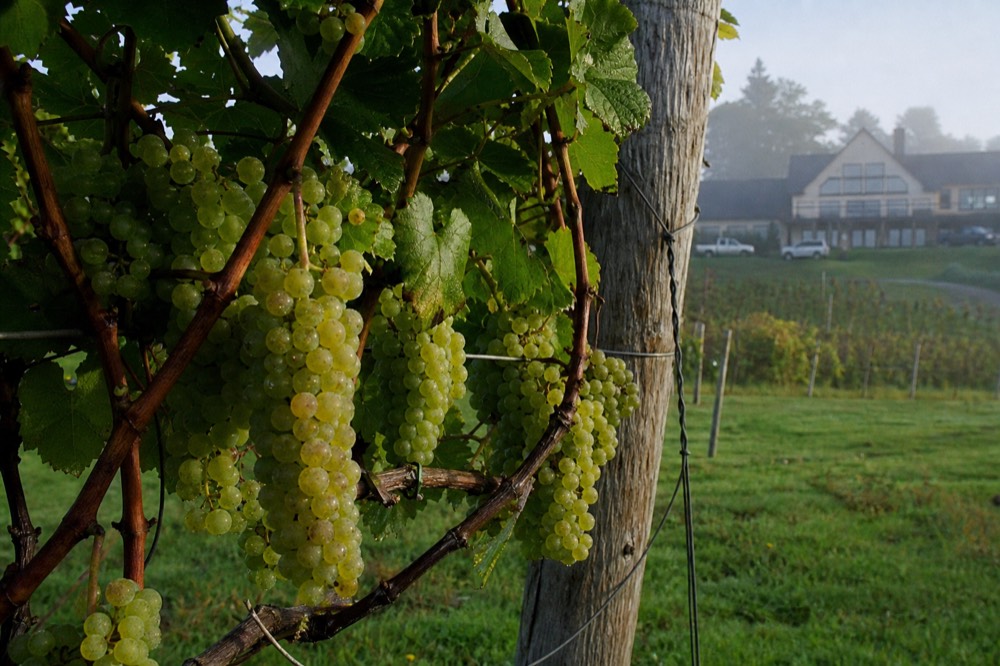
Because the fruit is here. At the 2026 Taste Michigan Governor's Cup, the state's top wine competition, Best of Show went to French Valley Vineyard on the Leelanau Peninsula for its 2024 Dessert Riesling, scoring 97 points out of 214 entries from 44 wineries, and the Winemaker of the Year, Blake Lougheed, works the same peninsula's Bel Lago, French Valley and Dune Bird properties. The medals are following the grapes.
The same results release also records Gold medals for Mawby's NV Blanc Brut in sparkling and Bluestone Vineyards' 2025 Chardonnay in vinifera white, both Leelanau producers, and a Governor's Case place for Dune Bird's NV Cabernet Franc. A second 2026 competition, the Great Lakes Winemaker Challenge, named Two K Farms of Suttons Bay, again on Leelanau, its Winery of the Year. Every one of those names sits inside the two AVAs around Grand Traverse Bay, per the Michigan Wine Collaborative's official results release.
Beyond the medals, the region's lodging has drawn national recognition: the Inn at Black Star Farms was voted the number one Best Wine Country Hotel in the United States in the USA Today 10Best Readers' Choice Awards for 2025, with Chateau Chantal on Old Mission taking second. The top two wine-country hotels in the country that year were both on these peninsulas. That is the kind of corroboration a capital claim needs, because it shows travelers voting with trips, not just judges voting with scorecards.
The wine itself is the reason to come, and the most efficient way to taste the argument is a guided run at the estates themselves.
The non-bus SUV tour run by Movie Stars Wine Tours covers four Old Mission wineries in four to five hours, from $69 per person, with samples included in the ticket plus a complimentary bottle, and it is rated 5 across 542 reviews. Pickup is included. For a fuller picture of who pours what on each peninsula, our guide to the best wineries in Traverse City names the estates worth building a day around.
Can You Tour The Wine Capital In A Day?
Yes, comfortably, and that is part of the capital argument too. Old Mission is a 19-mile peninsula with ten trail wineries along a single road, and Leelanau's 23 trail members sit within a 45-minute drive of downtown, so a five-hour tour reaches three or four serious estates without a long highway leg. Few wine regions in the country pack this much into one bay.
The practical shape of the region favors visitors. On Old Mission, Center Road runs the spine of the peninsula past Chateau Chantal, Brys Estate, Bonobo, Mari Vineyards and the rest, and the peninsula is never more than three miles wide, so nothing is far from anything. Leelanau is bigger, a whole county, but its wineries cluster on loops off M-22 and M-204 around Suttons Bay, Lake Leelanau and the northern shore. A single well-planned day can touch both, though most visitors pick one peninsula per day and do it properly.
Transportation is the one decision that matters. A shared shuttle keeps the price near $79 per person with tasting fees paid at each bar, generally $5 to $10 per tasting on Old Mission and $5 to $15 on Leelanau. The SUV-format tours include samples in the fare instead, which changes the arithmetic for heavier tasters. And there is a legal wrinkle worth knowing: Michigan's open-container law, MCL 257.624a, exempts passengers in chartered vehicles authorized by the state transportation department, which is why the shuttle and SUV operators can allow drinking on board. Our guide to wine tour transport walks through all three formats, including the designated-driver option where that exemption does not apply.
So Which Answer Should You Give?
If someone asks you at a dinner party, the defensible answer is Traverse City, on the evidence: two AVAs, over 60% of Michigan's grapes, the state's top competition medals and its top wine-country hotels, all within one bay. Say it with the attribution, though, because no legislature, tourism board or national ranking has ever printed the words "wine capital of Michigan" as an official designation. The title is earned, not awarded.
The distinction matters for honesty. Pages that simply assert a capital usually lean on vibes or on an unnamed accolade. The evidence-based case, the one this site stands behind, runs: Traverse City Tourism's over-60% grape-share figure for the two AVAs, the AVA boundaries in the federal code, the 2026 Governor's Cup results from the Michigan Wine Collaborative, and the 2025 USA Today 10Best wine-country-hotel result. Each of those is checkable, and each one lands on the same small stretch of Lake Michigan shoreline.
The southwest keeps its history and its volume, and a fair reading gives it that. But when more than six in ten of the state's grapes grow on two peninsulas you can drive between in an afternoon, the argument is over. Traverse City Wine Tours exists to get you out among those vines, and the three runs below are the fastest route to a verdict.
The short answers below cover the questions readers ask most about the title, the AVAs behind it and the numbers that settle it. Each one restates the evidence rather than the assertion, so you can quote any of them at a dinner table and be able to back it up. If a figure appears here, its source appears with it.
Common Questions About The Wine Capital Of Michigan
What Is The Wine Capital Of Michigan?
There is no official designation, but the evidence points to Traverse City. The Leelanau Peninsula and Old Mission Peninsula AVAs around Grand Traverse Bay produce over 60% of Michigan's grapes, per Traverse City Tourism, and the state's top competition medals and wine-country-hotel awards keep landing on the same two peninsulas.
How many wineries are near Traverse City?
The Old Mission Peninsula Wine Trail publishes ten wineries, and the Leelanau Peninsula Wine Trail lists 23 members. Third-party counts run higher because they count every licensed producer rather than trail membership, so the trails' own numbers are the anchor.
Is Traverse City really the Napa of the Midwest?
That phrase belongs to Travel + Leisure, which branded the two peninsulas the "Traverse Wine Coast" and used the Napa comparison in November 2025. It is a real national press quote, but it is the magazine's phrase, not an official title.
Which Michigan AVA is oldest?
The Leelanau Peninsula AVA, established 30 March 1982 under 27 CFR 9.40, five years before Old Mission Peninsula, which was established 8 June 1987 under 27 CFR 9.114.
Does southwest Michigan have a better claim?
It has a claim on history and producer count, since much of the state's 258 commercial wineries sit in the southwest. But the grape share settles it: over 60% of Michigan's grapes grow in the two Traverse City AVAs, per Traverse City Tourism.
Can you visit both peninsulas in one day?
Yes, though most visitors do one per day. Old Mission is a 19-mile peninsula on a single road; Leelanau's wineries cluster on loops within about 45 minutes of downtown Traverse City. Guided tours run four to five hours and cover three or four estates.