Is Traverse City Or Petoskey Better?
A decided comparison of Traverse City and Petoskey from wine country, food, beaches and logistics, with two-day itineraries for each town and the tours that make the call easy.
Is Traverse City Or Petoskey Better?
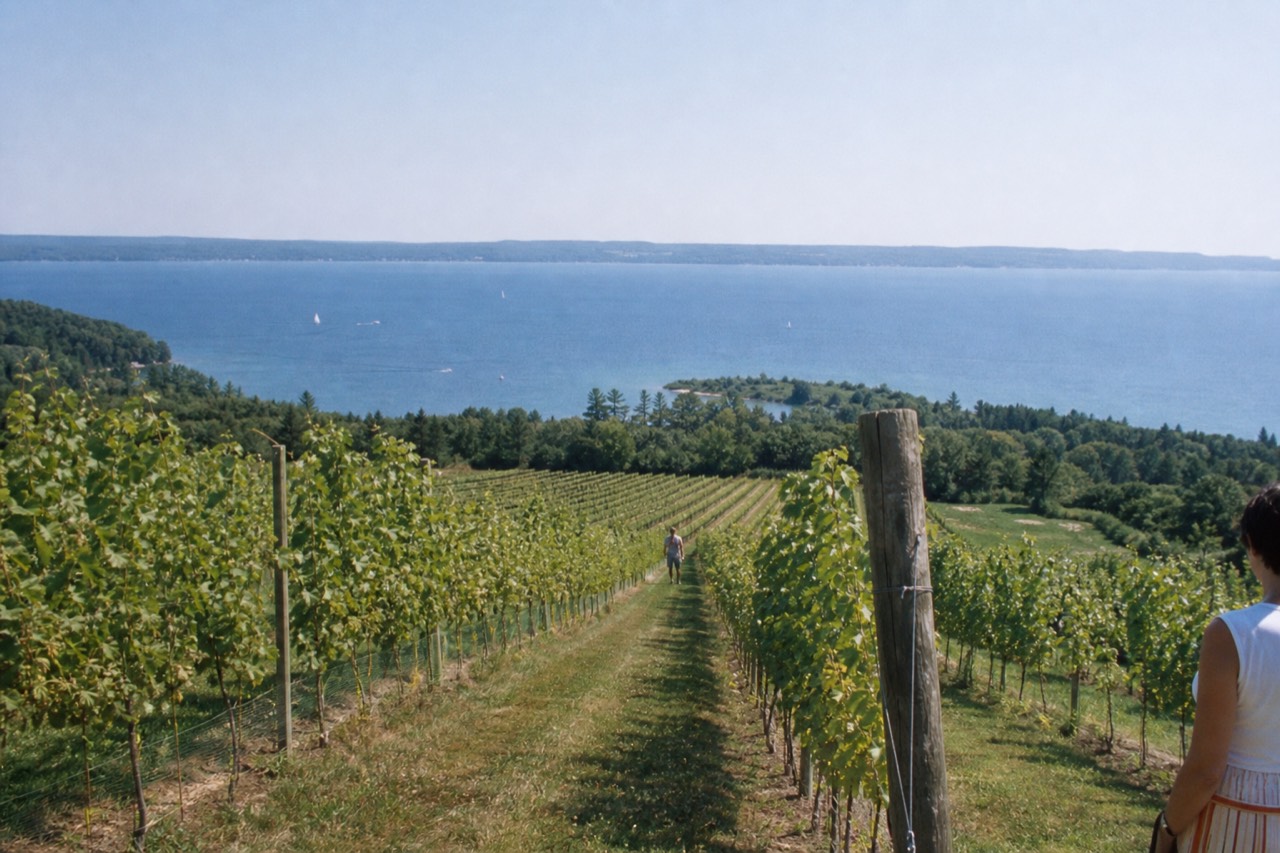
For a trip built around wine, food and water in one place, Traverse City is the better choice, and the reason is structural rather than a matter of taste: it sits between two federally recognized American Viticultural Areas, Old Mission Peninsula and Leelanau Peninsula, whose wineries together account for over 60 percent of Michigan's grapes. Petoskey is the better choice only for a trip built around golf, quiet and lakefront charm.
That is a decided answer, and it deserves a decided justification. Traverse City has ten wineries on the Old Mission Peninsula Wine Trail and 23 members on the Leelanau Peninsula Wine Trail, with Black Star Farms appearing on both. Petoskey has none of that. It has Gaslight Street, a handsome downtown, and one of the prettier harborfronts on Lake Michigan, but no AVA, no wine trail, and no equivalent concentration of tasting rooms within a short drive.
The comparison is not a straw man, though. Petoskey does several things genuinely better than its bigger neighbor to the south, and this page names them plainly rather than pretending the town is a lesser Traverse City. If your priorities are golf, small museums, public art and a slower pace, Petoskey wins those rounds outright.
Scale tells part of the story. Annual tourism spending across the four-county Traverse City region passed $1.14 billion, per figures Traverse City Tourism presented at its 2026 annual meeting, and Cherry Capital Airport handled 935,816 passengers in 2025, a third consecutive record year. Petoskey is smaller, quieter and, for many visitors, precisely better for being so.
If the wine country is what pulls you north, these are the three tours that best show what Traverse City has that Petoskey cannot match:
Which Town Has The Better Wine Country?
Traverse City, and it is not close. Petoskey has no wine trail, no AVA and no cluster of estate wineries within a half-hour of downtown. Traverse City has two federally recognized AVAs, established in 1982 on Leelanau and 1987 on Old Mission, whose combined wine trails list ten and 23 wineries respectively, all within a short drive of Front Street.
Old Mission Peninsula is the more compact of the two. It runs roughly 19 miles north from town and is never more than three miles wide, so a four-hour tour can comfortably reach three or four estates with bay water in view on both sides of the road. Leelanau is larger and more varied, with 23 member wineries spread across loops that also take in Suttons Bay, Leland and the Sleeping Bear shoreline. A first-time visitor with one free afternoon should pick Old Mission for density and Leelanau for variety.
Petoskey's wine options are not zero, but they are scattered and suburban rather than concentrated: a handful of tasting rooms across the broader Little Traverse Bay area, none of them part of a recognized viticultural area. The nearest thing to a wine experience comparable to Traverse City's is a drive of more than an hour south, which is to say, a drive to Traverse City.
The distinction matters beyond bragging rights. AVA status is a federal designation under 27 CFR, tied to boundaries, climate and geography, and both of Traverse City's were among the earliest in the Midwest. The lake moderation that lets vinifera grapes ripen this far north is the same force that keeps the bay water swimmable in July, and it is the reason wine tourism here supports a full ecosystem of shuttles, private drivers and winery inns. For a deeper look at each region, see the Old Mission Peninsula wine trail guide and the Leelanau Peninsula wine trail guide.
Which Town Eats Better?
Traverse City, on the evidence of national recognition, and by a clear margin. It was named Food City of the Year in Midwest Living's Best of the Midwest Awards for 2026 and placed sixth for Best Small Town Food Scene in the USA Today 10Best Readers' Choice Awards for 2026, while Petoskey's dining strength is real but regional rather than nationally ranked.
The Midwest Living honor is the headline: the magazine's 2026 Best of the Midwest Awards named Traverse City Food City of the Year. The USA Today result reinforces it, with Traverse City taking sixth nationally among small-town food scenes, as reported by the Detroit Free Press. Behind the awards sits a restaurant scene that has grown deep enough to survive turnover: longtimers close, as Blue Tractor and Mary's Kitchen Port did in 2025, and new openers such as Frank's 231 and Sisters arrive to replace them.
Petoskey should not be dismissed on food. Its downtown has solid, likeable kitchens and a genuinely good bakery culture, and the town's scale means you can walk from dinner to the harbor in five minutes. But there is no James Beard semifinalist energy, no national food-city title, and no equivalent of the farm-to-table density that Traverse City's surrounding cherry and grape country supplies. If eating is the point of the trip, the bigger town wins.
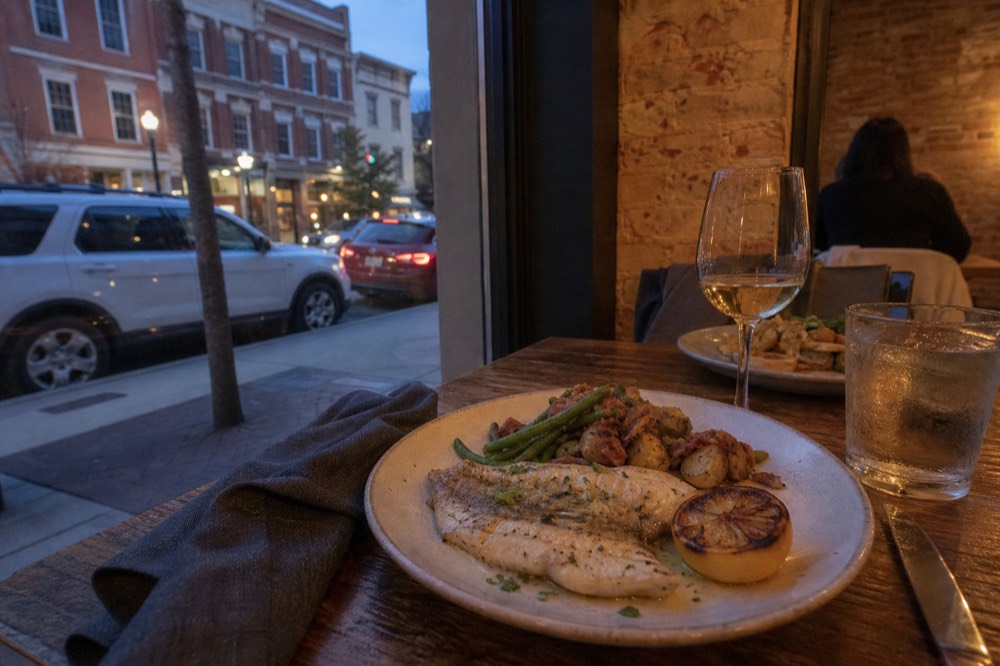
The food gap and the wine gap compound each other, which is why the wine-and-dine format exists only on one side of this comparison. The Traverse City Wine & Dine Tour, run by Movie Stars Wine Tours, pairs tastings at two Old Mission wineries with food stops downtown in one four-and-a-half-hour run, from $79 per person. It is a newer listing, so no reviews are published yet, but it is the most efficient single answer to "what would I actually do there?"
If that combined format sounds like your kind of day, it is worth locking a date early. The operator's live listing carries the cancellation terms and current availability, and the newer listings in this market can sell out on summer weekends when the food tours and wine tours compete for the same seats.
What Does Petoskey Do Better Than Traverse City?
Petoskey is better at golf, quiet and small-museum charm, and it can prove at least the first of those: the Petoskey Area placed fifth among USA Today 10Best Golf Destinations for 2026. It is also better at being uncrowded, with a harborfront and downtown you can move through without the peak-season congestion Traverse City now carries as a record-volume destination.
Golf is the honest headline. The Petoskey Area's fifth-place finish among USA Today 10Best Golf Destinations for 2026 reflects a real concentration of resort and public courses in the hills above Little Traverse Bay, and Traverse City has nothing with the same national standing in that category. If your ideal morning is eighteen holes and your ideal evening is a slow walk, Petoskey is built for you.
The town has also invested in its quieter attractions. The Little Traverse History Museum opened for its summer 2026 season on 9 June, and a new dog park opened on 21 August 2026. The Wheelway Art Walk, twenty murals along the Little Traverse Wheelway, had its ribbon-cutting on 28 August 2026, per the Petoskey News-Review. A bronze Passenger Pigeon Monument marking the great nesting of 1878 was unveiled in June 2026. None of this is world-beating, but all of it is real, current and unhurried.
Traverse City's scale cuts both ways. Record airport traffic, a $120 million terminal expansion and billion-dollar tourism spending mean better restaurants, more tours and more places to stay, and also more people sharing them with you. Petoskey gives you a smaller menu and a calmer table. That trade is worth naming rather than hiding: on a summer Saturday, Petoskey's downtown is pleasant and Traverse City's is packed.
Which Town Has The Better Beaches And Water?
Both sit on clean, cold northern water, but they offer different kinds of it. Traverse City has two protected bays, Grand Traverse Bay's East and West arms, plus the freshwater dune landscape of Sleeping Bear to the west, while Petoskey has a rockier, wilder Lake Michigan shoreline famous for Petoskey stones.
Traverse City's beaches are bay beaches: sandy, shallow and family-friendly, with the twin peninsulas sheltering the water so it warms and calms through summer. The same geography that protects the beaches protects the vineyards, which is why the wine country and the swimming are physically the same feature of the map. If you want to combine a morning tasting on Old Mission with an afternoon at a beach ten minutes away, the two activities share a peninsula.
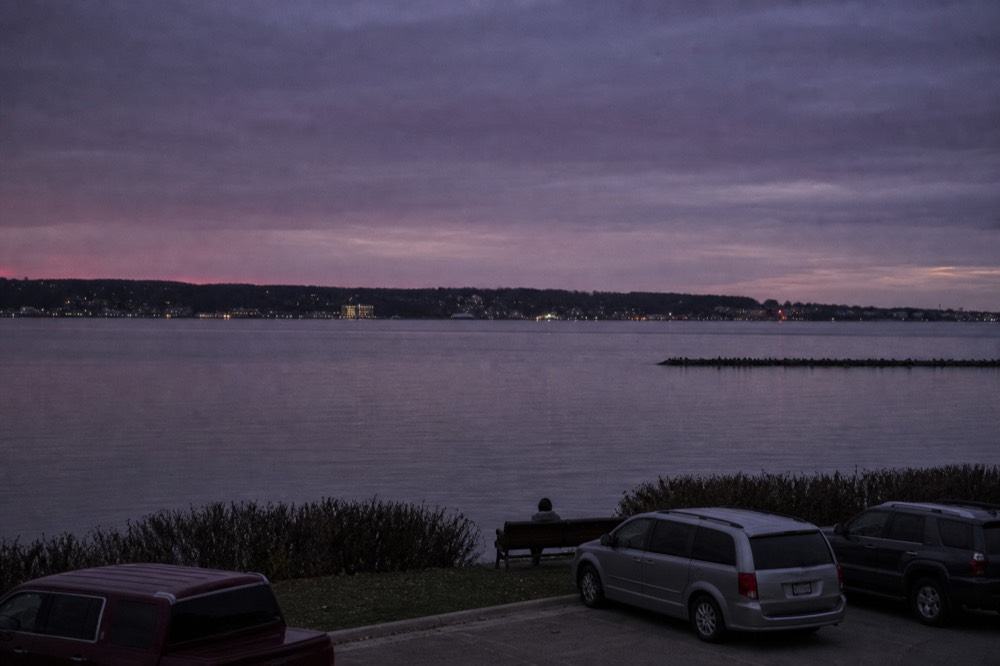
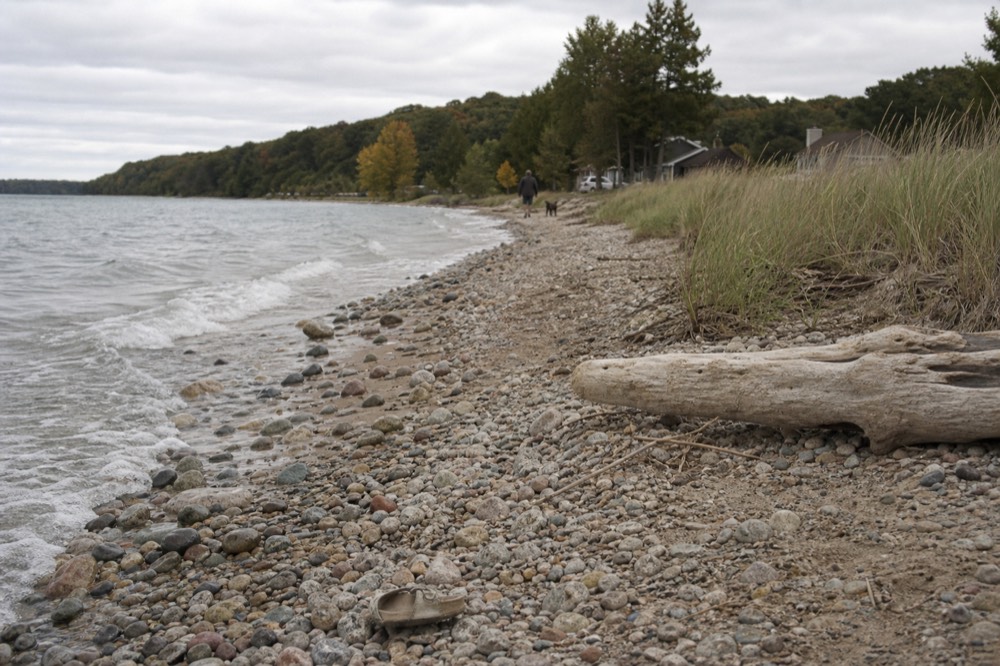
Petoskey's shoreline is Lake Michigan proper, colder and more exposed, with the fossilized coral of the Petoskey stone washing up after storms. Rockhounds and walkers often prefer it precisely because it is not a swimming beach in the Traverse City sense. The sunsets over the open lake are the stronger of the two, since Petoskey faces west across open water while Traverse City's downtown faces north between two bays.
Neither town loses this round decisively, but they win it for different travelers. Sand, warm water and swimmable afternoons favor Traverse City. Rocks, open horizon and sunset photography favor Petoskey. Families with small children should lean Traverse City; collectors and photographers should lean Petoskey.
How Far Apart Are They, And Can You Do Both?
The two towns are roughly 60 to 70 miles apart by road, about an hour and a quarter of driving each way, so yes, you can do both, but doing both properly means two nights, not one. The most efficient plan is to base in Traverse City, take a wine day there, then drive north for a day and night in Petoskey before looping home along the lake.
The drive itself is part of the argument. US-31 runs up the east side of Grand Traverse Bay through Charlevoix, and the return can swing along Lake Michigan through Harbor Springs, making a loop rather than an out-and-back. Charlevoix sits roughly at the midpoint and works as a lunch stop in either direction.
| Comparison | Traverse City | Petoskey |
|---|---|---|
| Wine country | Two AVAs, 10 wineries on Old Mission and 23 trail members on Leelanau | No AVA, scattered tasting rooms |
| Food recognition | Midwest Living Food City of the Year, 2026; sixth, USA Today 10Best small-town food scene | Strong regional dining, no national ranking found |
| Signature water | Two sheltered sandy bays | Open Lake Michigan shoreline, Petoskey stones |
| Golf | Resort courses, no national ranking found | Fifth, USA Today 10Best Golf Destinations, 2026 |
| Airport | Cherry Capital, 935,816 passengers in 2025 | Smaller regional options nearby |
| Peak-season feel | Busy, record tourism years | Quieter, walkable, calmer |
For a trip that includes both, the order matters less than the base. Sleeping in Traverse City puts the wine tours within reach, since most depart from or near downtown, while a night in Petoskey positions you for a slow morning on the waterfront before the drive back. Trying to day-trip Petoskey from Traverse City and still fit a five-hour wine tour into the same day is the classic mistake; the two activities are each a half-day minimum.
What Does A Two-Day Trip Look Like In Each Town?
In Traverse City, day one is a peninsula wine tour and dinner downtown, and day two is the beach, the other peninsula or Sleeping Bear. In Petoskey, day one is the downtown, harbor and history museum, and day two is golf or the Wheelway Art Walk. The itineraries are not interchangeable, and that difference is the practical answer to the whole question.
| Day | Traverse City plan | Petoskey plan |
|---|---|---|
| Day one, morning | Old Mission or Leelanau wine tour, 4 to 5 hours | Coffee downtown, Little Traverse History Museum |
| Day one, afternoon | Beach on the bay or the Commons area | Harborfront walk, hunting Petoskey stones |
| Day one, evening | Dinner downtown, Front Street | Gaslight District dinner, early night |
| Day two, morning | Second peninsula, or Sleeping Bear Dunes to the west | Golf, or the Wheelway Art Walk murals |
| Day two, afternoon | Wine country lunch, drive or fly home | Drive the lake route home via Charlevoix |
The Traverse City version of day one has a ready-made answer. The 5-Hour Traverse City Wine Tour from The Magic Shuttle Bus visits four Old Mission wineries, from $79 per person, rated 4.9 across 2,666 reviews, with tasting fees of roughly $5 to $10 per stop paid at the bar. It is the highest-volume, best-reviewed wine product in the market, and it exists because the wineries are close enough together to make four stops in five hours pleasant rather than rushed.
For the Leelanau-leaning traveler, the same operator runs a five-hour, three-winery Leelanau tour at the same from-price of $79 per person, rated 4.9 across 427 reviews, with appointments arranged ahead at each estate. Choosing between the peninsulas is its own question, covered in full in the Old Mission versus Leelanau comparison, and the practical answer for a first visit is Old Mission for compactness and Leelanau for range.
Petoskey's two days are gentler by design. The town rewards slow mornings, and its attractions, the museum, the murals, the shoreline, are all within a short walk or drive of each other. That is not a lesser way to travel; it is simply a different one. A traveler who wants to be shown around, poured for and fed will feel more at home in Traverse City, and a traveler who wants to wander undirected will feel more at home in Petoskey.
So Which Should You Choose?
Choose Traverse City if wine, food or a full activity menu is the point of the trip, because its two AVAs, its nationally recognized dining and its tour infrastructure are things Petoskey simply cannot offer. Choose Petoskey if golf, quiet and lakefront walking are the point, because it wins those rounds honestly and costs you less crowd in the process.
There is a third answer worth saying out loud: choose both, in that order. Base in Traverse City for the wine and the dinners, then finish north in Petoskey when you want the trip to slow down. The drive between them is short enough that the combination costs you one extra night and no real hardship, and it is the version of this trip that leaves nothing on the table.
If the decision comes down to a single afternoon, though, the wine country is the tiebreaker. Two federally recognized AVAs, over 60 percent of Michigan's grapes, and a wine trail on each peninsula within sight of downtown: that is a structural advantage, and everything else in this comparison is negotiable. Traverse City Wine Tours covers the touring side of that advantage in depth, from the guide to wine tour prices and the guide to wine tour transport to what Traverse City is known for beyond the vines.
The short answer is that Traverse City wins on wine and food, Petoskey wins on golf and quiet, and the two towns are close enough, roughly 60 to 70 miles apart, to combine into one trip. The questions below cover the details: distances, wine options, beaches, food recognition and how to build a two-day plan around either town.
Common Questions About Traverse City Versus Petoskey
Is Traverse City Or Petoskey Better?
Traverse City is better for a trip built around wine and food, because it sits between two federally recognized AVAs with 10 wineries on Old Mission and 23 trail members on Leelanau. Petoskey is better for golf, quiet and lakefront charm, and it placed fifth among USA Today 10Best Golf Destinations for 2026.
How far is Petoskey from Traverse City?
Roughly 60 to 70 miles by road, about an hour and a quarter each way. You can visit both towns on one trip, but doing both properly means two nights rather than a single day-trip.
Does Petoskey have wine tours?
Not in any comparable way. Petoskey has scattered tasting rooms in the broader Little Traverse Bay area, but no AVA, no wine trail and no estate-winery cluster like the two peninsulas flanking Traverse City.
Which town is better for a food trip?
Traverse City. It was named Food City of the Year in Midwest Living's Best of the Midwest Awards for 2026 and placed sixth for Best Small Town Food Scene in the USA Today 10Best Readers' Choice Awards for 2026. Petoskey's dining is solid but regionally rather than nationally known.
Which town has better beaches?
Traverse City has sandy, sheltered bay beaches that warm through summer. Petoskey has a rockier, more exposed Lake Michigan shoreline known for Petoskey stones and stronger sunsets. Swimmers favor Traverse City; walkers and rockhounds favor Petoskey.
Can you visit both towns on one trip?
Yes, and it is the best version of the trip. Base in Traverse City for a wine day and dinner downtown, then drive north for a day and night in Petoskey, returning along the Lake Michigan shore through Harbor Springs and Charlevoix.