Traverse City Wineries Open In Winter: What's Open, What Changes, And The January Harvest
The October crowds leave, the tasting rooms quiet down, and something unusual happens on the vines: grapes stay out in the cold on purpose. Winter in Traverse City wine country is a smaller, stranger, and in one respect more interesting season than fall.
Short answer
Most Traverse City area tasting rooms stay open through winter on reduced schedules, typically fewer days and earlier closing times, with exact hours set winery by winery. Ice wine grapes are picked frozen from late December into January, the region's only winter harvest. Guided tours keep running in enclosed vehicles, from $69 per person, and distillery stops help fill shorter days.
What Happens To Traverse City Wine Country When The Snow Arrives?
October is the busiest month of the year in these tasting rooms, because harvest and fall colour land at the same time, and after it ends the region does not close, it contracts. Tasting rooms thin their schedules, the shuttle calendar loosens, and the whole experience gets quieter and easier to book. Winter here is not an off-season so much as a different one, with its own harvest, its own festivals, and its own reasons to go.
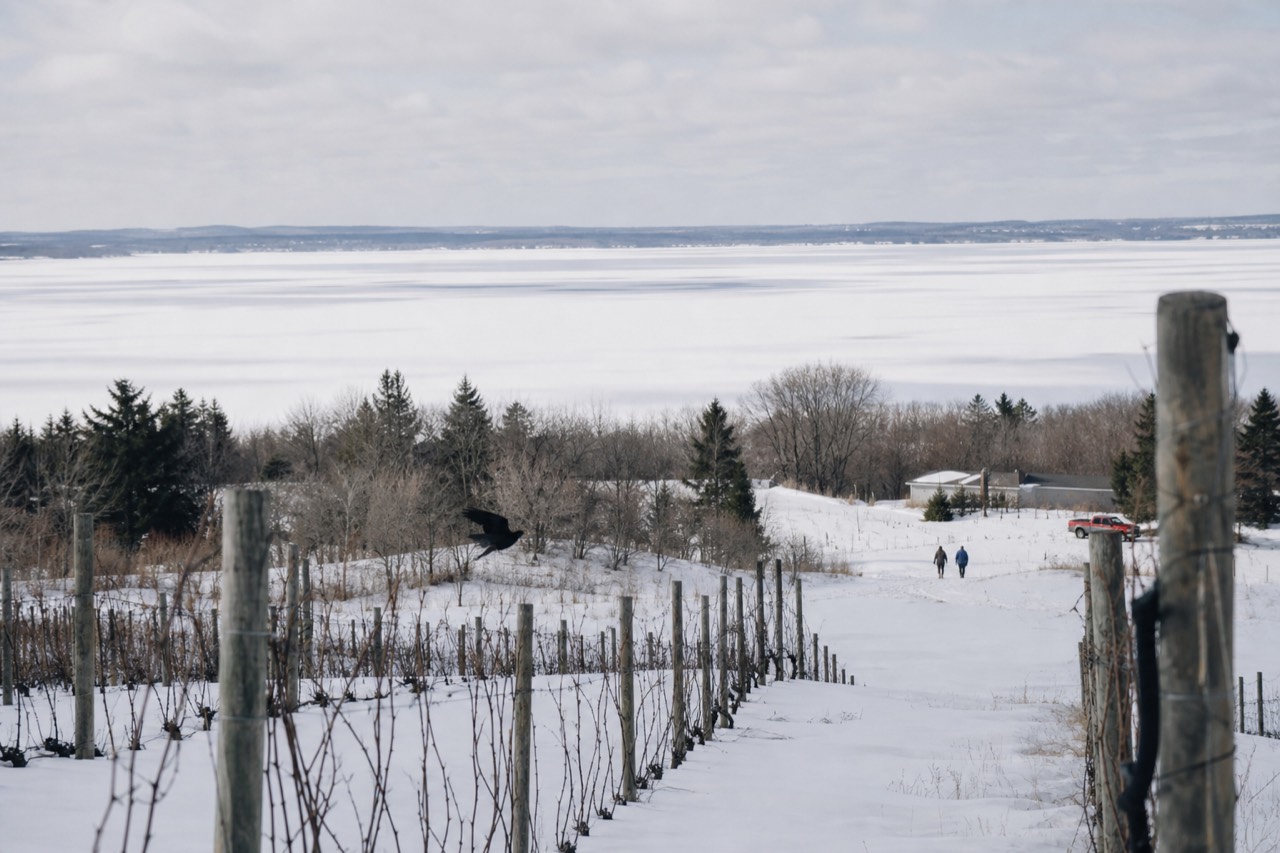
The two peninsulas that hold the region's wineries, Old Mission and Leelanau, sit between the arms of Grand Traverse Bay, and that water does more than make the summer views. It moderates the air well into autumn, which is why the colour and the touring season linger later here than inland, and it also means winter arrives on its own schedule. Snow is reliable. Vineyard rows go white and stay that way for weeks at a time.
What does not happen is a wholesale closure. The Old Mission Peninsula Wine Trail publishes ten wineries on its trail map and the Leelanau Peninsula Wine Trail lists 23 members, and both trails market winter events to visitors, which tells you the rooms are pouring. What changes is the shape of the day: fewer stops, shorter hours, warmer vehicles, and a slower pace inside the tasting room itself.
There is one thing winter gives this region that no other season does. Ice wine, the flagship cold-climate style of northern Michigan, is made from grapes deliberately left on the vine until they freeze, and the harvest window runs from late December into January. That makes Traverse City one of the very few American wine destinations where you can visit during a live harvest in the dead of winter. The rest of this guide is about how to do that well.
Which Traverse City Wineries Are Open In Winter?
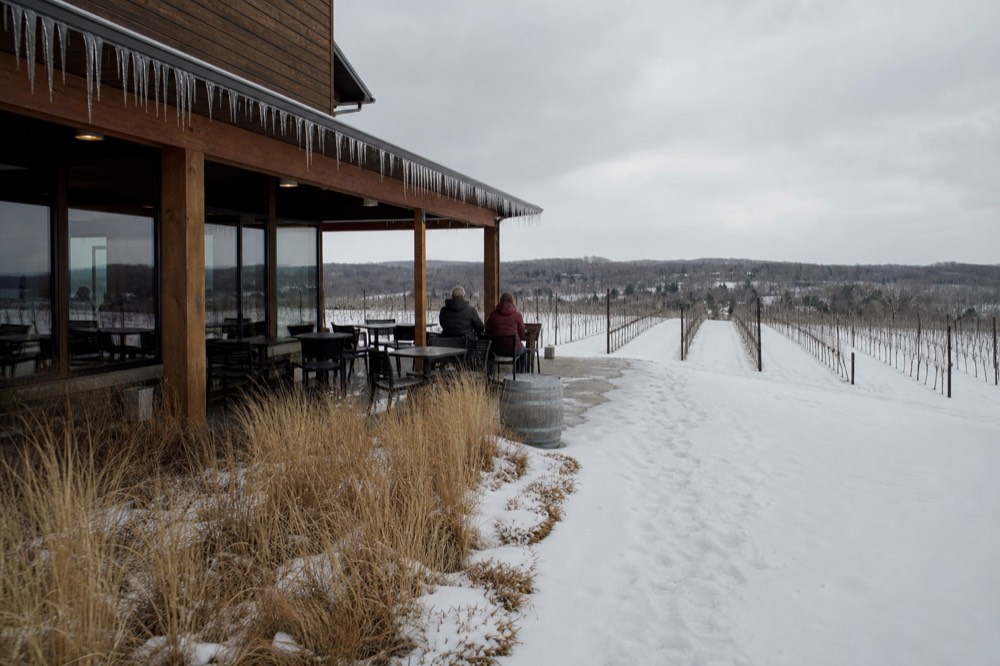
There is no single published winter schedule for the region, and no tour operator publishes an operating-season window, so the honest answer is winery by winery. What is verifiable is the pattern: most tasting rooms on both peninsulas stay open through winter on reduced schedules, fewer days per week and earlier closing times, with hours posted on each winery's own site. Treat any specific day or hour as a check-the-listing question, not a promise.
The reliable anchor is Black Star Farms, which operates tasting rooms on both peninsulas, at Suttons Bay on Leelanau and on Old Mission, and publishes its hours directly. Its posted schedule runs Sunday to Thursday 11am to 6pm and Friday to Saturday 11am to 8pm at Suttons Bay, with the Old Mission room closing an hour earlier on weekends. Hours change seasonally, so re-read the winery's own page before you plan around them, but a two-location operator keeping evening weekend hours in the cold months is a good sign the region does not shut down.
Beyond that, the practical rule is simple. Wineries that are year-round businesses with inns, restaurants, or event calendars attached, Chateau Chantal with its inn, Black Star Farms, Mari Vineyards with its events programme, keep winter doors open. Smaller rooms may go weekend-only or pause entirely for a stretch of January and February. Nobody publishes a master list, and any page that claims one is guessing.
One more structural note worth knowing. Black Star Farms' Bistro Polaris now runs as a culinary event venue and pop-up bistro, with special events, weekly dining events, pop-up brunches, seasonal cooking classes and private dining, rather than as a regular full-service restaurant. A winter visitor cannot simply walk in for dinner there. If food is part of your plan, check the events calendar rather than assuming a kitchen is waiting.
Here is how the season generally breaks down, month by month. Treat it as a planning pattern, not a schedule, and confirm the specific room before you drive out.
| Month | What generally happens | Planning note |
|---|---|---|
| November | Fall colour fades, Toast the Season weekends run on the Leelanau trail, rooms start trimming weekday hours | Event weekends book early; the rest is walk-in friendly |
| December | Schedules tighten toward the holidays; ice wine grapes hang on the vine waiting for a hard freeze | Holiday-weekend rooms are busy; midweek is very quiet |
| January | Ice wine harvest when temperatures drop far enough; the Chateau Chantal Ice Wine Festival is held in late January | The one winter month with a live harvest to see |
| February | Deepest quiet; many rooms run weekend-only hours | Best month for unhurried tastings and long conversations at the bar |
| March | Hours stretch back out as the calendar moves toward spring bottling and blossom season | A transition month; check each room |
The deeper comparison between the two peninsulas, including how their winery counts and characters differ, is covered in our Old Mission versus Leelanau guide, and the trail-by-trail detail lives in the Old Mission Peninsula wine trail guide and the Leelanau Peninsula wine trail guide.
For winter specifically, the tours that make the most sense are the ones built around enclosed vehicles and mixed itineraries, since a distillery stop warms up a cold afternoon nicely.
What Is Ice Wine, And Why Is January Its Season?
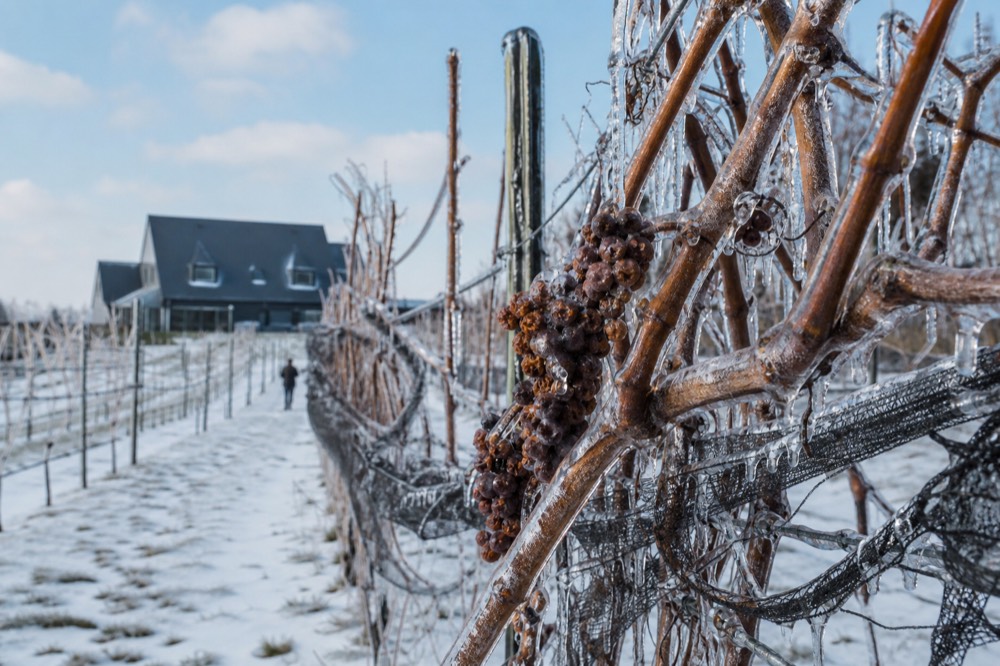
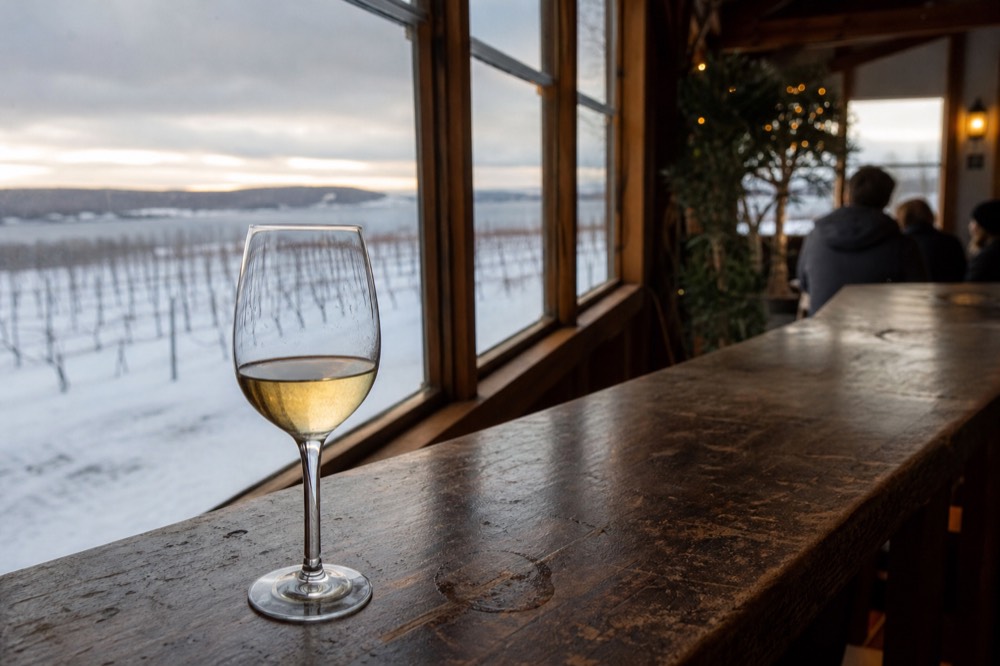
Ice wine is a dessert wine made from grapes left on the vine until they freeze solid, then pressed while still frozen, so most of the water stays behind as ice and only the concentrated juice runs out. In northern Michigan the picking window runs from late December into January, when temperatures reach roughly 15°F, which makes it the region's only winter harvest and the single best reason to visit a winery in the coldest weeks of the year.
The logic is physical rather than romantic. A frozen grape yields a fraction of the juice of a thawed one, and that fraction is dense with sugar and acid. It takes several times more grapes to make a bottle, which is why ice wine is sold in small formats at premium prices, and why only genuinely cold regions bother. Northern Michigan is one of them. The Old Mission Peninsula Wine Trail publishes its own explainer on how the style is made in its northern Michigan ice wine guide, and the region's producers have real pedigree in the style: Chateau Chantal on Old Mission earned a Judges' Selection at the 2025 TEXSOM International Wine Awards for its 2023 Cabernet Franc ice wine.
The harvest itself is not a tourist spectacle you can book a seat at. Picking happens fast, at night or at dawn, when the temperature is lowest, and the crews are small. What a visitor can genuinely experience is the aftermath: tasting rooms pouring the current vintage of ice wine in the weeks after the press runs, often alongside the fire pits and snowshoeing that winter events build around it.
If the frozen-harvest story is what pulls you here in January, the smart move is an itinerary that mixes a winery pouring ice wine with a distillery, since spirits tastings are unaffected by the season and the warm rooms are welcome. The private non-bus Old Mission wine and distillery run is built exactly that way, and the details are in the section on tour formats below.
Do Wine Tours Run In Winter Near Traverse City?
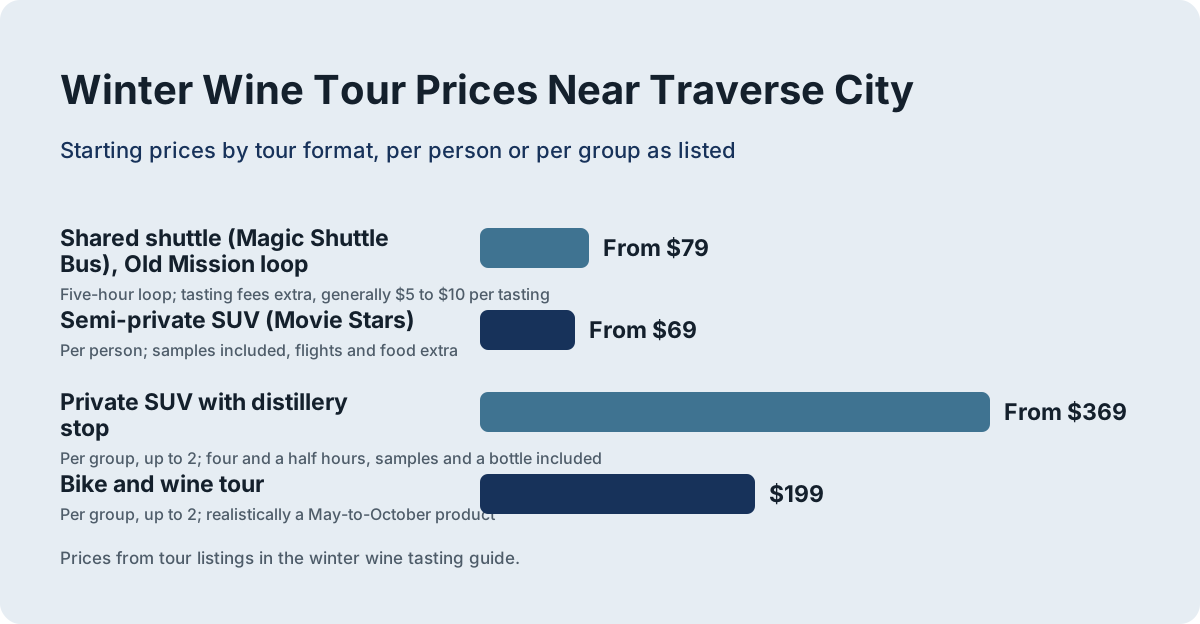
Yes, guided tours keep running through winter, but no operator publishes an operating-season window, so availability is a check-the-listing question rather than a promise. What is verifiable is the format logic: winter favours enclosed vehicles, the SUV and Escalade products over open-air or bike options, and itineraries that add a distillery stop, because a shorter, warmer loop with one spirits room is simply a better cold-weather day than four outdoor treks between buildings.
The roster splits cleanly along this line. The Magic Shuttle Bus runs shared, scheduled tours in enclosed limo-style shuttles, from $79 per person for the five-hour Old Mission loop, rated 4.9 across 2,666 reviews, with tasting fees paid separately at each winery, generally $5 to $10 per tasting on Old Mission. Movie Stars Wine Tours runs semi-private SUV and Cadillac Escalade products from $69 per person, with samples and a complimentary bottle included in the ticket, flights and food extra. Both formats are winter-viable. The bike tour, at $199 covering two riders, is not, and neither operator pretends otherwise.
The private end of the roster is where winter makes the most sense. The private non-bus Old Mission wine and distillery tour from Movie Stars Wine Tours gives a party of up to two the vehicle to themselves for four and a half hours, mixing wineries with a spirits stop, from $369 per group, samples and a complimentary bottle included. It is a new listing with no reviews published yet, so there is no rating to lean on, but the shape of it, enclosed, private, short, with a distillery in the middle, is precisely the honest winter shape of a tasting day. Pickup is not listed, so confirm the meeting point on the live listing.
There is also a genuinely winter-native tour format that most visitors never hear about. Snowshoe, Wine and Brew tours ran every Sunday from 4 January to 8 March 2026 on Old Mission Peninsula, 10.30am to 2.30pm, starting at Jolly Pumpkin and combining snowshoeing with winery and brewery tastings, as MLive reported. That programme proves two things at once: a real winter touring season exists here, and wine-plus-brewery is an established local format rather than a compromise. Our wine and beer day guide covers that hybrid style in detail.
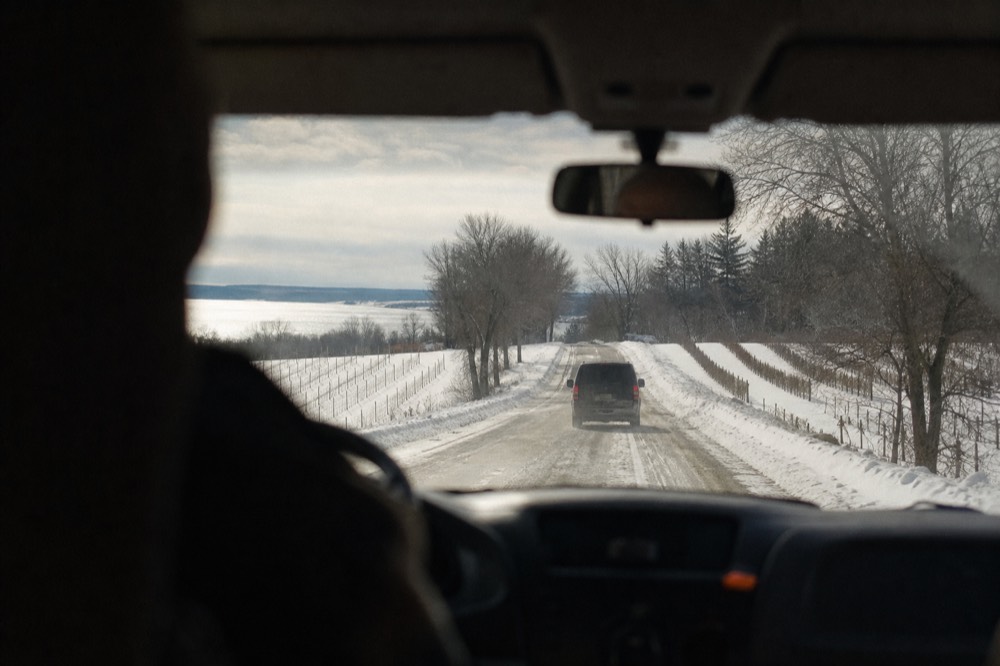
Here is how the tour formats compare for a winter day.
| Format | Winter fit | Price anchor | What to check on the listing |
|---|---|---|---|
| Shared shuttle (Magic Shuttle Bus) | Good: enclosed, scheduled, 5 hours | From $79 per person | Running dates in Jan-Feb; tasting fees extra at each stop |
| Semi-private SUV (Movie Stars) | Very good: enclosed, pickup included on most runs | From $69 per person | Samples included; flights and food extra |
| Private SUV with distillery stop | Best: your own vehicle, mixed itinerary | From $369 per group (up to 2) | New listing, no reviews yet; confirm meeting point |
| Snowshoe, Wine and Brew | Winter-native: outdoors plus tastings | Per-event pricing on the listing | Whether the Sunday programme runs again this winter |
| Bike and wine tour | Poor: open-air cycling | $199 per group (up to 2) | Realistically a May-to-October product |
One legal footnote worth knowing, covered fully in our wine tour transport guide: Michigan's open-container law, MCL 257.624a, bans open alcohol in a vehicle's passenger area, but subsection (4) exempts passengers in a chartered vehicle authorized by the state transportation department. That is why the shuttle and SUV operators can allow drinking on board, and it matters more in winter, when a warm drink between stops is part of the appeal.
Indoor Or Outdoor: What Are Tasting Rooms Like In The Cold?
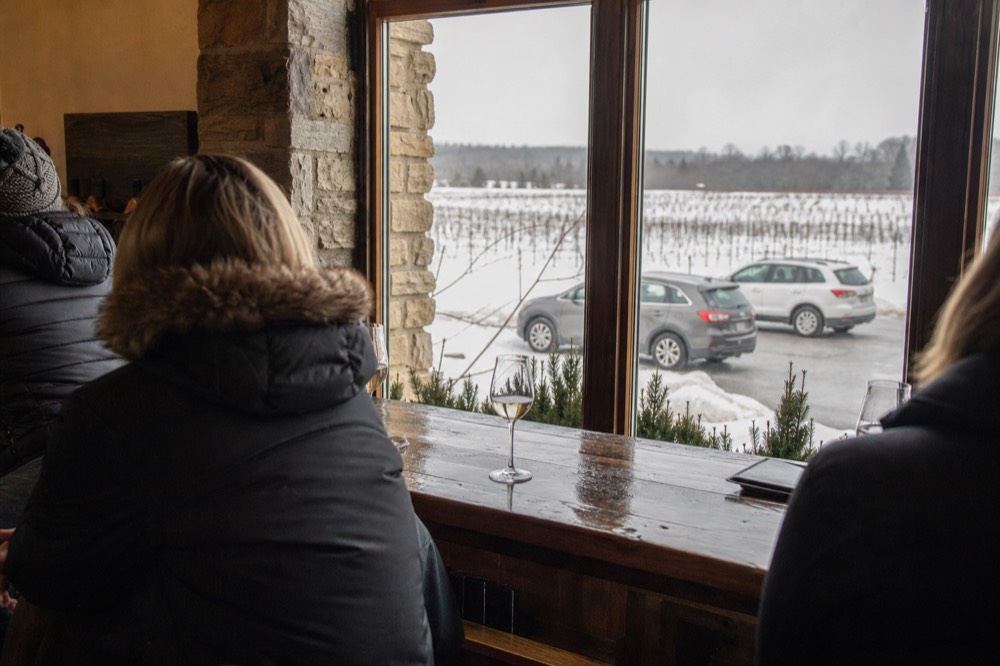
Most winter tasting happens indoors at the bar or at a table, but the region's winter events deliberately push part of the experience outside, with fire pits, snowshoeing and ice wine served in the cold at festivals. The practical split is this: a standard winter tasting is an indoor activity, while a winter festival tasting is an indoor-outdoor one, and dressing for both is the difference between a good afternoon and a miserable one.
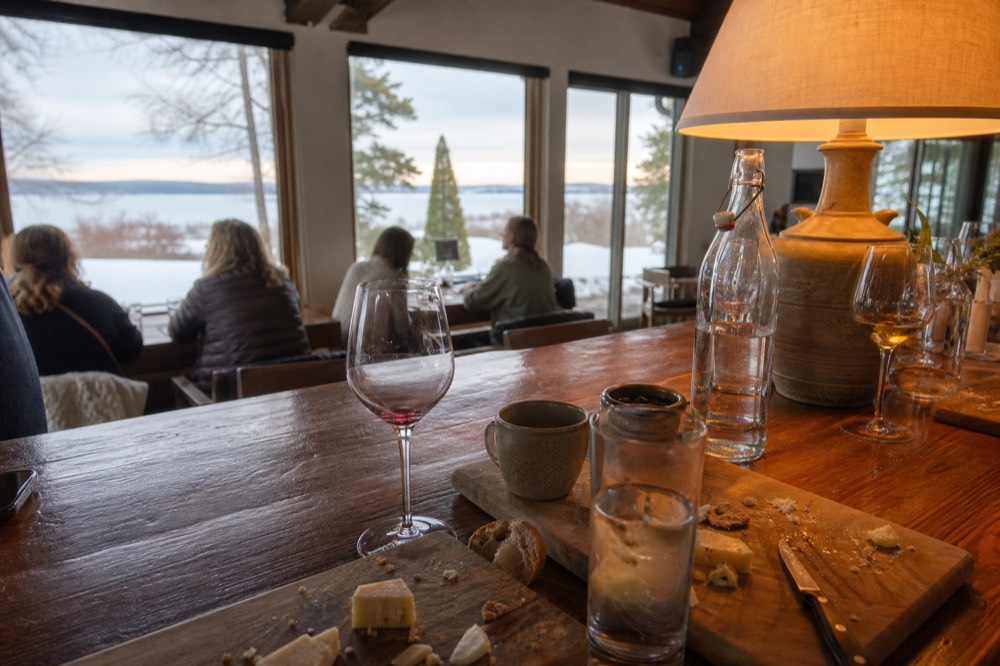
The rooms themselves are built for this. Peninsula tasting rooms are substantial buildings, many with fireplaces and bay views, and the winter bar crowd is small enough that conversations with pourers run long. The Chateau Chantal Ice Wine Festival, held on 31 January 2026 from 11am to 5pm, is the model: ice wine tastings inside, fire pits and snowshoeing outside, winery tours running, and a ticketed Fire and Ice dinner, as MLive described. It is an annual event, so late January is the pattern to plan around rather than a specific date.
Views are half the reason to come here, and winter does not cancel them. A frozen Grand Traverse Bay from a tasting-room window is a different landscape from the summer version, and the wineries with views guide covers which rooms face the water. On the Leelanau side, the trail's Toast the Season weekends, 6 to 8 November and 13 to 15 November in 2026, keep the event energy going into the darker months with 1.5 to 2 ounce pours, food pairings and cork cash at participating wineries, per the Leelanau Peninsula Wine Trail's events page.
| Experience | Where it happens | Winter character |
|---|---|---|
| Standard tasting flight | Indoors at the bar | Small crowds, unhurried pours, long conversations |
| Ice wine tasting | Indoors, or outdoors at festivals | Served cold by design; the region's signature winter pour |
| Fire pit and snowshoe events | Outdoors on winery grounds | Festival weekends only; dress for standing around |
| Toast the Season trail event | Indoors across multiple Leelanau wineries | Ticketed, two weekends, pours and pairings |
| Distillery tasting | Indoors | Season-proof; warms up a cold afternoon |
What Does A Winter Tasting Day Cost?
Budget the same figures as the rest of the year, because winter does not change the published tour prices: shared shuttle runs from $79 per person, semi-private SUV runs from $69 per person with samples included, and private runs start at $369 per group. The real winter saving is softer: smaller crowds mean walk-in tastings, while tasting fees stay the same, generally $5 to $10 on Old Mission and $5 to $15 on Leelanau.
The fee-inclusion distinction is the sharpest thing to understand before you book, and it holds in every season. On The Magic Shuttle Bus products, the ticket is transport only and you pay each winery at the bar. On Movie Stars Wine Tours products, samples and a complimentary bottle are in the fare, and only flights and food cost extra. On the Bay Life Getaways designated-driver product, where a hired driver takes the wheel of your own car, every pour is paid at every stop.
| Operator | Vehicle | Are tastings in the fare? | What you still pay at the bar |
|---|---|---|---|
| The Magic Shuttle Bus | Scheduled limo-style shuttle | No, transport only | $5 to $10 per tasting on Old Mission, $5 to $15 on Leelanau |
| Movie Stars Wine Tours | SUV or Cadillac Escalade | Yes, samples plus a complimentary bottle | Flights and food only |
| Bay Life Getaways | A hired driver in your car | No | Every pour, at every stop |
For a concrete winter day, the five-hour Old Mission shared tour is the volume choice: four wineries, from $79 per person, rated 4.9 across 2,666 reviews, tasting fees extra at each stop. It is the same product in January as in July, just with snow on the rows outside the window.
Lodging is where winter genuinely gets cheaper, even if no local operator will say so in those terms. The US General Services Administration sets a per diem lodging rate for Traverse City and Grand Traverse County of $134 a night for most months, rising to $235 for July and August, which is the federal government's own arithmetic on seasonality: it budgets 75 percent more for a summer room than an October-through-spring one. February is the cheapest month on that scale to be here.
More on stretching a visit, including which fees to expect where, is in our wine country on a budget guide, and the full price breakdown by tour lives in the wine tour prices guide.
How Do You Plan A Winter Visit Without Getting Caught Out?
Plan around three honest unknowns: no operator publishes an operating-season window, no winery publishes a master winter schedule, and Michigan weather can close a peninsula road for a day. The method that works is to book the enclosed tour first, confirm each tasting room's hours on its own site the week you travel, keep one flexible afternoon, and treat the distillery stop as the buffer that makes a shortened winery day still feel complete.
Driving yourself deserves a specific caution. Center Road, M-37, is the single spine of Old Mission Peninsula, running roughly 19 miles north from town with no alternate route, and a culvert collapse near Council Oaks Drive closed it temporarily in July 2026, which is a useful reminder that one road carries the whole peninsula. In winter, ice and drifting snow make that same spine the region's most demanding drive. If you are not confident on it, that is precisely what the chartered and private products are for, and it is why the designated-driver format, where a professional drives your own car from $369 per group, rated 4.8 across 187 reviews, earns its price in January.
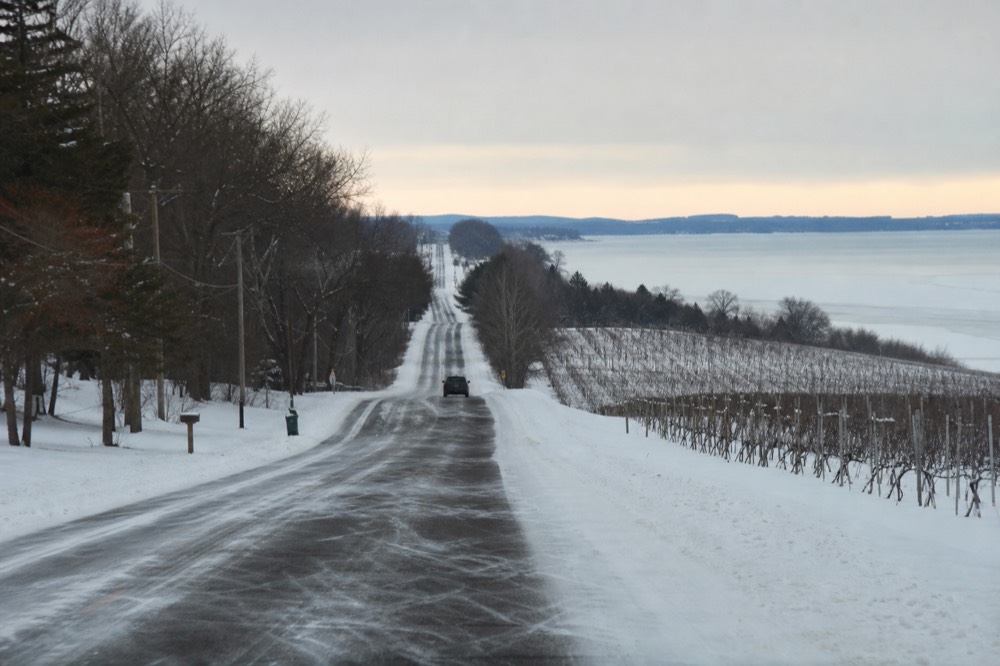
Timing within the week matters more in winter than any other season. Weekends carry the event traffic and the holiday crowds; midweek in February you may share a tasting room with a handful of locals. If ice wine is the goal, late January clusters the harvest aftermath and the Chateau Chantal festival together, and the Snowshoe, Wine and Brew Sundays, if they run again, give the early-year calendar a fixed weekly rhythm from early January into March.
A reasonable winter day looks like this: a late-morning start, two wineries rather than four, one distillery in the middle, and an early dinner downtown. Traverse City was named Food City of the Year in Midwest Living's Best of the Midwest Awards for 2026, so the town end of the day carries real weight, and the best time for wine tasting guide compares the winter calendar against every other season if you are still choosing a month.
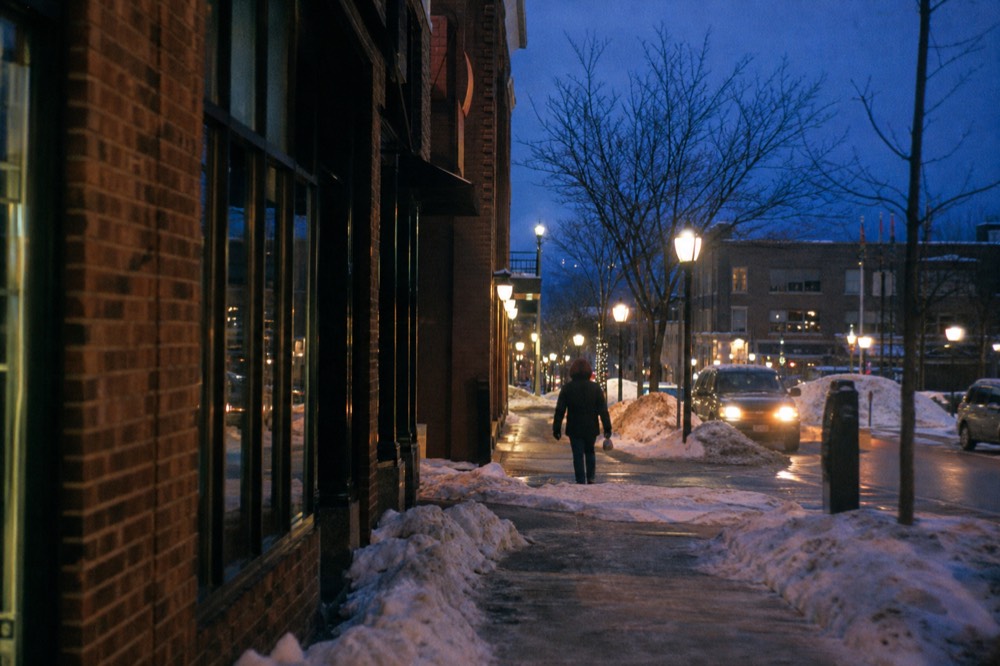
Whether you build it yourself or hand the driving to someone who does it daily, winter rewards a smaller plan. The version of Traverse City wine country that Traverse City Wine Tours writes about all year is at its most relaxed exactly when the vines look dead, because of course they are not: half of them are holding next year's ice wine out in the cold, waiting for the freeze.
If you would rather compare the winter-suitable options side by side before deciding, these three cover the range.
Winter wine tasting in Traverse City raises the same practical questions every year: which rooms are pouring, whether the tours keep running, what a cold-weather day should cost, and when the ice wine harvest actually happens. The answers below gather the figures from this guide, from the $69 semi-private floor to the late-December-through-January picking window, so you can plan a winter visit without guessing.
Common Questions About Winter Wine Tasting In Traverse City
Are Traverse City wineries open in winter?
Most stay open on reduced schedules, typically fewer days per week and earlier closing times, with hours set winery by winery. There is no master winter schedule, so check each winery's own site. Black Star Farms, which pours on both peninsulas, publishes its hours directly and keeps evening weekend hours in the cold months.
When is ice wine harvested near Traverse City?
From late December into January, when grapes left on the vine freeze at temperatures of roughly 15°F and are pressed while still frozen. It is the region's only winter harvest and the reason late January, which also hosts the Chateau Chantal Ice Wine Festival, is the most interesting winter month to visit.
Do wine tours run in Traverse City in the winter?
Yes, the enclosed-vehicle tours keep running, but no operator publishes an operating-season window, so availability is a check-the-listing question. Shared shuttle runs start from $79 per person and semi-private SUV runs from $69 per person with samples included. The bike tour is not a winter product.
What should a winter tasting day look like?
Smaller than a summer one: two wineries rather than four, one distillery stop in the middle for warmth, a late-morning start and an early dinner downtown. Midweek in February is the quietest version of the region all year.
Is January or February better for a winter wine trip?
January if ice wine is the goal, since the harvest aftermath and the Chateau Chantal Ice Wine Festival cluster in late January. February if you want the quietest tasting rooms and the lowest lodging rates, with no festival calendar to work around.
Do you still pay tasting fees on a winter wine tour?
Fees work the same as in every season. On shared shuttle tours the ticket is transport only and you pay $5 to $10 per tasting on Old Mission, or $5 to $15 on Leelanau, at the bar. On the SUV products, samples and a complimentary bottle are included and only flights and food cost extra.