What Is The Best Wine In Michigan?
Riesling is Michigan's best wine, and the numbers back it up: it is the most-planted wine grape in the state, grown on cool-climate land beside Lake Michigan. Here is the full picture, awards included.
What Is The Best Wine In Michigan?
The best wine in Michigan is Riesling. Roughly 670 of the state's 3,375 acres of wine grapes are planted to Riesling, the most of any variety, and the 2026 state competition crowned a Leelanau Peninsula dessert Riesling its Best of Show with 97 points. No other Michigan wine combines that acreage, that critical record and that suitability to the land.
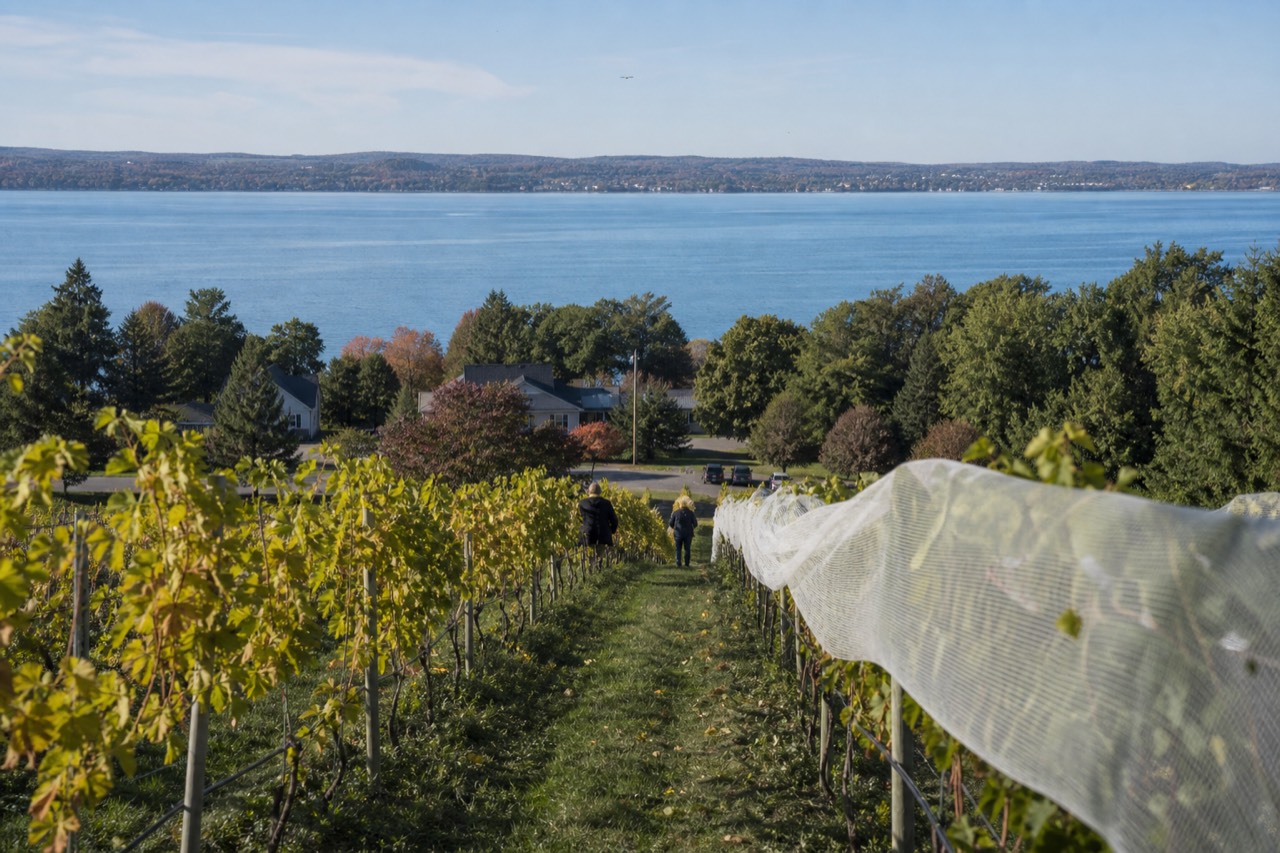
That answer is not a matter of taste alone, it is a matter of evidence. Michigan grows wine grapes on a narrow band of cool-climate land along Lake Michigan, and the lake does the work that altitude does in other regions: it moderates the air, extends the growing season and lets delicate white varieties ripen that would struggle a county inland. Riesling is the grape that thrives most reliably in exactly those conditions, which is why growers keep planting it and why it shows up, vintage after vintage, at the top of the state's competitions.
The 2026 Taste Michigan Governor's Cup Competition made the case in public. French Valley Vineyard, on the Leelanau Peninsula, won Best of Show with its 2024 Dessert Riesling, scoring 97 points and a Platinum medal out of 214 entries from 44 wineries, in results published by the Michigan Wine Collaborative. A dessert Riesling from the Traverse City area beating every other style in the state is about as clean a verdict as wine competitions deliver.
Riesling's dominance is also structural. The two American Viticultural Areas that flank Traverse City, Leelanau Peninsula and Old Mission Peninsula, together produce over 60 percent of Michigan's grapes, and both sit on glacial soils beside deep water. If you want to taste the state's best glass, you taste it here, and the practical way to do that is a guided loop of the wineries themselves. This site, Traverse City Wine Tours, exists to help you do exactly that: the pages here cover the trails, the prices and the tour formats in detail, so the rest of this article focuses on the wine in the glass.
Why Does Riesling Dominate Michigan Vineyards?
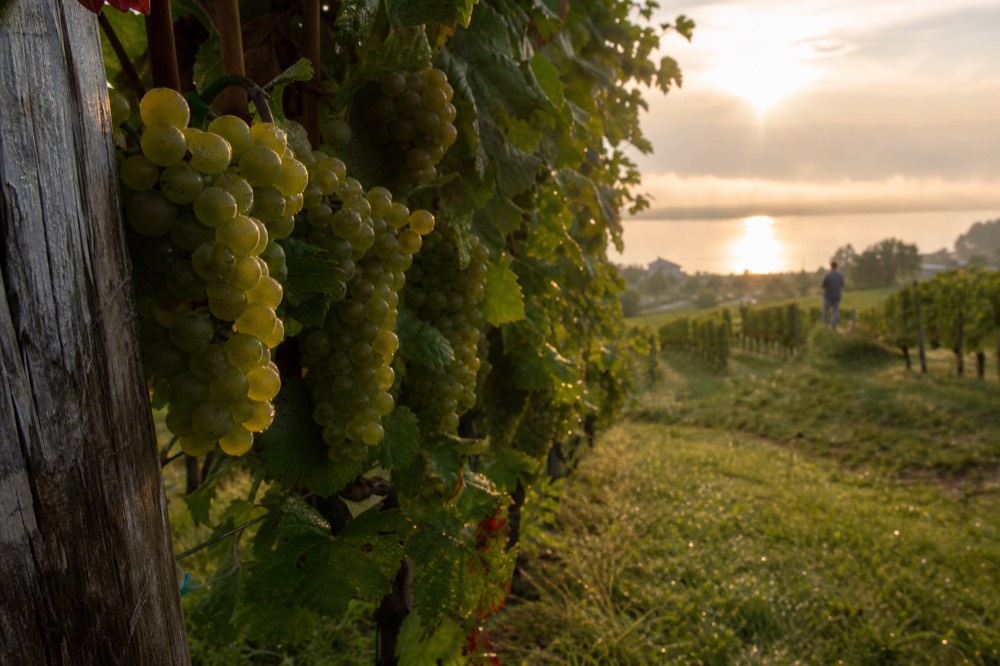
Riesling dominates because Michigan is a genuinely cool climate and Riesling is the noble grape that loves one. About 670 of the state's 3,375 wine-grape acres are Riesling, the most-planted wine grape in Michigan, and roughly 70 percent of the state's vineyard acreage is now vinifera, the classic European species, with Riesling leading the shift.
The explanation is latitude plus water. Traverse City sits on the 45th parallel, the same band that runs through parts of Bordeaux and Piedmont, and Lake Michigan's moderating effect extends the growing season enough to ripen cool-climate varieties. Riesling hangs late, holds its acidity in cold nights and makes compelling wine across a spectrum of styles, from bone-dry to late-harvest to ice wine, which gives growers more ways to sell it than a single-style grape allows. Michigan State University's viticulture program has documented this evolution of the state's vineyards toward vinifera and away from older hybrid plantings in its coverage of Michigan viticulture.
The supporting cast matters too, and honesty requires naming it without inflation. Chardonnay, Pinot Gris and Gewurztraminer do well in the same conditions. Sparkling wine is a genuine strength, because cool-climate fruit with high acidity is exactly what traditional-method sparkling wants. Cabernet Franc is the most credible red, ripening in warm sites on the peninsulas. And fruit wines, cherry above all, are not a tourist novelty here: Bel Lago's NV Cherry Wine took Gold in the fruit wine category at the 2026 Governor's Cup, a medal reported by MLive inside the same results release.
Here is how the main varieties stack up as glasses in your hand:
| Grape or style | Where it grows best here | What it tastes like from this region |
|---|---|---|
| Riesling | Both peninsulas, most-planted in the state | Lime and green apple, high acidity, styles from dry to dessert |
| Chardonnay | Warmer Leelanau and Old Mission sites | Orchard fruit, and in the 2025 Blustone Gold winner, a leaner cool-climate profile |
| Sparkling (traditional method) | Leelanau, notably L. Mawby and Two K Farms | Fine bubbles, citrus and brioche, from grapes that never fully lose their acid |
| Cabernet Franc | Warm sites on both peninsulas | Red currant and pepper, lighter-bodied than southern examples |
| Cherry and fruit wines | Leelanau, with Bel Lago's Gold medal as proof | Bright, tart-sweet, genuinely regional rather than apologetic |
A note on how to read that table: the styles are ranked roughly by how much of the region's identity each carries, not by quality alone. A great Michigan Chardonnay is a lovely glass of wine, but a great Michigan Riesling is an argument about place. The same fruit can be picked early for sparkling base, at full ripeness for dry table wine, late for dessert, or frozen on the vine for ice wine, which is why one grape can anchor an entire tasting flight here without repeating itself.
Which Michigan Wines Won The Top Awards In 2026?
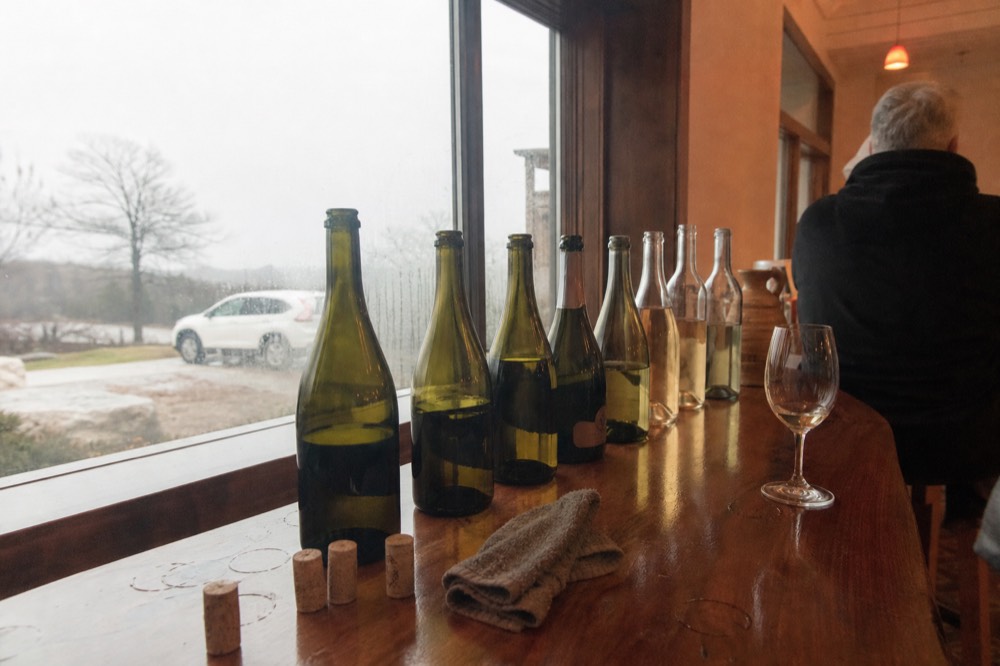
The 2026 Taste Michigan Governor's Cup gave Best of Show to French Valley Vineyard's 2024 Dessert Riesling at 97 points, named Blake Lougheed of Bel Lago Ventures Winemaker of the Year, and awarded Golds to Mawby's NV Blanc Brut in sparkling and Blustone's 2025 Chardonnay among whites. Separately, Two K Farms of Suttons Bay was named Winery of the Year at the 2026 Great Lakes Winemaker Challenge.
Every one of those winners sits on the Leelanau Peninsula, which tells you where the state's quality center of gravity actually is. The Governor's Cup results, published by the organizer itself, also named Dune Bird's NV Cabernet Franc to the Governor's Case, the competition's shortlist of top bottles. So the honest reading of 2026 is: Riesling takes the biggest trophy, sparkling and Chardonnay take category Golds, a Cabernet Franc makes the case for the reds, and a cherry wine medalled in fruit.
The second competition complicates any single-winery crown, which is worth saying plainly. Two K Farms won Winery of the Year at the 2026 Great Lakes Winemaker Challenge with Best in Class Double Golds for its Pinot Deux 2025 sparkling and its Honeycrisp Ice 2023 cider, as reported by Wine Industry Advisor. Ask "which winery is best" and the answer depends on which competition you name, but ask "which wine is best" and Riesling wins on both scoresheets.
One caution about awards pages generally: no major consumer outlet published a "best Michigan wine" ranking in 2025 or 2026, so any site that crowns one is editorializing. Competition medals are the only checkable evidence, and they all point the same direction this year. It is also worth knowing that Traverse City area wineries medalled further afield in 2026, at the San Francisco Chronicle Wine Competition among others, but the wine-by-wine details of those results sit in secondary compilations rather than the competition's own published list, so this page sticks to the results the organizers themselves have released.
What Should You Order At Your First Michigan Tasting?
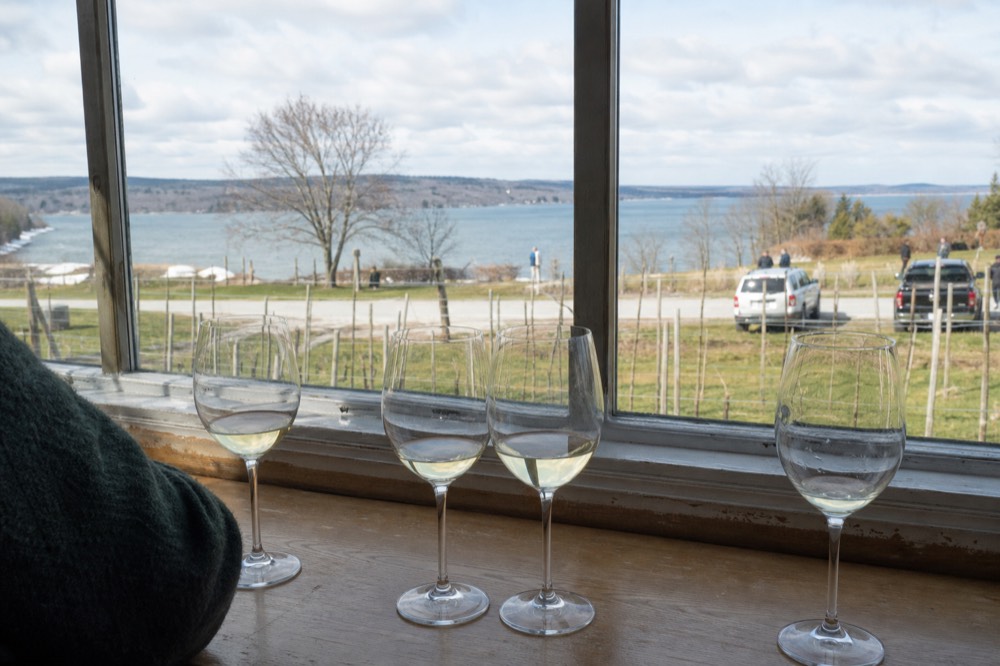
Order a dry Riesling first, then a sparkling wine, then a Cabernet Franc, and finish with a late-harvest or ice wine if the room pours one. That sequence moves from the state's signature style through its sparkling strength to its most credible red and its most distinctive dessert, and it tells you within one flight which Michigan wines are yours.
Ice wine deserves its place at the end of that order because it is a real specialty, not a gimmick. Grapes are left on the vine and picked frozen, typically late December into January when temperatures reach about 15°F, and the Old Mission trail publishes its own explainer on how the region makes it. A dessert Riesling just took Best of Show in the state, so the sweet end of the spectrum is where Michigan currently holds its highest trophy.
A practical first-tasting order, with the reasoning:
| Order | What to ask for | Why it belongs in a first Michigan flight |
|---|---|---|
| 1 | Dry Riesling | The state's most-planted grape at its most food-friendly |
| 2 | Traditional-method sparkling | Cool-climate acidity is the raw material of good bubbles |
| 3 | Barrel-aged Chardonnay | Shows the warmer-site side of the same terroir |
| 4 | Cabernet Franc | The red that actually ripens here, pepper and currant |
| 5 | Late-harvest Riesling or ice wine | The style holding the state's current Best of Show |
Tasting fees are separate from tour tickets on the shared shuttle runs, generally $5 to $10 per tasting on Old Mission and $5 to $15 on Leelanau, while the SUV operators include samples in the fare. Our guide to wine tour prices breaks down the whole fee-inclusion matrix, and it is the difference most visitors miss until the first bar. One more tip for the first-timer: tell the pourer which end of the dry-to-sweet spectrum you prefer at the start, because Michigan lists lean heavily toward Riesling in several styles and a quick word saves you a flight of glasses you did not want.
Where Should You Go To Taste Michigan's Best Wines?
Go to the Leelanau Peninsula, home to the 2026 Best of Show winner, the Winemaker of the Year and every Gold medalist in the state competition, with the Old Mission Peninsula as the shorter, tighter second loop. Leelanau's wine trail lists 23 member wineries; Old Mission's lists ten.
Leelanau is the older AVA, established in March 1982, five years before Old Mission, and it is where French Valley, Bel Lago, Dune Bird, Mawby, Blustone and Two K Farms all pour. A five-hour shared tour run by The Magic Shuttle Bus visits three Leelanau estates with appointments arranged ahead, from $79 per person, rated 4.9 across 427 reviews. It is the simplest way to cover ground on the peninsula that just swept the state's awards.
Old Mission deserves its half-day too. The peninsula is no more than three miles wide at any point and runs about 19 miles north from town, so a four-winery loop there is compact enough to finish before dinner. The Magic Shuttle Bus runs exactly that, five hours, from $79 per person, rated 4.9 across 2,666 reviews, with tasting fees paid at each stop. For a comparison of the two peninsulas in full, see our Old Mission versus Leelanau guide.
The one tour that straddles both worlds anchors at Left Foot Charley, the urban winery inside Traverse City's old village at the base of the Old Mission Peninsula, before crossing onto Leelanau for the rest of the route. Run by Movie Stars Wine Tours in an SUV rather than a bus, it runs four and a half hours from $199 per person with samples and a complimentary bottle included. It is a new listing with no reviews published yet, so there is no rating to report, only the format.
If you would rather build your own route, our self-guided wine tour guide covers driving the peninsulas yourself, including the open-container law that makes a chartered vehicle the safer legal choice for a day of tasting. The short version: Michigan's open-container statute exempts passengers in a properly authorized chartered vehicle, which is why the shuttle and SUV operators can pour on board, while a hired driver at the wheel of your own car cannot rely on that exemption.
Is Michigan's Best Wine Actually An Ice Wine?
Possibly, if you weight rarity and regional character over volume. Ice wine is the style Michigan can make as well as almost anywhere in North America, and the 2026 state Best of Show went to a dessert Riesling, the same grape, picked late and concentrated. But by acreage, availability and everyday quality, dry and off-dry Riesling remain the state's best wine.
The case for ice wine is the case for the climate itself. Grapes left to freeze on the vine in late December and January lose water to ice, and the pressed juice comes out concentrated, sweet and acid-driven. It is expensive to make, made in small quantities, and it is the wine that most surprises visitors who expect the Midwest to produce only sweet plonk. Chateau Chantal on Old Mission earned a Judges' Selection at the 2025 TEXSOM International Wine Awards for its 2023 Cabernet Franc ice wine, alongside a zero-alcohol sparkling selection, which shows the region's range at the edges of the style spectrum.
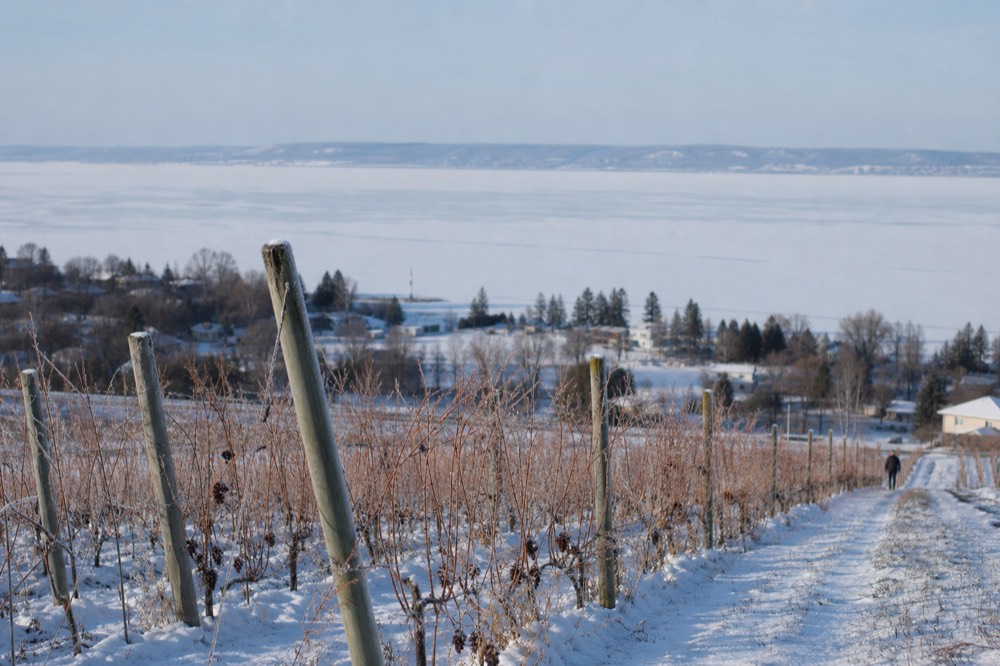
The case against crowning it is simple availability. Ice wine is a special-occasion pour; everyday Riesling is what the region's 775 family-owned farms actually live on, and it is the glass most likely to convert a skeptic. The best answer for a visitor is to taste both in one afternoon, which is exactly what a peninsula tour is for. Our piece on what Traverse City is known for puts the wine in the wider context of the food scene, and the Leelanau Peninsula wine trail guide maps the estates where the state's current champions pour.
How Big Is Michigan Wine, Really?
Michigan's wine industry generates $8.96 billion in total economic activity, supports 52,939 jobs and counts 279 producers, according to the 2025 WineAmerica economic impact study, and the Traverse City area's two peninsulas produce over 60 percent of the state's grapes. By any measure this is a substantial wine region, not a novelty.
Those numbers come with a caveat worth understanding. The 13,346 vineyard acres in the WineAmerica study count total vineyard acreage including juice grapes, while the 3,375-acre figure this article uses elsewhere counts wine grapes only. They are different measures of different things, not a contradiction, and a page that quietly swaps one for the other is misleading you. Bridge Michigan, reporting on the study in August 2026, framed the industry as contributing nearly $9 billion to the state economy, up 42 percent in three years, even as national drinking rates fall and wineries diversify into events, food and experiences to keep tasting rooms busy.
That context is why the best-wine question matters more than a casual reader might expect. The industry's growth is riding on quality recognition, and quality recognition in wine arrives through competitions, sommeliers and visitors who go home and tell people what they drank. A dessert Riesling scoring 97 points at the state's top competition is not just a trophy on a Leelanau wall, it is the region's argument that northern Michigan belongs in the conversation about serious American wine. The grapes, the lake, the 45th parallel and the glacial soils all set the ceiling; the winemakers are now reaching it.
Michigan's best wine is Riesling by acreage and by trophies, with sparkling, Chardonnay, Cabernet Franc and cherry wine forming a strong supporting cast, and nearly all of the state's champions pour within a short drive of Traverse City. The answers below cover the questions visitors ask most often, with the figures that back them.
Common Questions About Michigan Wine
What Is The Best Wine In Michigan?
Riesling. It is the most-planted wine grape in the state at roughly 670 acres, and in 2026 a Leelanau Peninsula dessert Riesling, French Valley Vineyard's 2024, won Best of Show at the Taste Michigan Governor's Cup with 97 points.
Which Michigan winery won the most awards in 2026?
French Valley Vineyard took Best of Show at the 2026 Governor's Cup, and its parent group's winemaker, Blake Lougheed of Bel Lago Ventures, was named Winemaker of the Year. Separately, Two K Farms won Winery of the Year at the 2026 Great Lakes Winemaker Challenge, so the title depends on which competition you ask.
Is Michigan Riesling sweet or dry?
Both. Michigan makes Riesling across the full spectrum, from bone-dry to off-dry to late-harvest and ice wine. The style is always marked on the label or the tasting list, so ask the pourer if the label is unclear.
Does Michigan make good red wine?
Yes, in a cool-climate register. Cabernet Franc is the most credible red, and Dune Bird's NV Cabernet Franc was a Governor's Case winner in 2026. Expect lighter bodies, red currant fruit and pepper rather than the weight of warmer regions.
What is Michigan ice wine?
A dessert wine made from grapes left on the vine and picked frozen, typically late December into January at around 15°F. The freezing concentrates the juice, producing a sweet, high-acid wine the region is genuinely known for.
Where are most of Michigan's wineries?
The Traverse City area. The Leelanau Peninsula and Old Mission Peninsula AVAs together produce over 60 percent of Michigan's grapes, and the two wine trails list 23 member wineries on Leelanau and ten on Old Mission.